Dar es Salaam. Tanzania is targeting a contribution of up to 130 megawatts (MW) of geothermal electricity by 2030 as part of efforts to diversify its energy mix and strengthen the reliability of power supply.
The target is part of Tanzania’s commitments under the Mission 300 initiative, which seeks to expand access to affordable, reliable, and sustainable electricity across Africa.
Tanzania’s Energy Compact identifies geothermal energy as one of the renewable energy sources expected to contribute to the country’s electricity generation mix by 2030.
The geothermal contribution will support Tanzania’s broader strategy to expand electricity generation capacity and reduce overreliance on individual energy sources by developing a mix of hydropower, natural gas, solar, wind and geothermal resources.
Speaking on behalf of Tanzania Geothermal Development Company Limited (TGDC) Acting General Manager Shakiru Idrisa, the company’s Manager for Research and Innovation, Mkufu Shabani, said Tanzania has identified five priority geothermal areas with estimated generation potential of between 100 MW and 200 MW.
“By 2030, geothermal energy is expected to become part of Tanzania’s electricity generation mix through the implementation of our priority projects,” she said.
She said Tanzania’s priority geothermal projects include the 70MW Ngozi Geothermal Project in Mbeya Region, the 60MW Kiejo–Mbaka Geothermal Project in Songwe Region, the Songwe Geothermal Project.
Others are the Luhoi Geothermal Project in Rufiji District, Pwani Region, and the Natron Geothermal Project in Arusha Region.
“The combined potential of these projects will support Tanzania’s geothermal development ambitions, while the country’s commitment under Mission 300 is to contribute 130MW of geothermal capacity by 2030,” she said.
According to Ms Shabani, TGDC, a subsidiary of the Tanzania Electric Supply Company Limited (TANESCO), was established to spearhead the development of Tanzania’s geothermal resources for electricity generation and direct-use applications.
She said all five priority geothermal projects have undergone geological and geophysical investigations, while Ngozi, Kiejo-Mbaka, Songwe, and Luhoi have advanced to the resource confirmation stage.
“Resource confirmation is one of the most important stages in geothermal development because it involves drilling exploratory wells to determine the size, quality, temperature, and lifespan of the geothermal resource before commercial development begins,” she explained.
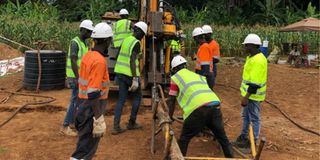
She said TGDC’s immediate focus is the Ngozi Geothermal Project, where preparations for exploratory drilling are ongoing.
The company plans to drill three exploratory wells at Ngozi, each expected to reach a depth of about 1.5 kilometers, to establish the commercial viability of the geothermal resource.
Preparatory activities, including site development, environmental assessments, and mobilization planning for specialized drilling equipment, have been undertaken ahead of the drilling program.
“Exploratory drilling requires highly specialized equipment, much of which must be imported. While we are ready to commence drilling, the exact start date will depend on factors such as equipment mobilization, weather conditions, and overall site readiness,” she said.
Ms Shabani said after completing the Ngozi drilling program, TGDC will proceed with resource confirmation activities at the Kiejo-Mbaka and Songwe projects before advancing to Luhoi, while feasibility studies continue at the Natron Project.
Beyond electricity generation, she said geothermal energy presents opportunities for direct economic uses, including agriculture, industries, and other productive activities.
“Geothermal energy is not only for generating electricity. The remaining heat and hot water can be used in agriculture for drying crops, greenhouse farming, and aquaculture and livestock production.
Industries that require heat for processing can also use geothermal energy instead of fossil fuels, making production cleaner and more environmentally sustainable,” she said.