Tanzania unveils record Sh61.9tr budget framework for 2026/27

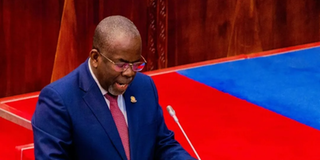
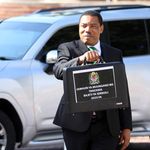
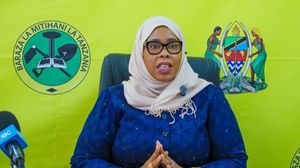
Minister for Finance, Khamis Mussa Omar. PHOTO | COURTESY

By Katare Mbashiru

Dodoma. The government has presented its largest budget framework in history, planning to spend about Sh61.9 trillion in the 2026/27 financial year to stimulate economic growth, strengthen human capital, and promote social and environmental development.

The proposed budget, representing a Sh5.4 trillion increase from the Sh56.49 trillion approved for 2025/26, is anchored on building a stable, inclusive, and competitive economy, while reinforcing national sustainability and implementing flagship programmes designed to transform key sectors.

Presenting the guidelines for the preparation of the government plan and budget for the medium-term period (2026/27–2028/29) yesterday, Finance Minister Khamis Mussa Omar projected the economy to grow by 6.3 percent in 2026.

“Priority areas for spending include financing ongoing flagship and strategic projects, servicing government debt, paying salaries, settling arrears, and expanding social services,” said Mr Omar.

He noted that over the medium-term period, the government expects to collect and spend Sh204.087 trillion, an annual average of Sh68.03 trillion.

Revenue for 2026/27 is projected at Sh46.69 trillion, with tax revenue contributing Sh36.9 trillion, other revenues Sh9.24 trillion (including Sh1.97 trillion from Local Government Authorities), and grants from development partners at Sh563.1 billion.

The increase in the domestically financed portion of the budget is expected to be the highest in the past four years.

According to the 2022/23 government budget, domestic revenue collections accounted for 67.6 percent of the total budget, rising to 70.7 percent the following year and further to 72.6 percent in 2024/25.

In the ongoing 2025/26 financial year, the government projected total revenue and expenditure at Sh56.49 trillion, with domestic revenue estimated at Sh40.47 trillion, equivalent to 71.6 percent of the national budget.

Compared with other East African countries, Kenya’s tax revenue accounted for 85.8 percent of its national budget in 2024/25, slightly down from 86 percent the previous year.

In Uganda, domestic revenue contributed only 51.9 percent of the national budget in 2025/26, up from 44.8 percent in the preceding year.

Debt strategy

In line with the Medium-Term Government Debt Management Strategy (2025/26–2027/28), the government expects to borrow an average of Sh15.5 trillion per year from domestic and external sources, with Sh15.24 trillion expected for 2026/27, of which Sh7.4 trillion is earmarked for development projects and Sh7.8 trillion for debt repayment.

Economists welcomed the ambitious budget but cautioned that its impact would depend on effective resource mobilisation and spending.

An economist from Saint Augustine University, Dr Isac Safari, said the near Sh62 trillion budget reflects government confidence in the economy’s ability to generate revenue and drive growth.

“A bigger budget can stimulate growth, especially if directed to infrastructure and human capital, but it also increases pressure on public finances,” said Dr Safari, highlighting the risks of borrowing, particularly through non-concessional loans.

An economist from the University of Iringa, Mr Samson Rutashobya, noted that the increase offers a chance to tackle development bottlenecks, but only if additional funds are aligned with national priorities and translate into tangible benefits for citizens.

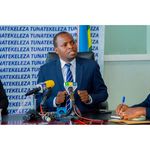
REPOA executive director, Dr Donald Mmari, stressed that the budget’s success will be measured by inclusivity and poverty reduction.

“Public investment should create sustainable employment and attract private sector participation rather than foster dependency on government spending,” he said.

He added that a bigger budget does not automatically mean better outcomes for the poor; what matters is how much is directed towards sectors that directly affect livelihoods, such as agriculture, health, education, and rural infrastructure.

He emphasised that the government should ensure the budget supports productivity at the grassroots level, particularly in rural areas where poverty is more pronounced.

“Public investment should crowd in private sector participation and create sustainable employment, rather than creating dependency on government spending,” said Dr Mmari.

Earlier, Minister of State in the President’s Office, Planning and Investment Professor Kitila Mkumbo, presented the Long-Term Perspective Plan 2026/27–2050/51, the Fourth National Five-Year Development Plan 2026/27–2030/31, and the proposed National Development Plan for 2026/27.

He said a total of 79 goals, 215 targets, and 737 interventions will be implemented to achieve expected outcomes.

Key priorities include establishing a National Sovereign Wealth Fund funded from revenues generated by natural resources such as oil, gas, gold, and other minerals; increasing tax collection to achieve a tax-to-GDP ratio of 18 percent; and building the capacity of local contractors to increase their participation in construction projects.

The implementation costs of the Fourth National Five-Year Development Plan are estimated at Sh477 trillion.

“This is the amount required to be invested in transformative sectors and economic growth drivers, including transport and logistics, energy and mining, industry and trade, agriculture, ICT, environment and climate resilience, social services and human development, governance and public service, as well as research and development,” he said.

According to him, the main sources of funding for this plan are the private sector and the public sector at a ratio of 70:30, with the private sector expected to invest approximately Sh324.49 trillion (70 percent), government institutions (MDAs and LGAs) contributing Sh115.04 trillion (22 percent), and public corporations (PSCs) investing Sh38.22 trillion (8 percent).