Tanzania warned against rushing into new Constitution before national healing
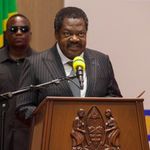
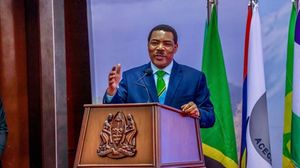
Former Prime Minister and retired Chief Justice Joseph Warioba speaks during the Tanzania Democracy Forum organised by the Tanganyika Law Society (TLS), which brought together stakeholders from the legal, justice, political and constitutional sectors for discussions on democracy and governance. PHOTO | SAID POWA
Dar es Salaam. Tanzania has been warned against rushing into a new Constitution before addressing the wounds and divisions arising from the country’s recent political crisis, with stakeholders arguing that reconciliation and national healing should come first.
Tanganyika Law Society (TLS) President Boniface Mwabukusi said on Friday, 28, August, 2026, that embarking on a comprehensive constitutional review before creating peace and stability in society could deepen the crisis instead of resolving it.
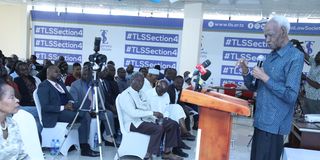
His remarks came during the Tanzania Democracy Forum, where lawyers, politicians, religious leaders, academics and civil society actors discussed democracy, justice, accountability and national reconciliation.
Mr Mwabukusi said Tanzania needed to first establish a Truth Commission to establish what happened, give victims an opportunity to tell their stories and recommend measures for reconciliation and healing.
He said the commission should be victim-centred rather than leader-centred, with broad representation from victims, citizens, political parties and religious leaders.
“We cannot start discussing the whole Constitution before creating a healing process and stability of thought. That would be like jumping into a petrol tank with a cigarette in your mouth; we will not survive,” he said.
Mr Mwabukusi said the country could not address the current situation through a process focused only on criminal investigations.
“When we establish presidential commissions of inquiry, their mandate becomes very specific, and when you target them to investigate criminal matters, they become even more specific, meaning they can leave out many issues,” he said.
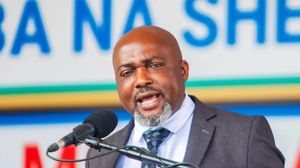
Chadema deputy chairman John Heche speaks during the Tanzania Democracy Forum organised by the Tanganyika Law Society (TLS) in Dar es Salaam on August 28, 2026. The forum brought together stakeholders from the legal, justice, political and constitutional sectors to discuss democracy-related issues. PHOTO | SAID POWA
He proposed the establishment of a Truth and Justice Commission or a Truth, Justice and Reconciliation Commission with a broader mandate covering truth-seeking, restorative justice and accountability.
The TLS president said the process should also address the plight of Tanzanians who had fled the country, those in prison and people facing court cases.
“There are our fellow Tanzanians who have fled and are not in the country. They have to be restituted. Let them come back to their country and let us talk,” he said.
He also called for cases involving people facing charges to be addressed as part of the healing process.
“We cannot continue talking about wanting to heal while we do not want the doctor. If we really want to heal, we have to seek treatment,” he said.
Mr Mwabukusi said transitional justice should not focus only on prosecution, but should also provide restitution, reparation and compensation for victims.
He said the country also needed to establish the truth about people who disappeared or were allegedly abducted.
“We are not hunting anybody. We simply have to know the truth,” he said.
The forum heard that national healing should precede a comprehensive constitutional process because the Constitution itself cannot resolve deeper social and political divisions without a national consensus.
Legal expert and author, Prof Issa Shivji similarly argued that Tanzania should consider transitional constitutional arrangements if it becomes difficult to achieve a new Constitution before 2030.
He proposed reforms to key institutions, including the electoral system and called for changes that would strengthen accountability.
Prof Shivji also challenged the language used to describe deaths and killings linked to political violence, urging Tanzanians to be more precise when discussing what happened.
“Let us correct our vocabulary. We did not kill each other; we were killed,” he said.
The constitutional debate comes against the backdrop of concerns raised by retired Prime Minister and former Chairman of the Constitutional Review Commission, Justice Joseph Warioba, who warned that Tanzania may not have enough time to complete a new Constitution before the next electoral cycle.
Justice Warioba said the process required adequate time, including the involvement of experts, collection of citizens’ views and a political and social reconciliation process.
“We should not enter another election using the current arrangements without first addressing the challenges that have emerged, because that could cause serious harm to the country,” he argued.
Former Minister for Lands, Housing and Human Settlement Development Prof Anna Tibaijuka, meanwhile, called for reforms to the existing political and electoral framework.
She said changes should include allowing independent candidates, reforming the registration of political parties and addressing laws that conflict with the 1977 Constitution.
“If we can make reforms so that independent candidates are allowed, have reforms in the registration of political parties, and change laws that conflict with the 1977 Constitution, all those things should change,” she said.
Prof Tibaijuka also called for stronger measures to protect voters and ensure citizens understand how to safeguard their votes.
The discussion also exposed differences over how Tanzania should begin its reform process.
ACT Wazalendo deputy secretary-general for Mainland Tanzania Ester Thoma speaks during the Tanzania Democracy Forum organised by the Tanganyika Law Society (TLS) in Dar es Salaam on August 28, 2026. The forum brought together stakeholders from the legal, justice, political and constitutional sectors to discuss democracy-related issues. PHOTO | SAID POWA
Civil society activist, Rosemary Mwakitwange said the country’s problem was not a lack of capable people who could help resolve the crisis, but a lack of political commitment.
She questioned whether the institutions currently involved in the political system could be expected to lead reforms that might undermine the interests of those benefiting from the existing arrangements.
“We cannot bring change within the same system and process that we know. With confidence, let me say that we and they do not have the same objective,” she said.
Ms Mwakitwange called for a parallel process led by citizens to establish what they wanted from the country’s political system.
She also argued that one of the first signs of readiness for reconciliation should be the release of people who had been imprisoned or subjected to political persecution.
She called for free and competitive elections, saying citizens should not have to choose between political participation and personal security.
“We want competitive elections. We want an election in which, as a woman, I should not have to worry about being told to choose between political leadership and personal security,” she said.
She challenged the organisers to ensure future dialogue includes the Government and other sides of the political divide.
“Make sure you bring the other side so that we have them here,” she said.
For his part, Tanzania Episcopal Conference (TEC) priest Flavian Kasala said religious institutions had a moral responsibility to contribute to the search for a solution.
He said religious institutions and civil society organisations should conduct what he described as an ‘examination of conscience’ by honestly assessing their own contribution to the country’s democratic situation.
Father Kasala argued that an effective civil society was fundamental to democratic governance but warned that some civil society organisations had become dependent on political and economic interests.
He also identified five national mistakes that he said had weakened citizens’ ability to participate effectively in national affairs.
They included the removal and privatisation of the political leadership college at Kivukoni, removal of political education from schools and universities, ending compulsory national service for Form Six graduates, weakening adult education and removing folk development colleges.
“These changes have contributed to a decline in citizens’ political awareness and participation,” he said.
The forum’s facilitator, political analyst Deus Kibamba, said: “These discussions are intended to provide a platform for Tanzanians to examine the country’s democratic situation and find ways out of the current impasse.”
Register to begin your journey to our premium contentSubscribe for full access to premium content