Tanzanian candidate ranked among top contenders for UN human rights role

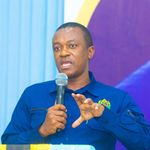
A Tanzanian human rights lawyer and advocate, Mr Onesmo Olengurumwa

Dar es Salaam. A Tanzanian human rights lawyer and advocate, Mr Onesmo Olengurumwa, has emerged as one of the leading global contenders for the position of United Nations Special Rapporteur on the situation of human rights defenders, a development that places Tanzania’s civil society movement firmly on the international human rights map.

Mr Olengurumwa has been ranked second among shortlisted candidates following a recommendation by the United Nations Consultative Group to the President of the Human Rights Council during its 61st session.

The recommendation followed a highly competitive, transparent and rigorous international selection process that assessed 65 eligible candidates from different regions of the world.

Reacting to the development, Mr Olengurumwa said he had received the news positively, describing it as both a milestone and an opportunity to elevate Tanzania’s human rights work to the global stage.

“I just took it positively and I hope the process will go in my favour. It is not that we do this for the sake of opportunities or personal gain, but we want to advance the kind of services we have been offering at the national level to the global level,” he said.

He said the nomination also presents an opportunity to gain new experiences while contributing to reforms within the global human rights agenda.

“It is also an opportunity to experience new challenges, gain new exposure and demonstrate our capacities, especially in reforming the human rights agenda at the global level,” he added.

The ranking places the Tanzanian advocate among a small pool of globally recognised experts considered suitable to oversee and advance the protection of human rights defenders internationally, a mandate that involves monitoring violations, engaging governments and strengthening global standards for the protection of civic space.

Mr Olengurumwa said reaching the final stage of consideration after undergoing multiple assessments was itself a significant achievement for Tanzanian human rights defenders.

“At this level, after going through that rigorous process — from being shortlisted and later being interviewed by the Consultative Group — it was very demanding but also very transparent. They saw my potential, and I take it as a milestone and recognition of human rights defenders in Tanzania,” he said.

He added that he remains ready for the outcome of the process, regardless of the final decision.

“I welcome this opportunity and I’m ready for whatever comes. I’m ready for anything,” he said.

Mr Olengurumwa is the founding national coordinator and board secretary of the Tanzania Human Rights Defenders Coalition (THRDC), one of the country’s most influential umbrella organisations for human rights defenders.

Established in 2012, the coalition has grown from an initial 14-member initiative into a nationwide network of approximately 300 organisations by 2025, representing grassroots defenders, journalists, pastoralist groups and marginalised communities.

A trained lawyer, Mr Olengurumwa is a graduate of the University of Dar es Salaam and holds additional qualifications in research, public policy and legal practice.

He joined the Legal and Human Rights Centre (LHRC) in 2009 as a researcher, where he worked on documenting Tanzania’s human rights situation until 2012.

It was during this period that he co-founded THRDC, at a time when the concept of human rights defenders was still largely unfamiliar in Tanzania and civic engagement operated under considerable pressure.

Over the years, the coalition has gained national, regional and international recognition for its work in policy advocacy, protection mechanisms and solidarity actions for defenders at risk.

According to available data, THRDC has reached more than 10,000 human rights defenders across Tanzania over the past 12 years, with thousands receiving training in legal compliance, security management and digital safety.

Journalists and media practitioners have also benefited from legal and professional support amid regulatory and operational challenges.

Mr Olengurumwa has been involved in several strategic legal actions and policy engagements aimed at expanding access to justice and safeguarding constitutional rights, including cases related to freedom of expression, public interest litigation, environmental and climate justice, disability and child rights, governance reforms, and the rights of pastoralist and marginalised communities.

One of the most notable recent outcomes of his legal activism came in June 2025, when the Court of Appeal of Tanzania struck out controversial provisions of the Basic Rights and Duties Enforcement Act that had imposed restrictive procedural requirements on public interest litigation, a ruling widely viewed as a major step in strengthening constitutional access to justice.

Beyond Tanzania, Mr Olengurumwa has engaged extensively with regional and international human rights mechanisms, including the African Commission on Human and Peoples’ Rights and the United Nations Human Rights Council.

He acknowledged the competitiveness of the UN selection process and expressed appreciation to the Consultative Group for the confidence placed in his work.

“Every profession requires a broader scope for demonstrating and proving competence, as well as testing different experiences and challenges. I wish to express my sincere appreciation to the UN Consultative Group for the confidence they placed in my work in the field of human rights defenders, and for recommending me, together with two other experts, to the final stage of consideration,” he said.

He also paid tribute to other candidates who took part in the process.

“I extend my respect and appreciation to all 65 candidates who participated in this highly competitive and transparent process, as well as to my fellow finalists from Colombia and the United States. The diversity of experiences represented reflects our shared commitment to the promotion and protection of human rights at national, regional and global levels,” he said.

Despite international recognition, Mr Olengurumwa’s work has not been without challenges, including arrests, intimidation and restrictions linked to his human rights activities.

He said the risks underscore the importance of solidarity among defenders worldwide.

“As the process reaches its conclusion, I remain hopeful and fully committed to cooperation and collective interventions with whoever is ultimately appointed among the three of us, in the spirit of solidarity for the rights and security of human rights defenders,” he said.

While the final appointment remains subject to the decision of the President of the Human Rights Council, the ranking itself marks a historic milestone for Tanzanian civil society and signals the growing presence of local human rights actors within global governance frameworks.