Tanzanian female scientists champion community-led malaria solutions

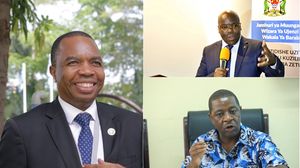
A combined photo of Ms Felista Tarimo (left) and Ms Justina Mosha. The two Tanzanian scientists are at the forefront of one of the country’s most ambitious international malaria research initiatives, Transmission Zero.

What you need to know:

  • The two scientists want young girls to see science not as something distant or foreign, but as a practical tool to address challenges within their own communities

Dar es Salaam. As the world marked the International Day of Women and Girls in Science on Wednesday, February 11, under the theme From Vision to Impact: Redefining STEM (science, technology, engineering, and mathematics) by Closing the Gender Gap, two Tanzanian female scientists stood at the forefront of one of the country’s most ambitious international malaria research initiatives, Transmission Zero.

Transmission Zero is a global research programme working to develop innovative genetic tools to help eliminate malaria in Africa.

The project focuses on genetically modifying mosquitoes to prevent the malaria parasite from being transmitted to humans.

By targeting transmission at its source, the initiative seeks to complement existing control measures and accelerate progress towards malaria elimination.

The two scientists, Felista Tarimo and Justina Mosha, are public health and social science researchers with extensive experience in stakeholder engagement. Ms Tarimo is a public health researcher and stakeholder engagement officer at the Ifakara Health Institute (IHI), while Ms Mosha serves as a social scientist and stakeholder engagement officer at the National Institute for Medical Research (NIMR) Mwanza Centre. Their work lies at the intersection of science and society, ensuring that communities are active and informed partners in scientific research.

Ms Tarimo, whose work focuses strongly on community engagement and malaria vector control, supports Transmission Zero’s cutting-edge research into genetic and biological tools for malaria elimination. She believes that scientific innovation must be accompanied by deep listening and meaningful dialogue.

“Transmission Zero aims to stop malaria transmission at its source. For that to succeed, people must understand that the future of science is not just about innovation. It is about listening,” she said. She explained that listening begins by understanding community perspectives before introducing scientific concepts.

“Listening first means starting with their questions, not our agenda. Before we explain any science, we ask community members what they know about malaria, the challenges they face, and the concerns they hold. Communities help shape how and when research happens,” she said. According to Ms Tarimo, health solutions for Africa must be designed by Africans and grounded in local realities. She said Tanzanian scientists, including women, are now leading research that reflects national values, lived experiences, and aspirations for a malaria-free future. “Health solutions for Africa need to be designed by Africans. Today, Tanzanian scientists, including women, are leading research that reflects our realities, our values, and our hopes for a future without malaria,” she said.

Ms Tarimo holds a Master of Science Degree in Public Health Research from the Nelson Mandela African Institution of Science and Technology and a Bachelor of Science in Biology from the University of Dodoma.

She said it was vital for girls to recognise their place in science, particularly in Africa. “Girls should know that science needs their voices. Women and girls bring perspectives that shape better questions, better research, and better outcomes for our communities,” she said.

Beyond their scientific contributions, both women view their work as part of a broader mission to inspire the next generation. They want young girls across Tanzania to see science not as something distant or foreign, but as a practical tool to address challenges within their own communities.

“We want young girls to see science as something accessible and meaningful. It is a way to solve everyday problems and improve lives, starting at the community level,” Ms Tarimo said.

Her academic and professional work has centred on understanding community perceptions of novel malaria control methods, including the auto-dissemination of pyriproxyfen, and ensuring that community concerns are integrated into scientific interventions.

She has co-authored several peer-reviewed publications on malaria control, gender-based violence, and health system challenges in Tanzania.

Ms Tarimo said women and girls are particularly affected by stakeholder engagement activities because they are often the primary caregivers within households. Their understanding of malaria and emerging interventions directly influences health-seeking behaviours at the family level.

“Their knowledge shapes decisions on the use of preventive measures, timely visits to health facilities for diagnosis and treatment, and adherence to recommended malaria control practices. Empowering women and girls with accurate information has far-reaching implications for household and community wellbeing,” she said.

She added that women are strong influencers, not only within families but also within wider communities. “In many communities, women are responsible for daily health-related decisions.

They ensure children sleep under bed nets, seek care when someone develops a fever, adhere to treatment, and engage with health services,” she said.

Because women are directly involved in implementing preventive and treatment practices, their understanding of science and health innovations significantly shapes how these interventions are adopted and sustained.

Ms Tarimo also emphasised the value of women’s lived experiences in scientific and policy forums. She said that women often bring practical insights that result in more actionable and tangible outcomes.

“In policy dialogues and research discussions, women bring their lived experiences. These experiences help shape research questions, design practical solutions, and ensure that scientific innovations respond to actual community needs,” she said.

Ms Mosha, who works at the NIMR Mwanza Centre, shares a similar commitment to community engagement. Her work focuses on understanding social dynamics, cultural beliefs, and behavioural factors that influence the success of malaria control strategies.

Through in-depth interviews, focus group discussions, and participatory research methods, she works closely with rural communities to ensure their voices are heard and respected.

Together, Ms Tarimo and Ms Mosha have helped establish engagement models that encourage communities to ask questions freely, challenge assumptions, address misconceptions, and provide feedback that directly informs research activities.

They host regular meetings in Swahili in village settings, often facilitated through local leaders, to ensure inclusivity and cultural sensitivity.

This approach has proven essential as Transmission Zero advances highly innovative research, including the development of genetically modified mosquitoes tailored to local conditions.

For the first time, a mosquito strain created in Tanzania has been shown to block transmission of *Plasmodium falciparum*, the parasite responsible for most malaria deaths in Africa.

Ms Tarimo said this scientific milestone underscores the importance of aligning advanced research with community understanding and acceptance.

“Such breakthroughs require trust. Communities must feel respected, informed, and involved. Without that, even the most advanced science will struggle to achieve its potential impact,” she said.

In her current role, Ms Tarimo applies advanced qualitative methods, including ethnographic techniques, to engage communities across rural Tanzania.

She has received specialised training in science communication, social innovation, and research ethics. She is fluent in both English and Swahili, enabling her to bridge scientific and cultural contexts effectively. She is also a member of the Tanzania Entomological Society.

She is  passionate about closing the gap between science and society. She believes community-driven approaches are essential for sustainable health solutions in Africa.

Transmission Zero is led by Imperial College London in partnership with the Ifakara Health Institute, the National Institute for Medical Research in Tanzania, and the Swiss Tropical and Public Health Institute.

The programme is supported by the Bill & Melinda Gates Foundation and is committed to advancing African-led science that is safe, equitable, and developed in close collaboration with communities.

The initiative seeks not only to deliver scientific breakthroughs but also to build local capacity, strengthen research institutions, and promote gender equity in science.

By supporting African scientists, particularly women, the programme aims to foster long-term sustainability and ownership of health innovations.

As Tanzania joins the global community in celebrating women and girls in science, the message from Ms Tarimo and Ms Mosha is clear. The future of science in Africa will be shaped not only in laboratories, but also in listening circles under village trees. It will be shaped through dialogue, trust, and shared purpose.

“In that future, more girls will see themselves not just as beneficiaries of science, but as its leaders,” Ms Tarimo said.

She added that empowering women and girls in science is not simply a matter of equity. It is a strategic investment in better health outcomes, stronger communities, and sustainable development.

“When women lead, communities benefit. When girls are inspired, nations progress. Science becomes a shared journey, not an isolated pursuit,” she said.

Through their work, Ms Tarimo and Ms Mosha are redefining what it means to conduct scientific research in Africa. They are demonstrating that excellence in science must be accompanied by humility, empathy, and respect for community knowledge.

Their efforts highlight the transformative power of inclusive research and the vital role women play in shaping Africa’s scientific future.

As Transmission Zero continues its work, these two scientists remain committed to ensuring that every step forward is guided by the voices and aspirations of the communities they serve.

In doing so, they are not only advancing malaria elimination efforts but also laying the foundation for a more equitable and resilient scientific landscape across the continent.