Tanzanian student develops fuel-saving vehicle to transform rural farming transport
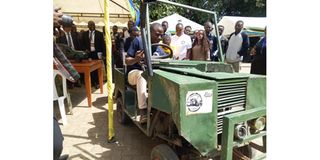
A student at Arusha Technical College (ATC), Mr Godlizen Joseph, tests the fuel-efficient farm vehicle he designed to demonstrate its performance and functionality during the college’s 2026 Research, Innovation, and Entrepreneurship Week exhibition in Arusha on Thursday, June 18, 2026. PHOTO| BERTHA ISMAIL
Arusha. A 20-year-old student from Arusha Technical College (ATC) has designed a low-fuel-consumption vehicle aimed at easing transport challenges faced by farmers in rural communities.
Mr Godlizen Joseph unveiled the prototype during the 2026 Third Research, Innovation and Entrepreneurship Week exhibition at ATC, describing it as a practical and affordable transport solution for farmers who often travel long distances to their farms.
The vehicle, designed with a body structure resembling a Land Rover, is powered by a modified 150cc motorcycle engine adapted to reduce fuel consumption while maintaining capacity for both passengers and cargo.
Mr Joseph said the vehicle consumes about a quarter of a litre of fuel for every four kilometres travelled, making it significantly more economical for daily use, particularly in rural areas where transport costs are a major burden.
“I started working on this project in 2024 to develop a dignified and affordable means of transport for people living in rural communities,” he said.
He added that after several tests and modifications, the project began showing promising results late last year.
The vehicle is currently about 40 percent complete in terms of bodywork and engine systems, but is already operational.
It can carry four passengers in addition to cargo weighing between 150 and 200 kilogrammes, making it suitable for transporting agricultural produce, farm inputs, and other goods in areas with poor infrastructure.
One of its notable features, he said, is its potential adaptability to alternative energy sources, including electricity and gas, depending on future market demand and technological advancements.
“This vehicle is specifically intended to support farmers. Once fully completed and subjected to further testing, it could become a valuable tool for improving rural mobility and agricultural productivity,” he said.
However, Mr Joseph noted that limited access to equipment and financial resources remains the biggest challenge in completing the project, as he has personally financed most of the development costs.
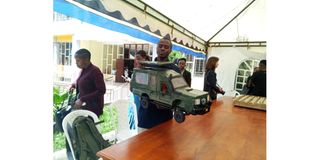
ATC student, Mr Godlizen Joseph, displays a design model of the fuel-efficient farm vehicle he developed, showing its intended final appearance during the 2026 Research, Innovation, and Entrepreneurship Week exhibition in Arusha. PHOTO| BERTHA ISMAIL
He appealed to the government, development partners, and the private sector to support the initiative so that final testing can be completed ahead of an official launch expected next year.
Speaking during the event, ATC Principal, Mr Mussa Chacha, said the annual exhibition was established to give students a platform to showcase research and innovation while connecting them with industry stakeholders.
He said the initiative helps identify talent, encourages innovation that addresses societal challenges, and increases opportunities for transforming student ideas into market-ready products and services.
The United Nations Development Programme (UNDP) Tanzania Resident Representative, Mr Shigekki Komatsubara, commended the creativity and problem-solving skills demonstrated by Tanzanian students.
“I am highly impressed by the students’ ability to develop practical solutions that can improve people’s lives,” he said.
He added that UNDP would continue supporting such innovations to ensure more Tanzanians benefit from economic growth and technological advancement.
Mr Komatsubara said UNDP is currently collaborating with 17 universities across Tanzania on innovation and entrepreneurship, and is seeking to strengthen cooperation with ATC to reach more young innovators.
He urged the private sector and industry players to support young inventors through mentorship, financing, and commercialisation opportunities, enabling ideas to move from prototypes to full-scale production and market entry.
“We need to see more young people developing solutions to everyday challenges. When innovation is combined with technical education, it can produce technologies capable of transforming lives and contributing to national development,” he said.
Register to begin your journey to our premium contentSubscribe for full access to premium content