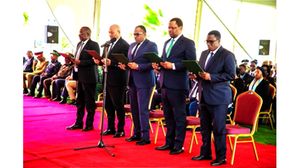
TRA plays a critical role in nation-building and noted that the government has continued to implement wide-ranging economic reforms through targeted policies and plans, alongside improvements in revenue collection systems.
Arusha. The Tanzania Revenue Authority (TRA) has been directed to keep pace with advances in science and technology by continuing to use and improve integrated tax systems particularly for domestic revenue collection in order to curb revenue leakages.
The move is expected to simplify tax payments, enhance transparency, improve efficiency and strengthen monitoring of government revenue.
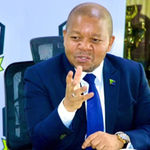
The directive was issued yesterday by the Minister for Finance, Ambassador Khamis Mussa Omar, while addressing the opening of the TRA performance review meeting for the first half of the 2025/26 financial year, which is being held in Arusha.
Mr Omar said TRA plays a critical role in nation-building and noted that the government has continued to implement wide-ranging economic reforms through targeted policies and plans, alongside improvements in revenue collection systems.
He urged the authority to continue applying taxpayer-friendly and modern approaches that uphold the dignity of taxpayers, stressing that revenue collection should not be a source of conflict but rather a catalyst for awareness, cooperation and trust between TRA and taxpayers.
“I direct TRA to simplify tax procedures, reduce bureaucracy and unnecessary costs for taxpayers, and strengthen dialogue platforms with private sector stakeholders,” he said.
“In keeping with advances in science and technology, I instruct TRA to continue using and improving integrated tax systems that will reduce revenue losses,” he added.
The minister said Tanzania should draw lessons from other countries that have achieved development by relying largely on domestic resources rather than excessive external borrowing or grants.
“When we travel, we admire what we see in other countries, but they worked hard and relied on themselves. I urge you to help make Tanzania self-reliant in financing all its activities and the major infrastructure reforms the country requires,” he said.
He further directed research experts to work closely with stakeholders and emerging sectors, including those attracting industrial investment, to further strengthen the economy and support national self-reliance.
On revenue performance, Mr Omar said that since the 2024/25 financial year, TRA collected Sh32.26 trillion, up from Sh22.2 trillion in 2021/22—an increase of 45 percent.
He said that in the first half of the 2025/26 financial year (July to December 2025), TRA collected Sh18.77 trillion, equivalent to 103.7 percent of the target of Sh18.10 trillion. The performance was boosted by strong collections in December, when Sh4.13 trillion was raised.
At the same time, the minister directed TRA to continue expanding the tax base and identifying new revenue sources, particularly in the informal sector, the digital economy, online trade, and other fast-growing economic activities.
“These measures should be implemented with the aim of increasing revenue without undermining economic growth or the wellbeing of businesses,” he said.
Earlier, the TRA Commissioner General, Mr Yusuph Mwenda, said the five-day review meeting provides an opportunity to assess areas of strong performance during the past half-year, identify gaps and develop strategies for improvement in the next financial period.
He said the meeting would also focus on enhancing revenue efficiency, improving service delivery and strengthening tax administration, while maintaining close collaboration with stakeholders, including business associations.
Mr Mwenda said TRA recorded an unprecedented milestone in December 2025, collecting Sh4.1 trillion in a single month, with contributions coming from ordinary citizens as well as small, medium and large taxpayers.
“In December, we had four main sources: large taxpayers contributed Sh1.9 trillion, customs Sh1.2 trillion, small and medium traders Sh838 billion, with the remainder coming from Union taxes,” he said.
He added that TRA is continuing to improve service delivery and systems, noting that the Domestic Revenue Administration System (IDRAS) is expected to be launched this month. The system will be interoperable with other platforms and will also incorporate artificial intelligence, as is the case with some existing systems.
The chairman of the Tanzania Traders Association (JWT), Mr Hamisi Livembe, commended TRA for improved revenue performance and better relations with the business community.
“Despite the achievements, what is notable is that collections are now being made through dialogue and mutual understanding, unlike a difficult period in the past when relations were strained,” he said.
He said improved engagement has enabled the exchange of information between TRA and traders, helping to resolve disputes and create a more conducive business environment.
“In this current atmosphere of cooperation, we can even double the current collections because we are sharing information and working together. Let us continue cooperating and holding each other accountable so that we do not slide back and the country can become self-reliant and achieve greater progress,” he said.