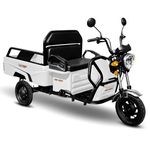
Dar/Dodoma. The rapid influx of unregistered electric two- and three-wheelers operating in Dar es Salaam and Dodoma has been largely driven by weak enforcement of existing transport and registration laws, an investigation by The Citizen has established.
Although Tanzania has amended its legislation to formally recognise electric vehicles (EVs), serious enforcement gaps have allowed thousands of electric motorcycles and tricycles to operate freely on public roads without registration, number plates or insurance.

The unchecked growth of these vehicles is now raising alarms over public safety and national security while depriving the government of significant revenue.
This newspaper conducted an investigation in Dar es Salaam and Dodoma between October and December 2025 to determine the scale of the problem and propose practical recommendations that could close regulatory loopholes, enhance public safety, and secure lawful revenue for national development.
The investigation found that regulatory oversight remains fragmented, with limited monitoring mechanisms and inconsistent application of the law by responsible institutions.
As a result, electric two- and three-wheelers have continued to operate openly in both cities without accountability, allowing their numbers to increase steadily.
The investigation revealed that some importers initially declared electric two- and three-wheelers as spare parts, only to assemble them locally into fully functional electric tricycles after entry into the country.
While this practice complicates the registration process, it also undermines legal compliance and creates difficulties in determining whether such vehicles should operate on public roads.
Authorities responsible for enforcement have failed to confiscate these vehicles or hold owners and operators accountable for non-compliance, further entrenching the problem.
Meanwhile, key institutions, including the Tanzania Revenue Authority (TRA), the Traffic Police, and the Tanzania Police Force (Tanpol), have shifted responsibility among themselves regarding the surge of unregistered electric two- and three-wheelers.
This institutional blame-shifting heightens safety and security risks while deepening revenue losses through unpaid registration and licensing fees, as well as uncollected fines and penalties.
The situation contravenes Section 57(b)(I–IV) of the Amended Motor Vehicle (Tax on Registration and Transfer) Act, Cap. 124, 2023, which explicitly recognises electric vehicles, including two- and three-wheelers, within Tanzania’s legal framework.
It also violates the Road Traffic Act, Cap. 168, particularly the Road Traffic (Motor Vehicle Registration) (Amendment) Regulations, 2025, which introduced sub-items 1A(a)–(d).
These provisions establish motor vehicle licence fees charged upon issuance of a certificate of registration for electrically charged vehicles.
The fees are categorised into three classes: Low Power EVs (below 50kWh), Mid Power EVs (50.1–100kWh) and High Power EVs (100.1–200kWh).
The regulations, gazetted on June 26, 2025 and signed by the then Minister for Home Affairs, Mr Innocent Bashungwa, set registration fees of Sh50,000, Sh200,000 and Sh250,000 for Classes 1, 2 and 3 respectively, with Sh300,000 applicable to performance or high-end EVs.
Sub-item 1B further provides that the motor vehicle licence fee for a motorcycle, whether electric or conventional, is Sh30,000, while that for a tricycle carrying goods or passengers is Sh50,000.
However, Section 13(1) and (2) of the Road Traffic Act, Cap. 168, prohibits the use of any motor vehicle or trailer on Tanzanian roads unless it is duly registered under the Act.
Section 13(2) states that any owner or driver who operates an unregistered vehicle commits an offence punishable by a fine not exceeding Sh50,000, imprisonment for up to five years, or both, and may face forfeiture of the vehicle to the government.
The current situation also undermines Tanzania’s commitment to the Global Decade of Action for Road Safety 2021–2030, under which the United Nations through the World Health Organisation (WHO) aim to reduce road deaths and serious injuries by at least 50 percent by 2030.
The investigation found that many electric two- and three-wheelers are being used for passenger and cargo transport, particularly in densely populated urban areas where conventional transport options are limited or expensive.
Yet most of these vehicles lack identifiable licence plates or registration stickers, making it difficult for authorities to trace ownership or hold operators accountable in cases of accidents or criminal incidents.
Interviewed users admitted they were aware of registration requirements but said weak enforcement encouraged widespread non-compliance.
Some operators argued that registering their vehicles was not financially viable while others continued to operate freely without plates or insurance.
Legal experts warn that the absence of clear identification makes it nearly impossible to trace vehicles involved in hit-and-run accidents or criminal activities.
Moreover, the lack of insurance coverage leaves passengers, drivers and other road users financially exposed in the event of injuries or fatalities.
Comparatively, countries such as India and China have developed clear registration frameworks for electric vehicles, including distinct licence plates that allow easy identification by enforcement officers.
These systems have strengthened compliance while simultaneously promoting the adoption of environmentally friendly transport solutions.
Transport analysts say Tanzania could have drawn lessons from such international best practices when amending its laws to recognise electric vehicles.
They argue that legislation must not only acknowledge new technologies but also be backed by strong enforcement mechanisms that reflect evolving transport trends.
When contacted for comment, TRA Director for Taxpayer Services and Education, Mr Richard Kayombo, said electric vehicles use the same numbering system as conventional vehicles and that owners are required to pay applicable import taxes.
“We issue public notices to encourage owners to register their vehicles, but enforcement against unregistered vehicles falls under the mandate of the Traffic Police,” he said.
Mr Kayombo added that TRA’s role is largely limited to tax administration and public awareness, noting that arresting or impounding unregistered vehicles is outside its mandate.
However, the Head of the Traffic Police Legal Department, Superintendent of Police Mussa Manyama, said the police are responsible for seizing unregistered vehicles through continuous enforcement operations.
He acknowledged that operating an unregistered vehicle, whether electric or conventional, violates the law and poses serious public safety risks.
Mr Manyama said such vehicles are typically uninsured, exposing drivers, passengers and other road users to significant financial risk in case of accidents, and that offenders should face heavy fines, prosecution and confiscation of their vehicles.
However, he declined to provide data on how many unregistered electric vehicles had been fined, impounded or removed from the roads since TRA announced the June registration deadline.
“We will continue enforcing the law and educating the public on the importance of registration,” he said, without detailing specific enforcement outcomes.
Legal experts have criticised what they describe as institutional blame-shifting, urging authorities to stop evading responsibility and instead apply the law consistently.
A lawyer from Divina Attorneys, Mr Edson Kilatu, said the situation reflects a growing culture of disregard for the law and weak accountability among both authorities and citizens.
“This is extremely dangerous. When accidents occur and cases reach court, there is often insufficient evidence. In some cases, even the identity of the vehicle involved is unknown,” he said.
Mr Kilatu stressed that it is the duty of authorities to ensure effective enforcement, including issuing clear and timely public notices to improve compliance.
Strengthening the rule of law, accountability and institutional responsibility, he added, is essential for public safety and societal well-being.
Another lawyer, who requested anonymity, said the problem lies not in the law itself but in its implementation.
The source explained that effective enforcement requires cooperation from all citizens, not just the police, although the police retain the authority to stop and question individuals.
The source noted that police often rely on information from the public to act on certain violations, and in some cases may not treat offences such as operating vehicles without number plates as serious.
“There is a need for sustained public education on the use of electric vehicles so that citizens understand the importance of compliance,” the source said.
According to the source, some drivers see no reason to register their vehicles because others operate freely without consequences, leading to normalised non-compliance.
The source added that under Vision 2050, public servants should receive continuous training to enable them to operate effectively within modern and evolving systems.
The police force, the source said, may also require specialised training on electric vehicles to better understand their regulation, risks and enforcement requirements.
As electric mobility expands rapidly across Tanzania, failure to enforce existing laws could turn a promising green transport solution into a growing public safety, governance, and economic challenge.
Clear coordination among TRA, police, and local authorities is therefore indispensable for orderly, safe, and lawful electrified urban transport.
Register to begin your journey to our premium contentSubscribe for full access to premium content