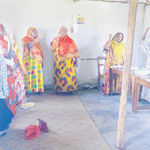
A recent Think Equal Lead Smart (TELS) study on women’s use of VICOBA groups and mobile money captured one revealing moment. A mother had no money for food, not even TZS 3,000. "I felt ashamed," she said. "I told myself I would never reach this point again." That moment pushed her into VICOBA and began her economic rebirth. This story is part of a much larger pattern.
Women across Tanzania join VICOBA savings groups seeking security and social support. As they progress, their influence at home increases.
For decades, Tanzanian women relied on VICOBA savings groups, yet paper ledgers told only part of the story. When a group leader fell ill or moved away, records sometimes disappeared with her. When cash was stolen from a treasurer's home, months of collective effort vanished overnight. Women who contributed faithfully had no independent way to verify their balances. M-Koba emerged from observing these fractures between intention and reality. Rather than replicating formal banking structures, the platform mirrored how women actually gathered, contributed, and borrowed. Every transaction became instantly visible to all members, with all transactions free. Building trust required understanding that for women with basic phones and limited digital experience, every extra step was a barrier.
As adoption grew, M-Koba evolved based on user feedback. Loan tracking, statements, and meeting notifications were added. The technology supported women’s actual workflows rather than imposing unfamiliar processes. Today, more than 500,000 savings groups use M-Koba. Where once a woman waited for her group leader to confirm her balance, she now checks it herself. Where household financial conversations once flowed in one direction, they increasingly become dialogues. The relationship between VICOBA and mobile money reveals itself in moments of crisis. A child develops a fever at midnight, and the nearest clinic requires immediate payment. VICOBA savings, pooled for long-term goals, cannot be withdrawn instantly. But mobile money credit arrives in seconds. As one participant said, “VICOBA is for building; phone loans are for surviving the day.”
The TELS Program, a partnership between the CEO Round Table and Vodacom Tanzania Foundation, documents how digital tools are redistributing decision-making power within households. Individual stories revealed systematic shifts across hundreds of participants. With only 71 per cent of women owning mobile phones versus 80 per cent of men, and just 24 per cent owning land under their homes, women approach financial services from positions of structural constraint. These barriers explain why 57 per cent of women used no formal financial services last year. Yet every percentage point increase in female financial inclusion contributes an estimated 1.2% to annual GDP growth, constraints limiting women also limit national prosperity.
M-Koba’s design reflects an understanding that women’s financial exclusion stems not from disinterest but from systems built without them in mind. Where formal banks require land titles that women rarely possess, M-Koba requires only a basic phone and group membership. Where paper records concentrated power in literate leaders’ hands, digital records distribute information equally. With over 500,000 savings groups now using the platform, this reconfiguration operates at scale through Vodacom M-Pesa’s infrastructure.
Women typically join VICOBA at moments of acute vulnerability, unable to feed their families or facing medical emergencies. The modest amounts they save matter less for their size than for what they represent: a claim to future possibility. As digital records make their contributions undeniable, conversations at home shift. One participant captured it: "Before, I was only told what would happen. Now, we decide together." The change rarely arrives without friction. Some husbands initially worried their wives would "become stubborn," discouraging meetings. Yet as women managed emergencies and contributed to school fees from their own resources, resistance gave way to respect. Economic credibility translated into social credibility, with women stepping into school committees, community meetings, and VICOBA leadership.
Financial inclusion becomes transformative when it addresses agency, not just access. VICOBA and mobile money serve as infrastructure for renegotiating household power, converting invisible domestic labor into visible economic contribution. The mother who once couldn’t find 3,000 shillings for food now advises neighbors on savings strategies. Change ripples outward from households into community structures.