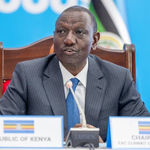
Dar es Salaam. The East African Community (EAC) faces one of the most decisive moments in its recent history as regional leaders gather tomorrow in Arusha for the 25th Ordinary Summit of Heads of State, convened by the current chairperson, Kenya’s President William Ruto.
The meeting is expected to shape the direction of the regional bloc at a time when questions about its governance, financing and leadership have become increasingly urgent.
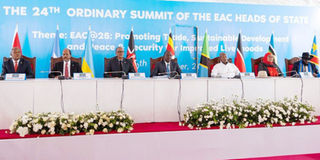
For months, anxiety has been building across the bloc over mounting financial strain, institutional inefficiencies and growing frustration over the failure of some partner states to implement decisions agreed upon at the highest political level.
The crisis has been brewing for years but came into sharp focus recently after Members of the East African Legislative Assembly (EALA) raised alarm over the Community’s worsening financial position.
Legislators accused partner states of failing to honour their financial commitments and ignoring key directives issued by the Summit of Heads of State.
For observers, the significance of the summit lies not only in the decisions that may be taken but also in whether leaders will demonstrate a renewed commitment to the principles that underpin the EAC Treaty.
At the centre of the discussions will be proposals prepared by the Council of Ministers on a new formula for partner states’ contributions to the Community’s budget.
The EAC has proposed a budget of $109.3 million for the 2025/2026 financial year, with 62 percent expected to come from partner states and the rest from development partners.
The funds are used to run key institutions including the EAC Secretariat, the East African Legislative Assembly (EALA), the East African Court of Justice and several specialised commissions.
Analysts say the summit provides an opportunity for leaders to address long-standing questions about how the Community is financed and governed.
A governance expert, Prof Ibrahim Byemelwa, said the meeting should be seen as a moment for reflection on how the bloc functions.
“The EAC has strong frameworks and ambitious integration plans, but implementation has been its weakest point,” he told The Citizen.
“This summit must focus on strengthening compliance mechanisms so that decisions taken at the regional level are actually implemented at the national level.”
According to him, regional integration depends largely on the political commitment of partner states.
“If leaders reaffirm that commitment and agree on practical ways to enforce decisions, the Community can regain momentum,” he said.
A regional economist, Dr Josephat Byamungu, said the summit also matters because it may introduce reforms that could stabilise the Community’s financial base.
“For years, partner states have signed protocols but delayed implementing them at home,” he said. “This summit must introduce accountability. If countries fail to comply with treaty obligations, there should be consequences.”
He added that a revised formula for financial contributions could help distribute responsibilities more fairly among member states.
“A contribution model that reflects the economic capacity of each country could ease tensions and improve sustainability.”
The leadership direction
Beyond finances, the summit is also expected to discuss the leadership direction of the EAC Secretariat.
The current discussions come at a time when experts are calling for a more proactive and strategic leadership at the helm of the regional body.
Some observers say the summit could also open discussions on the selection of the next Secretary General, a position that plays a central role in coordinating the Community’s programmes and ensuring that summit decisions are implemented.
Public administration expert Yvonne Neumbe believes the EAC now requires a Secretary General with strong policy and management skills.
“The Community is entering a difficult phase,” the Uganda-based expert said. “It needs a reform-minded technocrat who can strengthen coordination among partner states and ensure that regional programmes move forward.”
According to her, the Secretary General must also be able to navigate complex political dynamics within the region.
“This is not just an administrative role. It requires someone who understands the integration agenda and can push it forward even when political interests diverge,” she explained.
However, some analysts caution that leadership choices must reflect credibility and commitment to regional integration.
Prof Byemelwa said the credibility of the Secretariat’s leadership will depend partly on the track record of the country from which the Secretary General is nominated.
“If the Secretary General comes from a country that is not complying with treaty obligations, it sends the wrong signal,” he said. “Leadership of the Community must reflect commitment to the integration agenda.”
He added that repeated delays in implementing summit directives have gradually weakened public confidence in the regional bloc.
With a combined population of more than 300 million people and expanding trade links, the EAC remains one of Africa’s most ambitious regional integration projects.
Register to begin your journey to our premium contentSubscribe for full access to premium content