A welcome opening in Samia’s search for post-election healing
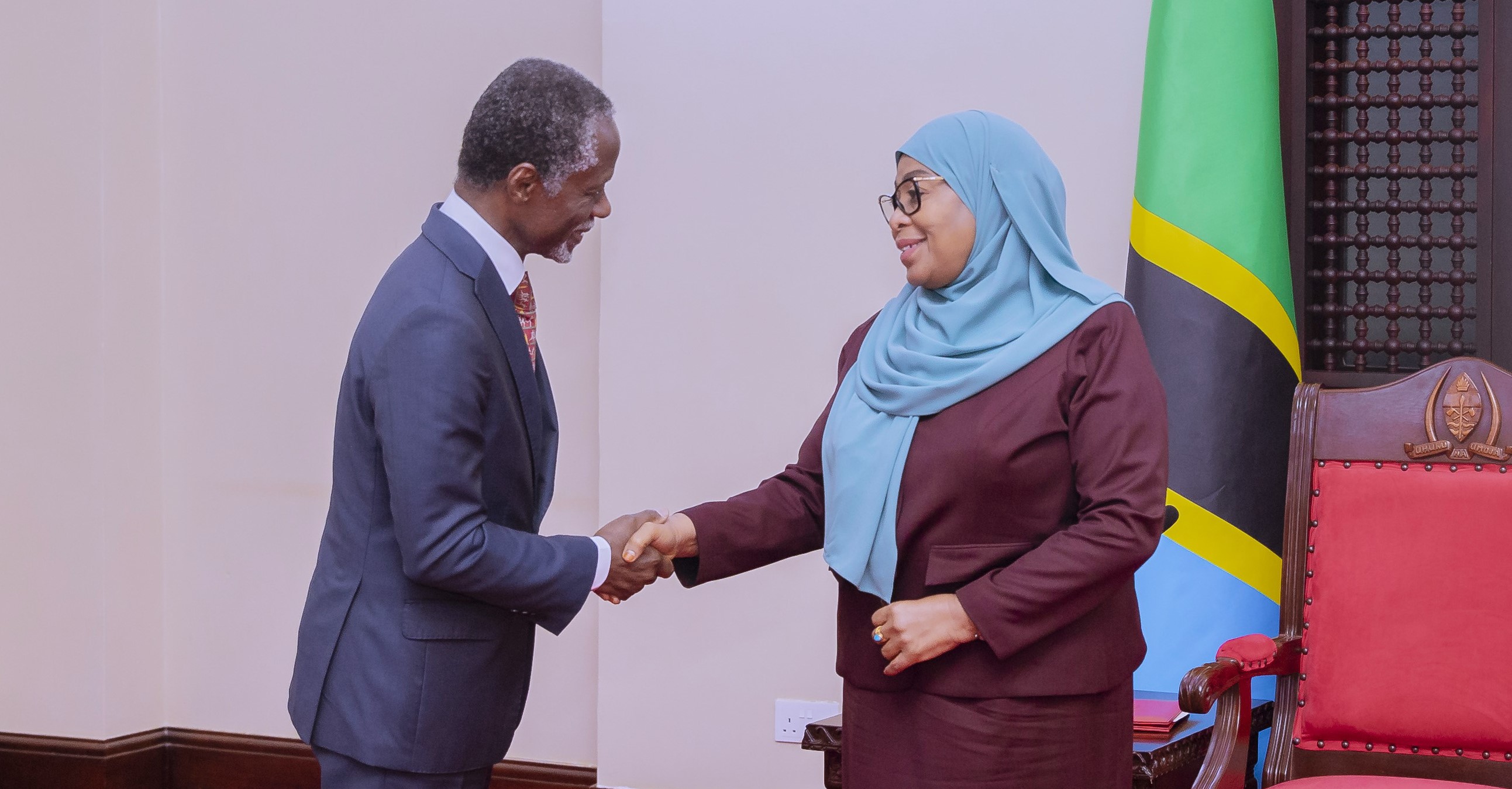
President Samia Suluhu Hassan with the UN Secretary-General’s Special Representative to the African Union, Mr Parfait Onanga-Anyanga, after holding talks at Chamwino State House in Dodoma on March 11, 2026. PHOTO | STATE HOUSE
By Protus S. Matipa
Recent developments suggest that President Samia Suluhu Hassan’s administration is not only keen to improve the narrative around the October 29, 2025 General Election but is also actively seeking durable solutions to the tensions that followed. After months of uncertainty, a series of domestic and international engagements points to a government that recognises the importance of credibility, dialogue, and ultimately, closure.
One of the most significant developments is the arrival in Tanzania of a United Nations envoy tasked with consulting political parties and state leaders on democracy and good governance. For a country that has long preferred to resolve its affairs quietly, hosting such discussions should be seen as a positive and strategic step. Every peace-loving Tanzanian ought to view this as an opportunity rather than unwelcome interference.
To appreciate the visit’s significance, it is necessary to consider the broader context. Mr Parfait Onanga-Anyanga, UN Secretary-General António Guterres’ Special Envoy and head of the United Nations Office to the African Union, is in the country as part of renewed efforts to encourage national cohesion following the unrest that accompanied the 2025 polls. His schedule includes meetings with leaders of the rulling CCM, the opposition Chadema, ACT Wazalendo, and Chaumma, alongside discussions with Speaker of Parliament Mussa Zungu, Chief Justice George Masaju and the President herself.
A State House statement on March 11, 2026 said the envoy delivered a special message from the UN Secretary-General, commending steps taken by the Tanzanian Government, particularly the establishment of an Independent Investigation Commission, the commitment to inclusive national dialogue and ongoing constitutional reform. These acknowledgments underscore Tanzania’s readiness to face difficult questions and demonstrate that its institutions can withstand scrutiny.
The agenda of these discussions — covering the political climate, governance, and the role of international partners in strengthening democratic institutions — reflects the seriousness of the moment. Tanzania is not being singled out for criticism; it is being invited to show that it can confront internal challenges transparently and responsibly. That distinction is critical for a nation that prides itself on moderation and political stability.
CCM, ACT Wazalendo, Chadema and Chaumma have confirmed they engaged with the envoy. While such talks will not resolve deep disagreements overnight, they create a necessary space for dialogue, something that has been in short supply since the election. Dialogue, even when uncomfortable, remains a cornerstone of democracy and a prerequisite for sustainable peace.
Equally noteworthy is the decision by the Commonwealth Ministerial Action Group (CMAG) to return Tanzania to its formal agenda. At its 72nd meeting in Malta on 7 March 2026, CMAG reviewed concerns about the political climate and human rights situation in Tanzania. While some may perceive this renewed attention as scrutiny, it is a reminder that Tanzania remains part of a wider community committed to democratic governance. CMAG welcomed the government’s cooperation with the Commonwealth Secretary-General’s Special Envoy, whose upcoming visit is expected to provide an independent assessment of the country’s political situation. Independent evaluations can be uncomfortable, but they provide an opportunity to rebuild confidence at home and abroad.
The Commonwealth had already taken an earlier step in November 2025 when Secretary-General Shirley Botchwey appointed former Malawi President Lazarus Chakwera as Special Envoy to Tanzania following post-election tensions. His mission aimed to encourage dialogue and reduce the risk of further confrontation.
These international efforts complement a domestic initiative of even greater significance. Shortly after the unrest, President Hassan established a commission of inquiry chaired by retired Chief Justice Mohammed Chande Othman to investigate the causes of violence and recommend measures to prevent recurrence. The commission, which includes senior figures from the judiciary, diplomacy, and security services, has been collecting testimony through public hearings, interviews, and written submissions.
When launching the inquiry in November 2025, President Hassan emphasised that Tanzanians should examine their own problems before others did so on their behalf. This reflects a sober understanding of sovereignty: accountability is not merely a political slogan; it is a responsibility that falls first and foremost on the nation itself. The commission’s mandate has now been extended to early April 2026, allowing more time for careful analysis. Whether its findings will satisfy all stakeholders remains uncertain, but what matters most is the recognition that the events surrounding the election cannot simply be ignored. They must be explained, acknowledged, and, where necessary, corrected.
Taken together, the UN consultations, the Commonwealth’s renewed focus, and the domestic inquiry indicate that the government has accepted a fundamental reality: national healing cannot be achieved by decree. It requires dialogue, transparency, and the willingness to confront uncomfortable truths.
For this reason, the administration deserves credit for allowing these processes to move forward. It would have been easier — and perhaps politically safer — to resist external engagement. Instead, the choice has been to engage, on the understanding that no single institution or individual has a monopoly on reconciliation.
Ultimately, the measure of success will not be the meetings themselves but what follows them. Tanzania’s stability has long rested on moderation and consensus. Preserving that reputation will require patience from the government, responsibility from the opposition, and goodwill from citizens.
In the end, the principle is straightforward: the nation must matter more than any party, office, or individual. It is this principle that will guide Tanzania through post-election healing and towards a stronger, more inclusive democracy.
Protus S. Matipa is a commentator on political and economic affairs