World Bicycle Day is an annual global observance held on June 3. This year (2026) the occasion was celebrated on Wednesday, June 3, with the theme “Cycling for a Greener Future”.
The day is dedicated to highlighting the bicycle as an affordable, reliable, and sustainable means of transportation that benefits physical health and the enAvironment.
It is possible that this day was celebrated in Tanzania; though, if that was the case, celebrations were very low key.
Which is very sad. Not many years ago, acquiring a bicycle was a main aspiration; and a feat when this ownership was realized.
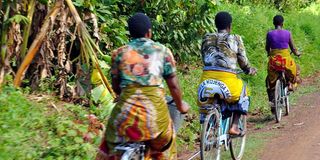
The bicycle used to be the workforce for society. The bicycle owner was regarded highly, and the bicycle was a prized possession.
Raleigh (“the all-steel bicycle” from Nottingham, England) ruled high, during the colonial days and in the early years of independence.
Gazelle, Humber, and BSA were brands to reckon with. All these were from Europe. There even used to be a bicycle licence, levied each year.
The Indians came in with their Avon brand but all these were overshadowed when the Chinese came in with their Phoenix and Flying Pigeon Brands. For the mainly rural bicycle enthusiast, Phoenix is the bicycle, though, in their early days in the late seventies, these bicycles were fragile.
Few will remember that there used to be a publicly-owned National Bicycle Company (NABICO) with a factory in the Mwenge area of Dar es Salaam.
In the 1970s/80s, it produced a bicycle branded Swala, the Swahili word for antelope, as part of efforts to industrialise and promote self-reliance in post-colonial Tanzania.
Swala was a national symbol representing speed, reliability, and local technological appropriation. Today, most bicycles are imported, new or second hand.
During the economic hardships days of the late 1970s and 1980s, characterized, among others, by severe fuel shortages, President Nyerere famously encouraged urbanites, particularly in Dar es Salaam, to ride Swala bicycles to and from work, instead of driving cars.
The iconic photograph of Mwalimu riding a bicycle, would have, in today’s parlance, gone viral.
While for the young man of yesteryear, owning a bicycle was the goal, and indeed, some brides were transported on a bicycle on their wedding day, the young man of today yearns to own a car.
Today, the UN is urging us to appreciate the importance of the bicycle.
World Bicycle Day is celebrated on June 3 each year, having been established by the United Nation’s General Assembly on April 12 2018, through a resolution that recognizes the uniqueness, longevity and versality of the bicycle as well as its contribution to sustainable development goals (SDGs).
This year’s theme “Cycling for a Greener Future”, reminds us that every ride can contribute to healthier communities, cleaner air and a more sustainable future.
So, for a developing country like Tanzania, grappling with travel and a multitude of economic constraints, encouraging the use of the bicycle is appropriate.
It is cheap to acquire and run; it offers immense health benefits, including lowering blood pressure; it is environmentally friendly, with zero emissions; and, it can encourage the formation of social and neighbourhood communities.
However, contemplating cycling on our urban roads is like contemplating suicide.
Motor vehicle drivers are most unfriendly to cyclists. Road designers easily leave out provisions for pedestrians and cyclists, and even when such provisions are made, they are easily taken over by traders.
Those who maintain roads, hardly care about marking and repairing pedestrian and cyclist ways. It is no wonder that bicycle fatalities are high on African roads.
According to the UN, vulnerable road users—such as those walking or riding bicycles—account for roughly half of all traffic fatalities on the continent, primarily driven by a lack of protected infrastructure, reckless driving, and poor post-crash care.
We need to create a society that loves the bicycle through school and public education.
Drivers, in particular, must see pedestrians and cyclists as fellow road users, not aliens. Road designers and maintainers should provide and care for non-motorised road users.
Those regulating the use of roads, should enforce regulations and impose heavy penalties for reckless drivers.
Using the bicycle should not be seen as a sign of poverty. We know of ministers in rich countries, going about their business on bicycles.
Formation of bicycle clubs need to be encouraged. Use of the bicycle must be propagated by the Honourable MPs, councillors and all professionals.
Work and popular assembly places should have facilities for cyclists such as parking and changing rooms.
Next year’s World Bicycle Day, which will be on Thursday 3rd June should not pass so quietly.