Street trading in urban areas: Lessons of experience

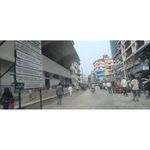
Pedestrians and roadside traders in Dar es Salaam Street. PHOTO | FILE 

In the wake of the inauguration of the renovated the Dar es Salaam Kariakoo Main Market in February 2026, authorities have begun clearing traders from roads, bus stops, pavements and pedestrian ways, pointing out that such activities block traffic and impede emergency access, such necessary in the case of fire.

The directive targets traders, bodabodas, and tricycle (bajaj) operators. Legal action can be taken against those who do not comply.

This is a welcome step since, deep down, we all yearn to see law and order in our urban areas. But this has many times, evaded us, as time and again, our streets and other public spaces have fallen into chaotic use with traders, bodaboda and  Bajaj drivers occupying whatever place from which, they reckon they can reach or get customers.

Since keeping streets clean of traders by public authorities is not a new undertaking, it may be instructive to learn from what transpired in the past, with what outcomes. Moreover, it may be equally, useful, to learn from the experience of authorities outside Tanzania.

In 1983, a law, the Human Resources (Deployment) Act was passed empowering the government to look into, and find a solution to unemployment in urban centres.

The government was also empowered to make proper arrangements for the repatriation (to rural areas) and subsequent employment of the unemployed urban residents. The policy became known as the Nguvu Kazi policy.

 While wallowing in the repatriation ancestry, the Nguvu Kazi Policy was progressive because it allowed the issuance of business licences on easy terms to many small-scale operators, whose activities were hither-to considered illegal.

The success of the Nguvu Kazi Policy was limited for several reasons including: overlapping roles of central and local government authorities; many of those repatriated to designated agricultural outlets filtered back to the city; and the number of informal sector operators qualifying for licencing became too many with more migration to urban areas. Dar es Salaam had to stop giving out Nguvu Kazi licences in 1993.

Thus, it can be argued that in the early days, the public authorities were in favour of cleaning urban areas of all those who were unemployed (who included street traders) and send them to rural areas where they could engage in agriculture.

When this did not work, a policy to send traders to specially designated areas, was adopted. In 1992, the Sustainable Dar es Salaam Programme (SDP) supported by UN-HABITAT was launched, bringing the innovative strategic planning on board, based on the notion of working groups for each burning sector.

The Working Group on Petty Trading, formed in 1995, made recommendations that included the need for regular dialogue, strengthening street traders’ associations, and collective management of city centre streets by traders’ associations.

Guidelines of Petty Trading were published by the Dar es Salaam City Council in 1997. Unfortunately, SDP Proposals died with the end of the Project.

Serious street riots took place involving public authorities and street traders and hawkers in Kariakoo in September 1993; in Magomeni in January 1994; and in Kariakoo and the City Centre in February 1995.

In the mid-1990s, Temeke Stereo and Makumbusho markets were constructed to accommodate street traders. These started off as failure since they lacked customers and the number of provided stalls were a drop in the ocean.

In 2001, Mwanza Municipal Council constructed trade stalls and requires traders to move there. The traders did not move since the stalls were 7km from the city centre and lacked customers.

In 2006 there was a countrywide clean-up of street traders from five major urban areas. Overall, street traders moved into oblivion initially, but started getting back strategically when the eviction fire had cooled down; and retook their former areas, and more.

Meanwhile, in 2010, the Machinga Complex, to accommodate some 4500 traders was opened. However, street traders did not move there claiming lack of customers.

In 2011 and 2014, clashes took place between authorities and street traders in Makoroboi area in Mwanza, as traders would not move from the area.

Between 2015-2021, the government operated a hands-off street traders policy. The traders responded by occupying any available space in urban areas.

This policy however, was reversed in 2021, when a countrywide clean-up of street traders was undertaken. The traders hibernated into thin air, but staged a slow and strategic comeback to the streets.

So, basically, currently, traders adopt a non-confrontational approach, when required to move. But with time they come back, in different numbers, and at different times.

The desire to create “city-beautiful”, can be found in may other urban areas in Africa. The Kampala City Council Authority (KCCA) and the Mbale and Mbarara City Councils in Uganda are reported to be cleaning their streets of vendors, requiring them to move to specified areas or markets. Street cleaning is also reported in Johannesburg, South Africa, and in Asaba Nigeria.

The Kenya National Highways Authority (KeNHA) is conducting nationwide operations to remove street traders and demolish structures on road reserves, along the Thika Superhighway (Githurai/Roysambu) and in Murang'a.

These actions, targeting unauthorized kiosks to improve road safety, curb congestion, and build bus stops, have led to significant trader losses, protests, and accusations of insufficient, last-minute notification.

Learning from experience, authorities want a clean modern city, with traders operating from official markets and stalls. Many of these have been constructed, but they are not taking track. The traders on the other hand, seem to want an open system, where one operates from where one feels there are customers.

A way forward would be dialogue, so that both sides have a shared vision of the city. The approach adopted during the Sustainable Dar es Salaam Project (SDP), of having regular consultations, through Sector Working Groups, is worthy considering; dialogue which would avoid policy fluctuations and result in ownership and sustainability.