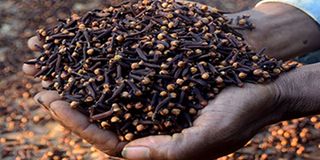
Cloves and youth anchor the continent’s next growth chapter

What you need to know:

  • Agroforestry landscapes can complement wildlife tourism 

By Bryan Bwana

As Africa confronts the intersecting pressures of climate change, youth unemployment, and fiscal strain at the local level, a quiet but potentially transformative experiment is taking shape, one rooted not in abstract pledges, but in soil, trees, and institutions closest to citizens.

The Africa Local Government Green Economy Initiative, anchored by the Association of Local Authorities of Tanzania (ALAT) as it marks 40 years of existence, proposes the planting of 40 million trees across Tanzania and partner African countries. At first glance, the initiative appears symbolic.

In reality, it reflects a pragmatic development logic: climate resilience, local revenue, and agribusiness value chains can be built simultaneously, starting with what economists call low-hanging fruits.

The initiative aligns with a rare convergence of milestones: 200 years of Africa’s horticulture industry, 10 years of the Tanzania Agricultural Research Institute (TARI), and 30 years of the Tanzania Revenue Authority (TRA). Together, they illuminate how local governments, often treated as administrative afterthoughts are to become engines of green growth in Tanzania.

Cloves, spices, and horticultural crops once shaped Africa’s global economic identity. Zanzibar’s clove economy powered trade routes linking East Africa to Asia, the Middle East, and Europe.

Today, global demand for spices (cloves, cardamom, cinnamon, ginger, turmeric, vanilla, and pepper) is rising again, driven by food processing, pharmaceuticals, cosmetics, and wellness markets.

The global spices market is valued at over $20 billion and continues to expand. Africa remains underrepresented, not due to lack of land or climate suitability, but because of fragmented production systems, weak aggregation, and limited value addition. These are precisely the constraints local governments are positioned to address.

Across Mainland Tanzania, local authorities collectively manage vast tracts of land—often idle or underutilized—held by councils, schools, religious institutions, and public agencies.

These include: Prime Minister’s Office [Regional Administration and Local Government-PM-RALG]-managed schools and training institutions, religious institutions with long-term land holdings, Jeshi la Kujenga Taifa (National Service) agricultural lands, Tanzania Prisons Service farms, municipal buffer zones and green belts, National Parks’ buffer zones

Together, these lands represent a scalable platform for agroforestry: integrating tree planting with cloves, spices, fruits, and horticulture, while restoring soils and sequestering carbon. The target of planting 40 million trees is therefore not a slogan, it is a land-use and revenue strategy embedded in local government planning.


Youth employment and a green demographic dividend

Africa’s youth population is projected to exceed 830 million by 2050. Without jobs, this trend becomes destabilizing. With the right value chains, it becomes an asset.

Clove and spice production is labour-intensive across planting, harvesting, processing, packaging, logistics, and export certification. These are sectors where local governments can lease land transparently, organize youth cooperatives, and connect producers to markets. Green economy jobs like nurseries, extension services, organic certification, and climate-smart irrigation, are accessible to young people with practical training rather than advanced degrees.

As evidenced globally, research without scale is a missed opportunity. TARI has developed improved spice varieties, disease-resistant horticultural crops, and soil management technologies. Yet much of this research remains underutilized.

The missing link has been scale at the local level. Councils often lack structured plans to deploy research outputs across villages and wards. The Green Economy Initiative bridges this gap, connecting TARI’s scientific capacity with local government implementation authority.

Africa’s tourism economy increasingly rewards destinations that demonstrate sustainability. Agroforestry landscapes (spice routes, clove farms, botanical corridors) can complement wildlife tourism with cultural and agricultural experiences.

Local governments that integrate green economy projects into territorial branding stand to attract eco-tourism, diaspora investment, and climate finance, including emerging carbon markets tied to verified tree planting.

The initiative’s strength lies in aligning institutions that already exist:

i. TRA, linking green enterprises to domestic revenue systems

ii. TAHA (Tanzania Horticultural Association), providing market access and export readiness

iii. Tanzania Prisons Service (Magereza)

iv. ALAT, coordinating councils and policy advocacy

v. Development partners focused on climate adaptation and food security

vi. Private-sector buyers in spices, essential oils, and horticulture

vii. Faith-based institutions and cooperatives, long-standing land stewards

While Tanzania offers fertile soils, institutional depth, and political commitment, the model is replicable across Africa. Most countries share similar conditions: youthful populations, underutilized local government land, and climate-sensitive economies.

As ALAT turns 40, TARI turns 10, TRA turns 30 and Tanzania Horticultural Production turns 200, the Africa Local Government Green Economy Initiative reframes anniversaries not as ceremonies, but as commitments to trees that grow, youths who work, soils that regenerate, and councils that govern sustainably.