The death of civilians and the damage to their quality of life are the real horrors of wars. Damage to human life, especially that of innocent civilians, should not be brushed off with euphemisms or approached passively.
In conversations, warring nations are often identified passively as entities and are looked upon as if they were individual persons with nothing to lose in a boxing match. This is a significant language dynamic that is increasingly being normalised and that needs to change. Each country is an inclusive identity of millions of people, most of whom desire peace and detest conflict, cruelty, and violence.
Wars affect people in very personal ways. Millions are bereaved, displaced, and dispossessed of the happy lives they once had and are forced to live in uncertainty and struggle. Yet, the globe’s citizens, and countries themselves, do not feel the same; many sit back passively and wager who will win and who will lose. Battles are not worth cheering on because real lives are being attacked, harmed, and lost. As impersonal as countries may seem, whoever wins does not truly win because humanity, which is highly personal, loses.
The death of civilians and the damage to their quality of life are the real horrors of wars. Damage to human life, especially that of innocent civilians, should not be brushed off with euphemisms or approached passively. No life is negotiable or disposable for political purposes. Yet the opposite, a horrendous dynamic gaining popularity in global politics in our time, is what Henry Giroux (2007) called “the politics of disposability.”
Around the world, we have seen power being seized through blood-stained means. Power gained through violence and spilled blood is not honourable. According to the V-DEM Institute report Clean Elections Across the World, since the year 2000, 1 in 4 elections has been violent. The 2024 report by Armed Conflict Location and Event Data (ACLED) establishes that violence occurred in 57 percent of global electoral processes that year.
If we do not condone such violence in our own homes, why cheer it on somewhere else or be emotionally distant and opinionated on the ‘winning’ and ‘losing’ of wars overseas? It is, however, worse when these opinions are linked to religion, tribe, race, and ethnicity, as these areas are historically complex and can trigger strong sentiments. We therefore ought to be vocal against the modern language that strategically normalises the disposal of human life through jargon, complex logic, sophistry and even appeals to religion and other sentimental and historical triggers.
For young people in particular, it is damaging to be exposed to a constant bombardment of news of war, violence, heroic cruelty, hostility, atrocities, killings and other disturbing violations against individuals and communities. Repetition numbs their sensitivity towards human life, drains empathy and makes senseless death feel like a normal occurrence. They cannot entirely separate these encounters and memories from their socialisation process. (Marta Castro et al., Journal of Health and Psychology, Vol. 29, Issue 1, 2023).
In an article published by the Social Media Victims Law Centre, Matthew Bergman highlights an important reality: “violence in media promotes more violence,” as real-world violence becomes less upsetting and empathy declines.
As young people form the largest percentage of internet and social media users, they are often drawn into emotionally taking sides in binary framings, becoming digital cheerleaders of ongoing violence across the globe (Basil Ibebunjo, Journal of Leadership and Development, 2025). Reacting to pro-war narratives on social media can amplify violence (Magdalene Karalis, Georgetown Journal of International Affairs, 2024).
Rather than scrolling indifferently, actively using digital spaces to campaign for peace can be a meaningful contribution. This form of digital engagement is often referred to as “clicktivism” or “slacktivism.”
Today, the media often functions to a considerable extent as a machine for the normalisation of violent narratives and plays a huge role by widespread selective framing and deliberate creation of ‘spectacle’. Even trusted and state media outlets have in numerous cases been proven to contribute to troubling narratives by hosting orchestrated disinformation campaigns designed to project power, manipulate facts and suppress dissent.
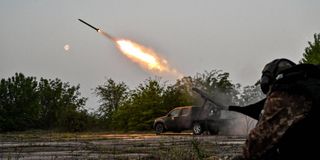
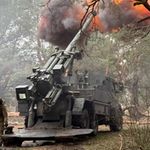
News about war is presented almost like entertainment. Escalations, clipped strike footage, boastful leaders, graphic violence and selective politicised empathy become the highlights, while peace initiatives, humanitarian aid, de-escalation effort and evacuations receive far less attention. In this way, the media can become a platform for division, side-taking, and sensationalism.
This sensationalism has intensified to the point that some channels broadcast war events around the clock. Roger Stahl (2009) calls it “militainment,” where war is glamourised and turned into a show for viewers. James Der Derian (2001) describes it as the “virtualisation of war,” as exploding battlefields are brought into our living rooms more to shock and awe than to inform through genuine analysis. Dr Jayanta Kumar Panda (2005) refers to this as the “strike, show and tell doctrine.”
Human life has the highest value, indeed, an invaluable one. This is basic human knowledge, even without invoking religion. Every human being matters, and people are not merely numbers or statistics. No one is expendable, and no death should be counted as an “acceptable loss” in the pursuit of power or profit. Humanity must rise to condemn the politicised normalisation of the disposability of human life, especially when it is amplified through the media.
Shimbo Pastory is a Tanzanian advocate for positive social transformation and a student at the Loyola School of Theology, Ateneo de Manila University, Philippines.