How digital education will define Africa’s rise in the decade ahead
By Sanjeev Mansotra
A new chapter is opening for Africa on the world stage; one where the continent is no longer seen as emerging but ascending.
This year, the IMF expects Africa to outpace even Asia in economic growth, with several countries set for double digit gains. It’s an important moment, driven by a young population full of ambition.
But unlocking its full promise will depend on how boldly we invest in education. If we equip our youth with the digital fluency the modern economy demands, Africa’s demographic strength can truly define its next chapter.
Despite years of enthusiasm around digital learning, Africa continues to lag in meaningful digital participation. More than 600 million people across the continent use mobile broadband, yet 76 percent face a “usage gap”—they may be connected, but are not able to turn connectivity into opportunity.
Africa also ranks well below the global average on digital skills readiness. This isn’t due to a lack of interest or talent; it reflects the limitations of past approaches.
The systemic barriers holding learners back
Many digital education initiatives have focused on distributing hardware rather than building evidence based, scalable models.
Without rigorous research, it has been difficult for policymakers to know which interventions genuinely improve learning outcomes.
Too often, teachers have been handed devices without being part of the design process or have been given one off workshops that disappeared as soon as they returned to their classrooms. Without continuous, subject specific training, many naturally revert to familiar methods.
And even in schools that have received hardware, there is rarely budget for data, electricity or maintenance, meaning devices sit unused in cupboards.
As things stand, many institutions struggle with outdated infrastructure, limited funding, and high student–teacher ratios.
Technology evolves rapidly, yet schools often still lack reliable electricity, stable connectivity, or even basic ICT resources. Less than half of Africa’s primary schools have internet access, according to UNESCO, making digital participation the exception rather than the norm.
At the same time, ICT has often been taught as an isolated subject rather than woven into everyday learning, leaving students knowing “how to use a mouse” but not how to apply digital tools in mathematics, science or problem solving.
Industries meanwhile move ahead at full speed, creating a widening gap between what young people learn and what employers need.
With low integration between industry and academia, the workforce is not equipped for the jobs being created.
If Africa is to unlock its economic potential, the next decade must prioritise smarter investment, stronger research, and learning systems designed for the world as it is today, not the world it used to be.
A shift from devices to ecosystems
This reality is reshaping how African countries think about digital education. For years, progress was measured by the number of devices in classrooms. But “device per learner” was never a true indicator of readiness.
Too many well intentioned programmes became exercises in “device dumping”—technology arriving without the ecosystem needed to use it effectively.
Today, the most important question is: Can the entire school environment integrate digital learning?
The African Union’s Digital Education Strategy reflects this shift. It calls for accelerating the use of digital tools across teaching, learning, research and administration, while strengthening digital literacy for all citizens, especially teachers and students.
Crucially, it places digital infrastructure at the centre. Without dependable networks, electricity, and functional devices, even the most ambitious digital plans remain aspirational.
Building sustainable learning environments
Across the continent, countries are beginning to adopt a more coordinated, ecosystem based approach. Namibia and Mozambique are examples of nations using UNESCO’s Readiness Assessment Methodology to identify gaps in curriculum, teacher training, infrastructure, and policy before deploying new technologies.
This mitigates the challenges of the past, where teachers received devices without empowerment or training, and where schools lacked the data budgets or power supply to put them to use.
A sustainable digital ecosystem integrates technology with the human and environmental support systems required to sustain it. This means creating true digital learning environments - smart classrooms, virtual labs, and learning platforms.
It means deepening collaboration between TVET institutions and industry so that curricula reflect real jobs and teachers are upskilled in line with global standards.
And it means giving young people early exposure to STEM pathways that can spark futures in AI, IoT, robotics and analytics.
Planet One has seen the impact of this approach firsthand. In Guinea, our partnership with the government is enabling the development of 20 world class STEM secondary schools, serving more than 10,000 students.
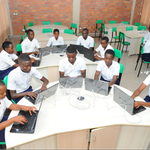
These include robotics labs, digital classrooms, and teacher training programmes, ensuring technology becomes part of everyday learning rather than sitting idle.
In Togo, Planet one is in discussion to devlop seven STEM focused high schools grounded in science, ICT and innovation. These projects show that when infrastructure, training and curriculum advance together, digital education becomes a pathway, not a promise.
As Africa steps into this new chapter, digital education will shape how far and how quickly the continent can rise. Around the world, employers are struggling to recruit and retain digital talent.
The European Union alone expects a shortfall of nearly four million technology professionals by 2027. This global scarcity is forcing countries to look beyond their borders for the skills they need.
With digitally delivered services now making up more than half of global service exports, Africa has a significant opportunity if it starts teaching tech skills early, consistently, and at scale.
The path forward is clear: invest early, build strong foundations, and prepare learners for a world that urgently needs digital skills.
Mr Sanjeev Mansotra is the Chairman of Planet One Group, a purpose-driven organisation advancing sustainable growth across Africa, Asia, and the Middle East.