I recently travelled to Dodoma using Tanzania’s standard gauge railway for the first time. I had been looking forward to it for a while. The SGR has been sold to us as a symbol of modern Tanzania.
The experience was mixed: impressive hardware weighed down by archaic thinking.
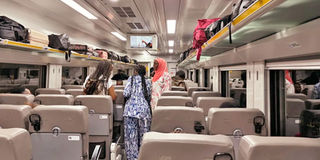
This is the SGR—new, shiny, modern. Three hours between Dar and Dodoma. The absurdity of spending eight hours on a treacherous 500-kilometre highway—dodging buses, potholes and fate—can finally be avoided. The SGR delivers what modern transport should: speed, safety and relief.
The system works. Booking was smooth. Multiple and convenient payment options. At the station, a few hostesses smiled at me. A smile. In a government service. I could get used to that.
We left on time. The cabins are still fresh enough. I decided to use the toilet—my acid test for a good facility. I found it clean. No strange smells. Water running. Toilet paper present. Soap available. Soap in a public facility is the Tanzanian equivalent of a solar eclipse: rare and beautiful. If this is the future, sign me up.
Now to the bad.
I paid Sh241,000 shillings for a return ticket on the so-called Royal Express. I didn’t think much of it until I met another passenger who casually mentioned that Ordinary Lines charge Sh35,000 and SH50,000. That is when it became clear I was being taken for a ride. Literally.
One reason: there was nothing royal about that Royal Express. Same seats. Same layout. No sleeping couches. No Wi-Fi. No restaurant car.
No entertainment. No attempt to justify the price whatsoever. The only difference is that they hand you a few snacks and shave an hour off the travel time. It looks like TRC does not understand how a premium service work.
That probably explains the ghost-cabins: 74 seats, barely 10 passengers—both trips. Do we really believe Tanzanians reject comfort? Or is TRC choosing empty seats over sensible pricing? With SGR economics already shaky, running empty trains is the fastest route to becoming another Tazara.
Then there is the temperature. It is so cold you would think we were crossing Siberia. With windows that do not open, you are effectively trapped inside a refrigerated metal tube. “This is Tanzania,” I thought, “why set the thermostat so low?”
Nearing Dar on the return trip, the train stopped in one station for possibly 15 minutes. Then there is the temperature. It is so cold you would think we were crossing Siberia. With windows that do not open, you are effectively trapped inside a refrigerated metal tube. “This is Tanzania,” I thought, “why set the thermostat so low?”
Which brings me to the ugly.
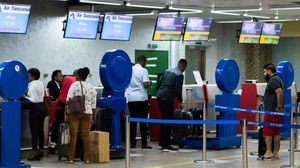
The SGR has adopted bizarre, pseudo-airport routines. Why the excessive security for a domestic train? People travel daily by bus, by other trains, by ferries—is the threat only on SGR? In many countries, you walk onto a train with a ticket, even minutes before departure. Yet for the SGR, passengers must arrive two hours early, line up and submit to rituals that add neither safety nor value.
And then there are the food and drink restrictions. You can carry grapes but not mangoes. Grapes require an extra fee: your fruit might affect aerodynamics.
A 15‑wagon locomotive that can pull 1,000 tonnes is worried about your 30‑kilogramme luggage limit. Instead of limiting the number of bags, they limit the weight and content. Figure that out.
On my return trip, I had two bottles of Kilimanjaro water and an unfinished soda. I had not eaten all day. Security insisted I throw them away. Drinks – not chemicals. Why? Well, because of “regulations”.
I had some time to spare, so I decided to test whether thinking was allowed. I asked to see a manager and was taken to a desk with four officials. I asked a simple question: Is it illegal to drink water on a train? Silence.
Then came the sacred phrase: “It is the regulation.” Fine. But regulations exist to serve a purpose. What purpose does this one serve? Eventually, one of them hinted: station and onboard vendors must be protected.
And there it was. The real reason for banning outside food and drinks is not safety—it is revenue protection. So, the problem is not the drink; it is where you bought it. I am forced to throw away my water so that I can buy theirs.
I told them I was not comfortable throwing away perfectly good water and offered to share it with them instead. Next time I will buy a whole carton of water for the trip.
The SGR is powerful infrastructure. For now, it works. But passengers are still treated as subjects. So long as the philosophy stays “we set the rules, you obey,” the SGR will never fulfil its promise.
Infrastructure can be imported. Excellence cannot. And that attitude—the conviction that citizens exist to serve the system, not the reverse—is the mother of everything that will eventually go wrong with the SGR.
Charles Makakala is a Technology and Management Consultant based in Dar es Salaam
Register to begin your journey to our premium contentSubscribe for full access to premium content