Refineries, ports and the future of East African integration – 2
By Anna Tibaijuka
In the first article, I argued that East Africa should first determine what regional petroleum and petrochemical system it needs by 2050 before debating which country or investor should host particular facilities.
That raises the next question: should we judge potential locations by the infrastructure they possess today, or by what they could become after thirty or fifty years of development?
A private investor naturally considers present conditions—port depth, roads, pipelines, market size, land, electricity, skills and construction costs.
Governments planning for 2050 must look further. They must ask not only, “What is cheapest today?” but also, “Where can we create the strongest competitive advantage for the next generation?”
This is the difference between present and dynamic comparative advantage.
Comparative advantage is not fixed. Infrastructure, technology, new resources and changing markets can transform the economics of a location. Development itself can create advantages that do not exist today.
That principle is highly relevant to the refinery debate.
Kenya has important advantages today
On present conditions, Kenya has a strong case.
Mombasa is East Africa’s most established commercial port and petroleum logistics centre. Lamu offers deep-water capacity and substantial expansion space. Kenya also has a large petroleum market and developed distribution networks.
These are genuine advantages.
But it does not automatically follow that the location strongest today must also be the best location for the regional energy-industrial system we want in 2050.
That still has to be demonstrated.
Tanga’s economic geography has changed
Tanga presents a different case.
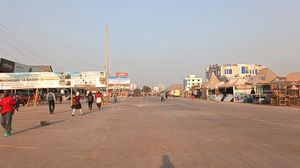
For many years it was a relatively modest port. Uganda’s discovery of oil and the development of EACOP changed its economic geography.
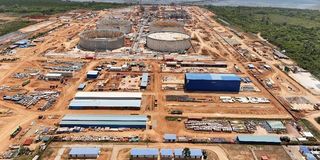
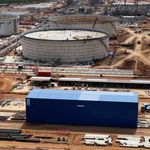
A major crude-oil pipeline now links Uganda’s petroleum resources directly to the Tanzanian coast. Tanzania, Uganda and Vitol are also exploring a regional energy hub at Tanga involving refining, storage, logistics and distribution.
Tanzania additionally possesses substantial natural-gas resources.
These developments create possibilities that did not exist when earlier decisions were made about Tanga’s long-term role.
The relevant question is therefore no longer simply: What can Tanga handle today? It is: What could the wider Tanga corridor become if refining, petrochemicals, pipelines, storage and port development were planned together?
Mwambani deserves a fresh appraisal
This is where Mwambani becomes relevant.
The Mwambani area south of Tanga was previously considered for deeper port development. The proposal did not proceed, and subsequent investment concentrated on improving the existing Port of Tanga.
That may have been the correct decision under the assumptions prevailing at the time. But those assumptions have changed.
Earlier planners were not dealing with an EACOP terminus, a possible major regional refinery, or the prospect of a broader petroleum and petrochemical complex centred on Tanga.
Reconsidering Mwambani therefore does not mean automatically reviving an old project. It means asking whether new economic circumstances justify a new appraisal.
That appraisal should compare credible full-development alternatives.
What would it cost to develop Tanga-Mwambani to the maritime capacity required by a large energy complex? What would it then be capable of handling? How would its logistics costs compare with Lamu or Mombasa? How much land would remain for future industry?
How easily could it connect crude oil, natural gas, regional markets and international shipping? Those are more useful questions than comparing today’s unequal starting points.
Think in terms of the completed system
Large infrastructure investments can shape economic geography for decades.
An existing location may have lower initial costs because roads, berths and services are already available. But congestion, land prices or physical constraints may make later expansion increasingly expensive.
A greenfield location may cost more initially but offer greater long-term flexibility. Neither is automatically superior. What matters is the total cost and benefit over the life of the system.
This is why strategic planning must also preserve options.
Nobody knows exactly what East Africa’s petroleum demand, petrochemical industry or shipping requirements will look like in 2050. Nor do we know what additional oil or gas discoveries may occur.
Good planning does not require building everything today. It requires avoiding decisions today that unnecessarily close valuable possibilities tomorrow.
Land for future industrial expansion can be reserved. Pipeline corridors can be protected. Environmental baselines can be established. Port designs can allow additional capacity to be added if demand justifies it. That is not overbuilding. It is planning for scalability.
The issue is not Tanga versus Kenya
None of this proves that Tanga is superior to Lamu or Mombasa. Nor does it establish that Mwambani must be developed.
Those conclusions require proper engineering, environmental and economic analysis.
But neither should Tanga’s long-term potential be dismissed simply because another port is deeper or more developed today.
The correct comparison is between what each location can realistically and competitively become by 2050.
And that leads directly to another factor that can materially change refinery economics: the size of ships a port can handle.
Large merchant refineries depend upon efficient movement of crude oil and refined products. Port depth, vessel size and terminal design therefore become economic variables, not merely engineering details.
In the next article, I will examine why ship size matters and why the Tanga-Mwambani corridor deserves renewed attention when East Africa considers the maritime requirements of a future regional refinery.
Prof Anna Kajumulo Tibaijuka is a former Tanzanian Cabinet minister and former United Nations Under-Secretary-General and Executive Director of UN-HABITAT