Refineries, ports and the future of E.African integration – 1
By Anna Tibaijuka
East Africa may be approaching one of those moments when an investment decision becomes a test of a much larger political idea.
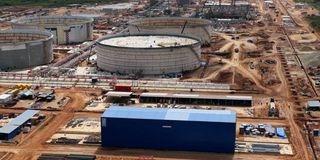
Uganda is developing its oil resources and plans a refinery at Hoima. EACOP brings Ugandan crude to the Tanzanian coast at Tanga. Tanzania, Uganda and Vitol have agreed to explore a regional energy hub at Tanga involving refining, storage, logistics, trading and distribution. At the same time, Aliko Dangote has been considering a very large refinery in Kenya.
Each project can be assessed on its own merits. But should it be?
The larger question is whether East Africa is planning these investments as parts of one regional economic system, or whether our countries are still building separate national systems that merely trade with one another.
In other words: is the East African Community becoming a true economic community, or are we still principally a common market?
I use “economic community” here in a practical sense. A common market allows goods, services, capital and people to move more freely across borders. A deeper economic community must eventually influence how major infrastructure is planned, where strategic industries are located and how regional resources are used.
We have made real progress. The EAC has a Customs Union and a Common Market, regional trade has grown, and infrastructure increasingly crosses borders. The Community itself has expanded from the original Kenya, Tanzania and Uganda to eight Partner States.
But market integration eventually raises a harder question: what happens when we must decide where the major factories themselves should be built?
Trading together is easier than planning together.
President Yoweri Museveni identified this problem in a 2004 speech on East African integration. He warned that neighbouring states could end up making parallel efforts instead of coordinated ones, each competing separately to attract similar investments. He also made the deeper point that a common market does not by itself guarantee the optimal use of the region’s natural resources.
Twenty-two years later, that warning is more relevant. Uganda has oil. Tanzania has natural gas and the EACOP outlet at Tanga. Kenya has Mombasa and Lamu, with major maritime and logistics capacity. The regional market is also vastly larger.
The important question is therefore no longer whether Tanzania, Kenya or Uganda can each build a refinery. They can. It is what combination of refineries, ports, pipelines, storage and related industries would produce the greatest long-term benefit for East Africa as a whole.
One way to think about this is to remove the political borders from the map for a moment. Leave Uganda’s oil, Tanzania’s gas, the ports and the population centres where geography placed them. Then ask engineers and economists where they would locate refineries, petrochemical plants, ports and pipelines if the objective were the lowest long-term cost and the greatest regional industrial benefit.
That gives us something close to a regional economic optimum.
Then put the borders back. Now comes the political problem.
Suppose the most efficient location for a major refinery is Tanzania. Kenya may reasonably ask what it gains. Suppose it is Kenya. Tanzania and Uganda may ask the same question.
These are legitimate concerns, but they are different from the efficiency question. First ask: what arrangement creates the greatest total East African benefit? Then ask: how should those benefits be shared fairly?
If we confuse the two, we may try to solve the distribution problem by duplicating expensive infrastructure. Several refineries may well be justified if they serve different functions, scales or markets. The problem arises when scarce capital creates capacity that merely reproduces what could be provided more efficiently elsewhere in the regional system.
Private investors and governments also have different responsibilities. An investor will choose the location offering the best financial return. Governments must consider a wider social return: employment, energy security, technology, foreign-exchange savings, industrial development, infrastructure, environmental costs and regional integration.
The refinery debate should therefore not begin with Tanga or Lamu, Dangote or Vitol, Kenya or Tanzania.
The first question should be: What petroleum and petrochemical system does East Africa need by 2050?
Only then can we decide what role each location should play.
That is the real refinery test.
But before deciding where tomorrow’s refinery should go, another question must be answered. Should we judge Tanga, Lamu and Mombasa only by the infrastructure they possess today, or by what each could become after 30 or 50 years of development?
That distinction between today’s comparative advantage and tomorrow’s potential comparative advantage is the subject of the next article: should East Africa plan around the economic geography we have inherited, or the economic geography we want to create by 2050.
Prof Anna Kajumulo Tibaijuka is a former Tanzanian Cabinet minister and former United Nations Under-Secretary-General and Executive Director of UN-HABITAT