The actions of one individual can become shorthand for alleged continental deficiencies
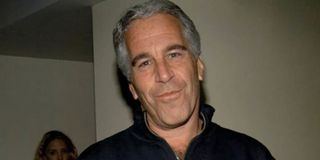
For months, global attention has repeatedly returned to the name Jeffrey Epstein. The American financier and convicted sex offender, who died in 2019 in a US prison under highly questionable circumstances, left behind not only traumatised victims but also a troubling network of associations that continues to provoke debate.
Renewed scrutiny followed the release of court documents in 2024, 2025 and early 2026, widely referred to as the “Epstein files”. These disclosures did not simply revisit the crimes for which he had already been convicted.
They shed further light on the extraordinary web of connections he cultivated over many years. Epstein’s social and professional circles extended into politics, finance, academia and entertainment. Presidents, prime ministers, royalty, billionaires and celebrities appeared at various points within his orbit.
It is crucial to be clear: association does not automatically imply complicity.
Being photographed with, travelling alongside, or attending events hosted by a disgraced individual does not in itself establish knowledge of wrongdoing.
Yet the scale and prominence of those connections have unsettled public opinion and raised legitimate questions about how power operates and how scrutiny is applied.
But let us pose an uncomfortable question: what if Jeffrey Epstein had been African?
What if similar allegations had emerged about an African businessman with documented ties to sitting and former African heads of state? What if wealthy nations had evidence, or even suspicion, that a network of political leaders was socially or professionally linked to him?
Would there not have been immediate calls for independent international investigations? Would global advocacy groups, many of them headquartered in the West and funded by Western governments, not have demanded accountability?
Would there not have been urgent debates about systemic corruption, elite complicity and the failure of African institutions? Would there not be calls for suspension of budgetary aid?
One can reasonably imagine the language that would have followed including “culture of impunity”, “state capture” and “failure of governance”. The involvement of international prosecutors might well have been proposed.
Under the Rome Statute of the International Criminal Court, crimes such as rape and sexual exploitation, when committed as part of a widespread or systematic attack against civilians, may constitute crimes against humanity.
The International Criminal Court has, in the past, pursued cases largely concentrated on the African continent, a fact that has fuelled long-standing debate about selective justice.
This is not merely conjecture. Several African leaders and scholars have argued that global accountability mechanisms appear more assertive on the continent than elsewhere.
Whether one agrees entirely with that assessment or not, the perception of uneven application has gained traction.
Without defending Epstein and his connections or to excuse any wrongdoing by anyone, anywhere, the fact is that justice must apply equally. Victims deserve truth and accountability regardless of geography. The point, rather, is about consistency.
Too often, scandals in African countries are interpreted not simply as personal moral failures but as evidence of deeper, structural dysfunction.
The actions of one individual can become shorthand for alleged continental deficiencies. By contrast, crises in powerful democracies are more readily framed as exceptions within otherwise stable systems.
Such disparities matter. They influence diplomatic posture, investor confidence and public trust in global governance.
They shape decisions about sanctions, intervention and reputational risk.
They determine whose sovereignty is treated as inviolable and whose is treated as conditional upon external approval.
To be clear, this argument does not seek to minimise the gravity of Epstein’s crimes or the suffering of his victims. Sexual exploitation of minors is abhorrent wherever it occurs.
If powerful individuals knowingly facilitated abuse, they must face justice — whether in Washington, Paris, Lagos or Pretoria.
The deeper issue is consistency. A genuinely rules-based international order must apply its standards evenly.
If proximity to a criminal in one part of the world is treated as incidental while similar proximity elsewhere is treated as presumptive evidence of complicity, accusations of selective morality will persist.
“What if Jeffrey Epstein were African?” is therefore less about nationality than about principle. It is a test of whether global outrage and institutional scrutiny are calibrated according to evidence or according to power.
It asks whether the same caution, the same respect for due process and the same restraint in drawing conclusions would be exercised.
Until international accountability is seen to operate without fear or favour, scepticism will endure. Justice must not only be done; it must be demonstrably even-handed. The credibility of global institutions depends not on how forcefully they pursue the weak, but on how consistently they treat the strong.