What the 284 reforms mean for global capital

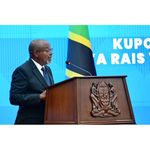
President Samia Suluhu Hassan receives the report of the Presidential Commission on the Review of Tax System Reforms from the Commission’s chairperson, former Chief Secretary, Ombeni Sefue, at State House in Dar es Salaam On March 18, 2026. PHOTO | STATE HOUSE

On March 18, President Samia Suluhu Hassan received a report at State House that had been 35 years in the making. The Presidential Commission on Tax Reforms handed over 284 recommendations to overhaul Tanzania's tax system — the first structural review since the Mtei Commission of 1989 to 1991.

Seven days earlier, Finance Minister Khamis Mussa Omar had presented a budget of Sh62.3 trillion in which foreign aid would finance just 0.9 percent of total spending.

Read separately, these are a tax reform and a budget. Read together, they are a sovereign statement: Tanzania is done asking permission to develop.

The context matters. I advise investors entering this market, and the question I am asked most often is not about returns — it is about predictability. Will the rules I entered under still apply when I try to exit? That question has no clean answer today.

The Iran war has pushed oil past $100 a barrel, closed Middle Eastern airspace, and cut Tanzania's meat export shipments by 62 percent in a single month.

In that environment, capital does not go looking for risk. It goes looking for the rare market that has done the hard institutional work — and Tanzania, in the space of one week, has just made the most compelling case in years that it is becoming that market.

However, a case is not yet a contract. The Sefue commission's report matters not because it promises reform, but because it names officially the structural failures that practitioners in this market have known for years: unpredictable tax rates, overlapping levies introduced without coordination, a dispute resolution process so slow that businesses routinely chose informal settlement over formal appeal.

 The most damaging of all: the systematic refusal by Tanzania Revenue Authority (TRA) to honour incentives that Tanzania Investment and Special Economic Zones Authority (Tiseza) had already certified — backed by diplomatic missions that wrote formally to Tanzania's then-Foreign Affairs Minister citing unevidenced back-tax claims dating up to fifteen years and tax bills with no legal basis.

That last failure has a specific legal anatomy. I wrote in this column in January that Tiseza and TRA operate under two sets of Parliamentary authority that directly conflict. Tiseza issues certificates promising defined tax treatments under the Tanzania Investment and Special Economic Zones Act.

TRA then assesses the same investor under separate tax statutes and treats those certificates as unenforceable. The investor is trapped between two arms of the same government, each acting lawfully under different laws.

No amount of investor roadshows fixes that. It requires legislative resolution and the commission has now said so explicitly.

So, what should a sophisticated investor watch for? Not the number 284. Numbers are comfort. Watch for three things: whether the dedicated Tax Division in the High Court — with binding timelines — gets resourced and staffed, or remains a recommendation on paper; whether the Tiseza-TRA certificate conflict is resolved in primary legislation rather than a joint memorandum that neither institution will enforce; and whether the shift to digital, faceless tax administration actually removes the discretion that has made compliance a negotiation rather than a process. These three alone would transform the investment climate. The rest is reform by press release.

The government deserves real credit here. Full implementation is projected to raise revenue by Sh11 trillion within three years and lift the tax-to-GDP ratio toward 18 percent — from a current 13.7 percent sustained by a narrow formal sector while 60 percent of the economy operates informally.

A budget that finances itself is not just a fiscal achievement. For an investor structuring a ten-year position, it is a signal that the government's incentives are increasingly aligned with growth rather than extraction.

The 284 reforms are the most serious attempt in a generation to close that gap. The window to act on them — before global capital finishes repositioning and before the reform momentum loses political oxygen — is not wide.

I work with investors navigating exactly this moment. The ones who move while the architecture is still being written tend to shape it. The ones who wait for certainty find they are negotiating with those who did not.