How Petro Group’s triple crown win is fueling Tanzania’s industrialisation and Vision 2050

The Minister for Industry and Trade, Judith Kapinga (right), presents Petro Group Executive Director, Adithya Satish Kumar, with the 2026 President’s Award for Best Industrial Producer (PMAYA) during the awards ceremony held on September 2, 2026, at Super Dome, Masaki, Dar es Salaam.
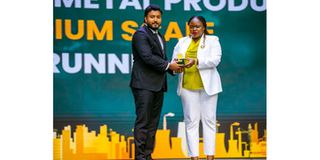

In a historic feat for Tanzania’s industrial sector, Petro Group has secured three prestigious accolades at the 2026 President’s Manufactur­er of the Year Awards (PMAYA).

The group emerged victorious across three distinct, highly com­petitive strategic sectors: Energy & Renewable Energy, Logistics & Transport, and Metal & Metal Prod­ucts.

This remarkable achievement stands as a profound validation of the company’s long-term corporate strategy and underscores how its commitment to operational excel­lence is being felt across the entire national economy.

Commenting on this milestone, Adithya Satish Kumar, the Execu­tive Director of Petro Group, noted that winning these awards across the company’s primary subsidiaries Pet­rofuel, Petro Logistics, and Petropak represents a major breakthrough.

Minister for Industry and Trade, Judith Kapinga (right), presents Petro Group Commercial Manager, Vishal Rajput, with the 2026 President’s Award for Best Industrial Producer (PMAYA) during the awards ceremony held on September 2, 2026, at Super Dome, Masaki, Dar es Salaam.

“Winning these awards across Petrofuel, Petro Logistics, and Pet­ropak is a tremendous honour and a validation of our long-term strat­egy,” Kumar stated. “This achieve­ment means that our commitment to operational excellence is being felt across the entire Tanzanian econo­my,” says Kumar.

The engine of success: People and heritage

According to Kumar, this consecu­tive success is neither a coincidence nor an overnight triumph. It is the direct result of the daily grind, long hours, and seamless teamwork of the company’s dedicated workforce.

Backed by a unified vision from family leadership and driven by the founders’ foundational principles, the group has maintained a relent­less focus on delivering consistent quality.

Petro Group’s journey began as a dedicated family enterprise focused on solving fundamental supply chain challenges.

Over the years, it has transformed into a diversified portfolio manag­ing critical national infrastructure, successfully scaling its subsidiaries independently while maintaining cohesive, family-driven corporate standards.

This growth took a pivotal step in 2026 with a comprehensive corpo­rate rebranding, a regional growth plan, and the relocation of central operations to a modernised head­quarters in Dar es Salaam City, which has unified corporate synergy and allowed Petrofuel, Petro Logis­tics, and Petropak to operate with greater agility.

Operational excellence across strategic sectors

The group’s impact is driven by its three award-winning subsidiar­ies, each dominating its respective niche:

Petrofuel (Energy & Renewable Energy): Ensuring supply security while actively exploring transition­al energy solutions, Petrofuel is upgrading storage and distribution infrastructure to minimise loss and optimise efficiency.

By integrating modern monitor­ing technologies into its fuel dis­tribution network, the company is reducing its carbon footprint and providing vital Tanzanian industries with uninterrupted, reliable, and cleaner access to power.

Petro Logistics (Logistics & Trans­port): Operating as the backbone of Petro Group’s supply chain, this subsidiary leverages advanced fleet management software and GPS tracking to optimise routing, reduce transit times, and lower fuel consumption.

Coupled with a modern, highly efficient fleet and continuous driver training, Petro Logistics ensures that goods move safely and predictably, bolstering the broader Tanzanian trade corridor and connecting local markets with regional borders.

Petropak (Metal & Metal Prod­ucts): Geared toward local value addition and strengthening domes­tic manufacturing, Petropak is actively expanding its industrial footprint to reduce dependency on imported finished products.

A key milestone is the recent launch of its commercial tyre retreading factory in Mbagala along Kilwa Road. This facility direct­ly promotes the circular economy, maximises resource lifespan, and showcases the group’s dedication to building a self-reliant manufactur­ing sector in Tanzania.

Investing in technology and community

To support its operations at scale, Petro Group is aggressively investing in centralized IT infrastructure to enable data-driven decision-making across all subsidiaries, while upgrad­ing corporate offices and expanding industrial facilities like the Mbagala plant.

Yet, its most significant invest­ment remains its people, prioritiz­ing ongoing skills development, cross-training, and leadership programs to ensure the workforce adapts to new technologies and best practices.

As a wholly Tanzanian, fami­ly-owned business, the group is deeply embedded in the local com­munity. It prioritises local hiring and extensive on-the-job training, suc­cessfully transforming entry-level workers into highly skilled technical operators and managers.

Furthermore, it supports local SME growth through localized supply chains, sourcing materials domestically whenever possible, while its sustainability initiatives in tyre retreading and fleet efficiency actively reduce industrial waste and emissions.

Minister for Industry and Trade, Judith Kapinga (right), presents Petro Group Head of Special Projects, Akhil Anil, with the 2026 President’s Award for Best Industrial Producer (PMAYA) during the awards ceremony held on September 2, 2026, at Super Dome, Masaki, Dar es Salaam.

Driving towards Vision 2050

Looking ahead, Petro Group is embarked on aggressive expansion and diversification to support Tan­zania’s rapid economic growth.

Petrofuel is scaling its retail fuel station network with multiple stations under construction and active nationwide land acquisitions, anchored by plans for a state-of-the-art storage terminal.

To support this retail expansion, Petro Logistics is expanding its logis­tics capacity by adding new trucks and tankers to its active fleet.

Meanwhile, Petropak is expand­ing into new metal manufacturing sub-sectors and strategically plan­ning an entry into plastic manufac­turing.

Kumar envisions a bold future where Petro Group acts as a core driver for Tanzania’s Vision 2050. “By heavily investing in robust logis­tics networks, domestic manufac­turing capacity, and reliable energy distribution, we are directly con­tributing to the country’s industri­alization agenda and helping build a self-reliant, globally competitive economy,” Kumar concluded.