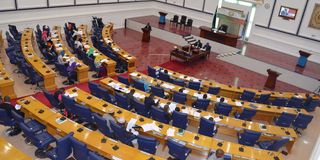
Unguja. Legal debates and a special report on the drug situation in the Isles are expected to dominate the fourth meeting of the 11th Zanzibar House of Representatives, which begins on Wednesday, September 9, 2026.
The session scheduled to run from September 9 to September 18, 2026 is considered to hold unique importance due to the nature of the bills and reports.
Addressing journalists on Monday, September 7, 2026, the Zanzibar House of Representatives acting clerk, Mr Ramadhan Khamis Juma, said the House has received 302 questions to be asked and answered.
On legislative matters, he stated that the House will deliberate on two major bills that cleared the first reading stage during the previous sitting.
“The first is the Zanzibar Newspapers Corporation Bill, aimed at repealing the 2008 law to establish a new entity capable of operating commercially,” he said.
The other legislation is the Fisheries Development and Marine Conservation Authority Bill, which seeks to repeal the 2010 fisheries law.
It aims to create a new authority to manage and conserve marine resources more efficiently, a critical component of Zanzibar’s blue economy.
House Operations Director, Mr Othman Ali Haji, explained that the initial agenda schedules 174 questions for processing during this week-and-a-half session.
Mr Othman noted that the number of questions may fluctuate depending on the pace of debate and management of daily business.
“Every member has a constitutional right to ask questions without limit, provided they comply with procedures requiring submissions to the Clerk at least 21 days before the commencement of the sitting,” he stated.
Speaking on the Fisheries Development and Marine Conservation Authority Bill, Legal Advisory Services Director, Ms Nasra Awadh Salmin, noted that it aims to replace the 2010 legislation to enhance efficiency and bolster Zanzibar’s blue economy.
Regarding the newspaper legislation, Ms Salmin explained that the amendments aim to empower the corporation to own printing presses, expand content distribution, and achieve commercial sustainability.
Despite the significance of these bills, the House recorded low public participation during the consultation period.
Ms Salmin expressed regret that despite publishing the bills on the House website pursuant to Standing Order 89, no public feedback was received before the committee convened.
“Unfortunately, we received no feedback for either bill prior to the committee sitting. There was zero input from the public,” said Ms Salmin.
Consequently, the committee was forced to engage directly with invited stakeholders to gather input for improving the proposed laws.
Another major item on the agenda is the special report examining the drug situation in Zanzibar for 2025.
Ms Salmin stated that the House awaits the official report from the relevant minister, which will undergo committee review before being presented in the House.
Sharing their perspectives, residents told The Citizen that enthusiasm was high regarding the proposed changes to the fisheries law, citing shortcomings in the current framework.
A fisheries stakeholder, Mr Isham Issa Haji, noted that the existing law is outdated and expressed hope that the new legislation will address current industry challenges.
Specific grievances under the existing law include provisions prohibiting fishers from entering the sea with diving goggles or gas burners.
Another resident, Ms Faumu Mussa, remarked that while citizens lacked sufficient notice to submit formal views, they remain confident the House will enact legislation aligned with modern realities.