Mwinyi opens Kizimkazi Festival, urges shift to deep-sea fishing, blue economy

Zanzibar President Dr Hussein Ali Mwinyi listens to explanations as he tours various institutional exhibition booths after opening the Kizimkazi Festival in South Unguja Region, Zanzibar on Wednesday, August 12, 2026. PHOTO | JESSE MIKOFU

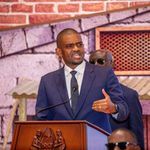
Unguja. The President of Zanzibar, Dr Hussein Ali Mwinyi, has urged citizens and business stakeholders to leverage the annual Kizimkazi Festival to promote trade, tourism, and investment opportunities, particularly within the blue economy sector.

He called for sustained innovation and firm strategies to showcase the archipelago's tourist attractions, expand commercial prospects, and strengthen national solidarity by encouraging public participation in economic and social development.

Dr Mwinyi made the remarks on Wednesday, August 12, 2026, while officially opening the Kizimkazi Festival and trade exhibition at the Dimbani grounds in South Unguja Region.

"Let us use this opportunity to promote ourselves in tourism, business, and investment to grow our country's economy," said Dr Mwinyi.

He noted that the festival continues to grow in popularity, drawing participants from across Zanzibar, Mainland Tanzania, and international destinations.

Furthermore, Dr Mwinyi commended the creative line-up of activities organised for the festival, including dhow racing, art exhibitions, traditional culinary displays, sports competitions, and the inauguration of community development projects.

"These planned activities honour and preserve our culture for future generations, while serving as a platform to motivate development initiatives," said Dr Mwinyi, encouraging members of the public to visit the trade exhibition to gain insights and strengthen their business operations.

He added that the festival aligns with government plans to diversify tourism offerings through cultural festivals and international conferences, supporting Zanzibar's broader goal of increasing annual tourist arrivals from 800,000 to 1.5 million.

Achieving this target, Dr Mwinyi explained, requires designing signature events alongside safeguarding the Isles' natural assets, including its pristine beaches and rare endemic wildlife.

He noted that Zanzibar is uniquely blessed with a wide variety of fruits, spices, historical architecture, distinct cuisine, and a renowned culture of hospitality.

"These are among the key attributes that attract visitors to Zanzibar," he said, expressing optimism that the festival will continue to drive both international arrivals and domestic tourism.

Dr Mwinyi highlighted that South Unguja Region is strategically positioned, bounded by the sea across all its districts and possessing extensive open land, critical resources that must be sustainably managed and protected.

He directed regional and district administrative leaders to use the festival to market local opportunities.

"Advertise your available land and the vast investment potential at sea to investors, so that these resources bring greater productivity and tangible benefits to citizens and the government," he instructed.

Shift to deep-sea fishing

Dr Mwinyi observed that despite centuries of reliance on coastal waters, traditional artisanal fishing has not adequately uplifted livelihoods or contributed to the national economy at the desired scale.

He reiterated the Revolutionary Government’s commitment to transitioning fishers towards modern deep-sea fishing by providing modern gear and vessels, alongside establishing seaweed processing factories to add value to local harvests.

To facilitate this transition, he said the government is constructing modern landing sites, improved markets, and dedicated fishing ports.

On seaweed production, Dr Mwinyi emphasised: "We have an immense opportunity to maximise returns from this crop by scaling up output for global markets so that farmers secure better prices."

He commended private sector investors for partnering with the government to boost tourist arrivals, pay taxes, and generate employment opportunities for young people.

"The government will continue to extend full cooperation and keep its doors open to facilitate investment, particularly in tourism, manufacturing, and the blue economy," he assured.

Speaking at the event, South Unguja Regional Commissioner, Ms Hamida Mussa Khamis, noted that the festival has brought together numerous public and private institutions, providing a major economic boost to the region.

"Institutions continue to invest here, and ample land remains available. The response to this festival has been overwhelming, with both large and small hotels operating at full capacity," said Ms Khamis.

The Mwanamke Initiative Foundation (MIF) Chairperson, Ms Wanu Hafidh Ameir, whose organisation co-organises the event, highlighted MIF's role in delivering health and educational services during the festival.

"There are still community challenges that require collaborative efforts from all stakeholders to address," stated Ms Ameir.