Rationing of electricity persists in Zanzibar despite new interventions
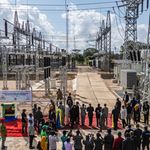
Technicians from the Zanzibar Electricity Corporation (Zeco) carry out maintenance work at the Mtoni power transmission station in Unguja. PHOTO | COURTESY
Unguja. Power rationing remains a major challenge in Zanzibar, particularly on Unguja Island, despite the Zanzibar Electricity Corporation (Zeco) entering into several agreements aimed at stabilising supply.
Currently, Zanzibar receives electricity through the National Grid from Mainland Tanzania via 132 kilovolt (kV) lines to Unguja and 33kV lines to Pemba.

However, the power received falls short of what is transmitted, resulting in significant losses and an ongoing supply deficit, according to Zeco officials.
They say Unguja is facing a shortfall of more than 30 megawatts (MW), a situation that has contributed to frequent and unplanned power outages in several areas, disrupting daily life and business activities.
It has also been revealed that backup generators used to support power transmission were installed in 2010, following a major outage caused by damage to the undersea power cable linking Kilomoni on the Mainland to Fumba in Unguja.
Residents have voiced growing frustration, saying electricity services have continued to deteriorate, with power cuts occurring without warning and little communication from Zeco.
Mr Kassim Hamdani, a resident of Kisauni, said their area has become notorious for repeated outages, often attributed to ongoing “maintenance works”.
“We keep hearing that Zeco is carrying out improvements on the Fumba line, but we are suffering. Sometimes the power is cut for just two or three minutes and then restored. We do not understand the purpose of these interruptions,” he said.
A fish trader, Mr Ngwali Juma Mahmoud, said the unreliable supply has forced traders to source ice from other areas to preserve fish and avoid losses.
“We now have to freeze ice elsewhere to keep our fish from going bad. This increases our costs and reduces profits,” he said.
Another resident, Ms Asma Mbaraka Hashim, said Zeco should clearly inform the public if power rationing is being implemented so that people can plan accordingly.
“If this is rationing, they should tell us openly so that we can prepare and manage our activities better,” she said and added that Zeco should invest in alternative energy sources such as solar, wind and ocean waves, arguing that reliance on generators is no longer sustainable given the growing demand for electricity.
Responding to the concerns, Zeco Director General Mr Haji Haji said the corporation has switched on generators at the Mtoni power station in Unguja to help ease the shortage.
He said once maintenance work on the generators is completed, they are expected to supply between 20 and 21MW, which should help reduce outages.
Mr Haji added that, in addition to these efforts, the government is holding talks on short-term solutions, including the possibility of generating electricity using a power barge.
In December last year, Zeco signed contracts worth Sh427 billion aimed at upgrading electricity infrastructure by replacing low-capacity 50-millimetre lines with higher-capacity 150-millimetre cables.
Among the agreements is a Sh385 billion contract with Dubai-based Elecmech Switchgears to strengthen the power network. The seven-year project will be implemented in four phases, including the installation of a 20MW energy storage system and the construction of a solar power plant with a capacity of 30MW.
Other components of the project include the installation of fault-detection equipment, upgrading transmission routes and rehabilitating 210 kilometres of power lines.
Zeco has also signed a Sh42 billion contract with Central Electricals International Limited to improve the electricity system in Stone Town. The project involves the construction of two power substations and new transmission lines.
Mr Haji said the projects are designed to eliminate low-capacity lines and strengthen the network to handle increased electricity demand.
“The limited capacity of the existing transmission lines leaves the corporation with no option but to cut power to avoid damage to the system,” he said.
He added that once completed, the projects will enable electricity storage and ensure continuity of supply even when there are disruptions from the National Grid.
According to Mr Haji, the frequent on-and-off power supply experienced in Zanzibar is largely due to ageing infrastructure, a problem he says will be addressed through the new energy storage systems.
Explaining the government’s broader strategy, the Permanent Secretary in the Ministry of Water, Energy and Minerals in Zanzibar, Mr Joseph Kilangi, said feasibility studies are under way to upgrade the old transmission system, which currently carries 45MW, to enable it to transmit up to 100MW.
He said the island is experiencing power shortages because demand has exceeded the capacity of both the 45MW and 100MW transmission lines from the Mainland.
Mr Kilangi added that the completion of the ongoing contracts will also reduce delays in fault detection and repairs, noting that technicians currently rely on manual inspections, which are time-consuming.
Meanwhile, the Minister for Water, Energy and Minerals, Mr Nadir Abdullatif, said the projects are critical for Zanzibar, as they incorporate modern technologies that will improve Zeco’s efficiency and help address persistent power challenges.
Register to begin your journey to our premium contentSubscribe for full access to premium content