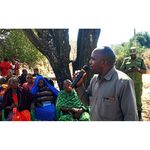
MSI Tanzania provided technical support through outreach programmes and embedded nurses, strengthening provider skills, improving service quality, and ensuring client safety.
Dar es salaam. What started as a modest attempt to link family planning with economic empowerment has, over two years, reshaped how thousands of young people in Zanzibar access health information, services and life skills.
The Sh890 million Start Small project, presented to The Citizen by project manager Ms Domitila Masalla, was implemented between 2024 and 2025 by MSI Tanzania in partnership with the Zanzibar Youth Forum Association (ZAFAYCO).
The project it covered West Urban, Unguja North and Unguja South, targeting adolescents and young people under the age of 25, alongside women and girls of reproductive age.
Rather than treating sexual and reproductive health as a standalone issue, the project deliberately combined family planning education with entrepreneurship and life-skills training—an approach implementers say responded to the realities young people face on the ground.
“We learned early on that young people’s health decisions are closely linked to their economic situation and self-confidence. By integrating family planning, life skills and economic empowerment, we enabled young people to make informed choices about both their health and their future,” Ms Masalla said.
Through 30 supported public health facilities, community outreach programmes, school-based clubs, youth bonanzas and peer-to-peer ‘kijiweni’ networks, the project reached thousands of adolescents and young people across the three regions, many of whom would otherwise have struggled to access youth-friendly services.
According to project records, the initiative contributed to averting an estimated 27,316 unintended pregnancies, 8,945 unsafe abortions and 27 maternal deaths during its lifespan—outcomes that health experts say highlight the importance of accessible and non-judgmental family planning services for young people.
MSI Tanzania, led technical support and service delivery through outreach programmes and an embedded nurse model, working closely with public health facilities. Continuous mentorship helped strengthen provider skills, improve quality of care and ensure client safety.
Annual clinical assessments showed that all service providers involved maintained Level One competence, allowing them to deliver services independently, while supportive supervision addressed gaps related to infection prevention and service provision.
Beyond health facilities, much of the project’s impact was driven at community level. ZAFAYCO mobilised young people through learning-institution outreach, youth-friendly service camps and girls-only sessions delivered using Ministry-approved training manuals. Care clubs in schools and entrepreneurship networks for out-of-school youth helped link health education with practical life skills.
District Education Officer for North A, Juma Abdallah Juma, said the project strengthened awareness among students by delivering information in formats young people could easily relate to.
“The way the education was delivered made it possible for many young people to understand quickly, starting from the lowest levels. This approach significantly boosted awareness in schools and communities,” he said.
Health officials reported similar gains. District Medical Officer from North A, Ms Fatma Abdallah said the project strengthened the capacity of frontline health workers and reduced barriers that often discourage young people from seeking services.
“Health workers were empowered to serve young clients efficiently and without judgement. Young people were given priority, misinformation was addressed, and service uptake improved in our facilities,” she said.
District nursing and reproductive health coordinators noted that the presence of embedded nurses helped build trust among adolescents, making it easier to discuss sensitive family planning and reproductive health issues.
For beneficiaries, the impact was felt most strongly through peer-to-peer engagement. Youth Kijiweni member Zainabu Mwinyi Mwinyi said reaching young people through fellow youths proved more effective than conventional awareness campaigns.
“Through the kijiweni networks and bonanzas, we reached thousands of young people. Because we are young and speak the same language, it became easier for others to open up and seek services without fear or stigma,” she said.
Despite the progress, Ms Masalla said implementers encountered challenges that could not be fully addressed within the project’s lifespan, including limited equipment, staff shortages, inadequate privacy in some health facilities and persistent stigma—particularly against unmarried adolescent girls and young women.
“Some facilities still lack adequate equipment and private spaces for young people, and staff shortages remain a challenge. In addition, stigma continues to discourage some adolescent girls from seeking services,” she said.
She added that geographical barriers, and bureaucratic procedures also constrained implementation in some areas.
“In hard-to-reach communities, distance and transport costs affected access, while administrative processes sometimes slowed down the implementation of planned activities,” Ms Masalla noted.
Still, stakeholders say the project’s achievements outweigh its limitations, with the closure of Start Small marking the end of a pilot phase that demonstrated the effectiveness of integrating family planning with economic empowerment for young people.
“What this project has shown is that when health interventions are combined with economic empowerment, the impact goes beyond service uptake to changing mindsets and behaviour,” she said.
Ms Masalla said lessons from the initiative have directly informed the design of a follow-up programme, Kijana Kwanza, which will run from March 2026 to September 2027 with a stronger focus on public sector strengthening and long-term sustainability.
“Kijana Kwanza will build on these lessons by strengthening public systems so that youth-friendly services continue even after project funding ends,” she said.
For many young people across Zanzibar, she added, the legacy of Start Small extends beyond improved access to family planning services.
“The real legacy is empowering young people to understand the link between their health, opportunities and the choices they make about their future,” Ms Masalla said.
On her part, Deputy Director of Preventive Services at the Ministry of Health Zanzibar, Dr Fatma Mohammed Kabole, said the Start Small project has contributed significantly to strengthening youth-friendly services across the islands.
“Start Small has demonstrated the importance of providing accessible and non-judgemental sexual and reproductive health services to young people.
The Ministry appreciates the integrated approach that combines family planning with economic empowerment, because it addresses the real-life challenges faced by adolescents and young people.”
She said the Ministry is committed to sustaining the gains made through the project, particularly by ensuring that public health facilities continue to offer youth-friendly services.
“Government facilities have been strengthened through mentorship and capacity building, and we are working to ensure that these improvements are maintained. We will continue to support youth-friendly spaces, strengthen provider competence and promote accurate information to reduce stigma.”
Dr Kabole also highlighted the need for male involvement and community support to further improve uptake of family planning services among young people.
“Engaging men and community leaders is essential in ensuring that young women and girls can access services without fear or discrimination.
We encourage all stakeholders, including families, religious leaders and community groups, to support youth empowerment and to work together to create an environment where young people can make informed choices about their health and futures.”