UNDP, Ireland donate electric tuk-tuks to expand legal aid access in Zanzibar
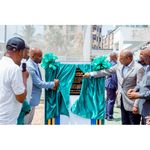
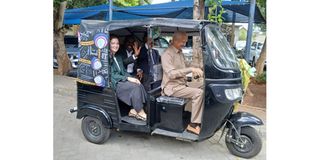
Minister of State in the President's Office for the Constitution, Legal Affairs, Public Service and Good Governance, Haroun Ali Suleiman, starts one of the 14 electric tuk-tuks donated by UNDP and Ireland to support the delivery of legal aid services in Zanzibar. PHOTO | JESSE MIKOFU
Unguja. The United Nations Development Programme (UNDP), in partnership with the Embassy of Ireland in Tanzania, has donated 14 electric tuk-tuks and a Toyota Land Cruiser to strengthen the delivery of legal aid services across Zanzibar, particularly in remote communities.
The donation comes amid persistent complaints from legal aid providers that a lack of transport has prevented them from reaching rural and hard-to-access areas, leaving many vulnerable residents without essential legal services.
The vehicles were handed over to Zanzibar's President's Office – Constitution, Public Service and Good Governance, where they will be used by paralegals and legal aid providers to improve outreach in underserved communities.
Speaking during the handover ceremony on July 1, 2026, the minister responsible for the ministry, Haroun Ali Suleiman, said the vehicles would help address longstanding transport challenges facing legal aid officers, particularly those responding to emergency cases involving women and children.
"Just yesterday, during a meeting of the National Committee on the Prevention of Violence Against Women and Children, regional leaders raised concerns that legal aid officers and paralegals lacked reliable transport to respond promptly to emergency cases. Today's support from UNDP and the Embassy of Ireland is therefore timely," he said.
He also praised the environmentally friendly electric tuk-tuks, urging beneficiaries to maintain them properly.
The donation follows concerns highlighted during the launch of the second phase of the Samia Legal Aid programme, where President Samia Suluhu Hassan, in remarks delivered by Zanzibar President Dr Hussein Ali Mwinyi, said distance had been one of the key obstacles identified during the programme's first phase, preventing many people from accessing legal aid despite needing the service.
UNDP Resident Representative Shigeki Komatsubara said access to justice is a fundamental human right and a cornerstone of sustainable development, yet geographical, financial and social barriers continue to deny many people, especially those in remote areas, the protection of the law.
He said the Land Cruiser would strengthen the government's ability to coordinate and supervise legal aid services across Zanzibar, while the electric tuk-tuks would improve the mobility of paralegals, enable faster responses to gender-based violence and child protection cases, extend services to remote communities and reduce transport costs for civil society organisations.
Komatsubara said the Legal Empowerment and Access to Justice Project (LEAP II) had already delivered significant results, including providing legal aid to 7,500 people through community legal clinics in remote areas and legal education to 13,364 people during Legal Aid Week.
He added that the project had provided psychosocial support to 166 survivors of gender-based violence, legal representation to 199 victims, strengthened the capacity of 201 justice officials, including judges, and trained 50 paralegals, including persons with disabilities, to provide legal assistance, mediation and referrals.
"This is another investment in bringing justice closer to underserved communities, particularly women, children, persons with disabilities and rural populations," he said, while reaffirming UNDP's commitment to supporting the Revolutionary Government of Zanzibar in building a more inclusive and people-centred justice system.
Ireland's Embassy representative, Danai Lazaris, said the donation represented more than the transfer of vehicles, describing it as an investment in people's ability to exercise their rights regardless of distance, poverty, disability or social status.
She said the initiative builds on the achievements of LEAP II, which over the past year has established human rights clubs, gender-based violence prevention clubs and community protection groups, empowered young people as justice ambassadors and supported the economic empowerment of women survivors of violence.
"These are not just statistics. Behind every figure is a person seeking protection, a child learning about their rights, a family resolving a dispute or a citizen gaining confidence that justice is within reach," she said.
One of the beneficiaries, paralegal Mwajuma Khamis Khamis, welcomed the donation, saying transport constraints had previously prevented legal aid providers from reaching some communities, but the new vehicles would significantly improve service delivery.