Zanzibar's Sh800 billion investment seeks to end power outages

Unguja. Persistent electricity outages in Zanzibar could soon get solution after the government committed Sh800 billion to upgrade power infrastructure in the isles.

Zanzibar currently receives electricity from mainland Tanzania through undersea transmission cables operated by the Tanzania Electric Supply Company (Tanesco).

 Unguja is served by two submarine cables — one with a capacity of 45 megawatts installed in 1980 and now utilised at 98.8 percent, and another with a capacity of 100 megawatts that is operating at 97.3 percent.

Both cables have nearly reached their transmission limits, leaving the Isles with a reliable supply of about 135 megawatts and a deficit estimated at 65 megawatts.

Speaking to sister paper Mwananchi, Zanzibar’s Minister for Water, Energy and Minerals, Mr Nadir Abdullatif, said the ministry, through the Zanzibar Electricity Corporation (Zeco), has signed several contracts with companies to strengthen the power infrastructure.

He said one of the agreements was signed with Dubai-based Elecmech Switchgears to replace about 1,000 kilometres of power lines in a project worth $159 million (about Sh411 billion).

“Zanzibar currently has a reliable supply of 135 megawatts, while demand has increased by about 65 megawatts. Ongoing projects are expected to significantly address this gap,” he said.

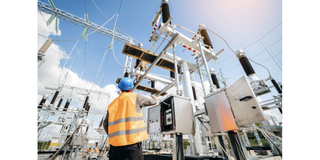
Mr Abdullatif added that while awaiting completion of the projects, Zanzibar has already received four transformers weighing 105 tonnes each. Two have been installed in Unguja South Region and the remaining two in Unguja North Region.

He said that by the time the projects are completed in 2028, electricity demand in Zanzibar is projected to rise further, requiring at least 100 megawatts of additional capacity to ensure stable supply.

Currently, Zanzibar relies heavily on electricity imported from mainland Tanzania through three submarine cables — a 100MW line, a 45MW line connecting mainland Tanzania to Unguja, and a 20MW line running from Tanga to Pemba.

However, the minister noted that due to their age, the cables can no longer transmit electricity at their original capacity.

“Power outages are not caused solely by ageing infrastructure. At times, demand surges due to ongoing development projects,” he said.

To address the situation, the government has undertaken several measures, including rehabilitating 30 generators at the Mtoni power station in Unguja.

The ministry has also brought in a temporary power-generation vessel that will supply electricity for between eight months and one year as new infrastructure is installed, noting that the arrangement is costly and intended only as an interim solution.

According to Mr Abdullatif, the vessel will generate 40 megawatts of electricity while the rehabilitated generators will add another 16 megawatts to the grid during the transition period.

He urged residents to remain patient, assuring them that the government has alternative measures in place to resolve the problem.

“The government is fully aware of the challenges citizens are facing due to power outages. Major agreements and projects have already been signed, and the problem is expected to be resolved by 2028,” he said.

The minister also warned that some former Zeco employees who were dismissed or removed from their positions are allegedly sabotaging the power system by cutting electricity supply in certain areas.

He cautioned that anyone found engaging in such acts would face legal action and serve as a warning to others.

Mr Abdullatif said the government’s long-term objective is to achieve energy self-sufficiency and reduce dependence on electricity imported from mainland Tanzania.

Deputy minister in the same ministry, Mr Seif Kombo Pandu, said the government also plans to lay a new undersea cable capable of transmitting 270 megawatts.

He noted that one of the key challenges facing the government has been electricity transmission through the 133kV system, but the newly installed transformers are expected to ease the pressure.

With the planned upgrades and new transmission lines, the government expects the persistent electricity outages in Zanzibar to be resolved by 2028, before President Hussein Ali Mwinyi completes his second term in office.

Meanwhile, Zanzibar resident Ms Asma Mbaraka Hashim said the power utility should clearly inform residents whenever supply interruptions occur so that households can prepare accordingly.