The Sh300 million project will be implemented in Zanzibar as well as in Mafia and Bagamoyo on the Mainland
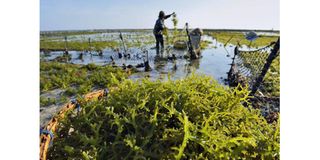
Unguja. The University of Dar es Salaam, in collaboration with Zanzibar’s ministry of Blue Economy and Fisheries, has launched a research project aimed at strengthening seaweed farming through scientific research and the application of technology to spur growth in the sector.
The Sh300 million project will be implemented in Zanzibar as well as in Mafia and Bagamoyo on the Mainland.
Speaking during the launch of the project yesterday, an officer from the ministry of Blue Economy and Fisheries, Mr Omar Saleh Moh’d, said the seaweed sector plays a significant role in boosting household incomes, making it imperative for the government to invest in research to address the effects of climate change, which have led to the emergence of diseases affecting the crop in marine environments.
“Seaweed farming is among the most important sectors in the country, as more than 36,000 people, particularly women and youth, are self-employed through this activity,” he said.
Commercial seaweed farming began in Zanzibar in 1989 before spreading to Mainland Tanzania in the 1990s, with more than 36,000 people currently estimated to earn their livelihoods from the crop.
Mr Moh’d said both the Union and Zanzibar governments recognise the importance of science and technology in driving economic development, particularly in helping seaweed farmers cope with the impacts of climate change.
The project’s principal investigator, Dr Amelia Buriyo from the University of Dar es Salaam, said the research would focus on addressing challenges related to the availability of quality seedlings and controlling diseases linked to climate change in marine ecosystems.
“This project will provide answers to the community and help develop strategies to strengthen the sector so as to address the challenges facing seaweed farming. Climate change is a natural phenomenon that no single individual can control,” she said.
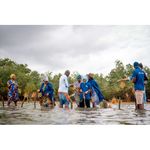
Dr Buriyo added that the research would be conducted in Unguja, Pemba, Mafia, Dar es Salaam and Bagamoyo, and would also involve training four master’s degree students and two doctoral candidates to build local expertise in the sector.
Seaweed farmers have urged project researchers to expedite studies in farming areas, citing persistent challenges that are undermining their efforts and slowing progress in the sector.
One farmer, Ms Ashura Said Haji, said the project had come at a critical time, noting that ocean pollution and emerging diseases were increasingly affecting seaweed production.
“We believe this project will help us farmers and improve productivity because we are facing many challenges, including issues related to seedlings, climate change and shallow sea depths,” she said.
A total of Sh300 million has been allocated for the implementation of the climate-resilient marine systems project, which is funded by the government of Tanzania.