Tanzania yet to capture rice market

What you need to know:

  • Speaking on the sidelines of the Seventh African Grain Trade Summit, whose theme was “Setting New Horizons Rethinking Grain Trade for Food Security and Prosperity in Africa”, Tanzania Rice Council chairman Julius Wambura said Africa imported rice worth $40 billion annually from Asia despite 60 per cent of its land being fertile for agriculture.
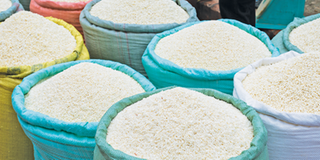

Dar es Salaam. Tanzania has yet to capture the regional rice market worth $500 million (Sh1.1 trillion) despite producing surplus that could meet 70 per cent of demand in East African Community (EAC) member states, stakeholders have said.

Speaking on the sidelines of the Seventh African Grain Trade Summit, whose theme was “Setting New Horizons Rethinking Grain Trade for Food Security and Prosperity in Africa”, Tanzania Rice Council chairman Julius Wambura said Africa imported rice worth $40 billion annually from Asia despite 60 per cent of its land being fertile for agriculture.

He said EAC member states imported rice worth $500 million, while Tanzania produced 70 per cent of the region’s requirements.

Failure to capture the regional market means perpetual poverty for farmers who are unable to get adequate markets for their produce.

“Rice is imported from Asia when our farmers produce enough, but fail to access markets,” Mr Wambura said, and urged the government to intervene by formulating policies that would enable farmers to access both local and international markets.

He added that measures should be taken to ensure that post-harvest losses, which account for 40 per cent of harvests, were reduced. Most of the losses are due to rats and other vermin and lack of proper storage facilities.

Focus “is on local consumption”

Two Cabinet ministers who spoke to The Citizen on the issue said the government’s focus was on increasing production to satisfy local demand.

Industry, Trade and Investment minister Charles Mwijage said the government was currently implementing programmes, including the Agriculture Sector Development Programme (ASDP2), that aimed at increasing rice production in the country. Part of the programme entails the introduction of rice farming in regions where the crop is not grown.

Agriculture minister Charles Tizeba said the government’s priority was meeting local demand.

“Traders mostly focus on exports without considering the local market, which is the most important before thinking of foreign markets,” he said. This is in line with the government’s policy of discouraging grain exports.

The government’s stance is also based on the fact that despite traditionally exporting rice to countries in the region, Tanzania has been grappling with periodic shortages of the commodity, which have led to steep price increases in times of scarcity. Food and Agriculture Organisation (FAO) data shows that Tanzania exported 76,000 tonnes of rice in 2011.

The current rice shortfall of 1.15 million tonnes is expected to reach 2.84 million tonnes by 2020. Rice deficit in Tanzania is bridged by the consumption of other staples, including maize, cassava and sorghum, according to experts. Consumers switch among these foodstuffs depending on availability and price.

More than half of all rice consumption in Tanzania is in Dar es Salaam Region (60 per cent). About 30 per cent of the crop is consumed by producing households.

According to official data, annual rice production doubled between 2001 and 2012 and now averages about 1.35 million tonnes.

Smallholders currently grow the majority of rice (74 per cent of the planted area) under rain-fed conditions. Only about 20 per cent of production is under irrigation, while large-scale production is six per cent.

The government has also restricted rice imports by raising import tariffs, which, according to experts, has helped raise local production. The government introduced 75 per cent rice import tariffs in 2005.

In the years between 2001 and 2005 imported rice was equivalent to 16.5 per cent of domestic production, but imports dropped to 5.2 per cent of production in the years between 2005 and 2011.