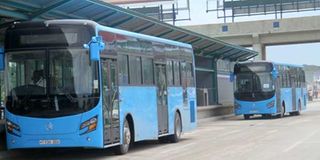
BRT buses operate along the Morogoro Road. The system has eased congestion, but some argue that they promise more than they can deliver, especially for society’s most vulnerable. photo | file
What you need to know:
Split into six phases, DART has triggered a major overhaul of the city’s road infrastructure – by its completion
London. Dar es Salaam’s new rapid bus system won international acclaim – but it excludes the poor.
Bus rapid transit system (BRT) has become the fashionable solution to chronic traffic congestion and low quality public transport – endemic problems for many cities in developing countries.
BRTs typically operate using dedicated bus lanes, while passengers pay their fares before boarding. The number of BRTs is growing rapidly across the world: from 40 in 2007 to 170 in 2019 – and there are many more in the pipeline.
BRT has several prominent advocates around the world, including the World Bank and NGOs such as the Institute for Transport and Development Policy (ITDP) and Embarq. They claim that the system combines the flexibility of bus transit with the speed, reliability and capacity of rail systems, at a fraction of the cost.
It is also regularly said that BRT fares can match those of pre-existing minibus operators, and that BRT buses cause less pollution. Such arguments fuel claims that BRT systems represent a “win-win” solution to public transport woes, benefiting the economy, the environment and the poor all at once.
But there’s evidence to show that BRT proponents promise more than they can deliver, especially for societies most vulnerable.
Enter Dar es Salaam
Dar es Salaam, in Tanzania, is one of the fastest growing cities in Africa. It’s home to an estimated six million people, and to DART – the most ambitious BRT system in Africa. Split into six phases, DART has triggered a major overhaul of the city’s road infrastructure – by its completion, 137km of new roads will have been built.
Since the launch of phase one in 2016, travel times have been greatly reduced, leading Chris Kost, Africa director of the ITDP, to claim: “Bus rapid transit has been transformational for Dar es Salaam. For millions of people in African cities, this is their best hope of ever being connected.” But while some groups do indeed benefit, this rosy outlook obscures the fact that some people are left worse off.
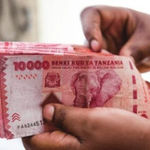
Take the issue of fares, for example. Though DART officials pledged that BRT fares would be comparable to those of the daladalas – the minibuses which provided the cheapest form of public transport in Dar es Salaam before BRT – today, Dart fares cost on average 55 per cent more.
This fare inflation is common to BRTs elsewhere in the world, and was even the cause of violent protests in Bogotá, in Colombia.
Despite investments of $150 million for the first phase of BRT, the poor are still stuck in traffic on cheaper buses every day. By contrast, those who are wealthy enough to afford the higher fare have the option of cutting travelling time by two hours a day.
Roughly 70 per cent of Tanzanians live on less than Sh4,400 a day (less than $2). Yet a two-way commute along the main branch of the BRT would cost Sh1,300 – that’s a staggering 30 per cent of poor people’s daily income being spent on transport.
By comparison, the same commute by daladala would have cost Sh800.
What’s more, the lack of jobs is a major problem in Dar es Salaam, as in many other metropolises in developing countries.
Since BRT buses can carry more passengers than minibuses, about 10 daladalas will be displaced by each BRT bus.
This will have devastating consequences for the 20,000 to 30,000 people employed in public transport.
There are currently no plans to address the fate of these workers.
BRT advocates commonly praise it as a financially self-sufficient bus transport system.
But BRT in Dar es Salaam, as elsewhere in the world, is not sustainable without public subsidies – even with its current high fares. (The conversation)