Dar es Salaam. The Tanzania Revenue Authority (TRA) has identified several key areas in which traders commonly evade taxes, notably in the issuance of receipts, payroll reporting, and the taxation of imported goods.
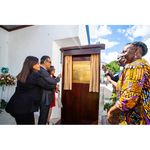
The observations were made yesterday during the launch of a new TRA tax centre in Masaki, part of ongoing efforts to bring services closer to taxpayers and improve compliance across the country.
Speaking at the event, the Acting Commissioner for Operations, Mr Charles Mabula, said some traders continue to avoid paying taxes by failing to issue electronic fiscal receipts, as required by law.
“This situation has caused the authority to lose revenue that should otherwise be collected from goods sold,” he said.
Mr Mabula noted that the introduction of the IDRAS tax system would support taxpayers who do not possess electronic fiscal devices by allowing them to issue receipts free of charge. He added that the system would improve transparency and enhance the accuracy of tax records.
He further said that in recent years, TRA investigations had uncovered a growing number of sophisticated tax evasion schemes, particularly in the construction, transportation, and import sectors.
Investigations, he explained, show that some operators use shell companies, falsified documents, and concealed transactions to underreport revenues and reduce their tax liabilities.
“In the construction sector, several traders register a company, operate it briefly, then shut it down and open another under a different name. Meanwhile, a third company is used to process fictitious transactions to mask real earnings,” he said.
He added that this pattern has become increasingly common, making enforcement more complex and requiring closer scrutiny of company records and business relationships.
“We have identified cases where companies generate fake receipts and prepare documentation for sales and purchases that never took place. For instance, a company may report sales of one billion shillings with purchases of 900 million shillings. Yet these transactions exist only on paper. The aim is to minimise declared profits and reduce tax payable,” he explained.
Mr Mabula said such practices deprive the government of substantial revenue each year and create unfair competition, as compliant businesses struggle to compete with those that evade taxes.
He stressed that fair competition depends on equal compliance and that traders who honour their obligations are placed at a disadvantage when others manipulate the system.
In the transport sector, he said, tax evasion has taken a different form. Some traders falsely claim to export goods to neighbouring countries, such as Burundi, while the goods remain in Tanzania and are sold locally without paying customs duties.
“Some operators use fake identities, alter cargo information in transit, or even remove export stickers from trucks.
In the system, the cargo appears to have crossed the border. In reality, it remains in the country,” he said. He added that such practices undermine legitimate traders who comply with regulations and distort the integrity of cross-border trade.
Investigations have also revealed the use of foreign-registered shell companies created under false names and presented as consignees for allegedly exported goods, while the cargo never leaves the country.
“These are paper companies. They are registered abroad under fictitious names and used to legitimise shipments that are claimed to be exports, yet the goods never depart. The intention is to evade customs duties and related taxes,” he explained.
In import operations, Mr Mabula said, some traders establish fake companies to bring goods into the country. Once the goods arrive, they are collected and distributed outside the official tax system, often being sold without issuing receipts.
Construction materials and livestock, particularly imported goats intended for resale, were cited as sectors frequently associated with this practice.
“Goods enter the country legally but are diverted from full tax assessment. They are later sold without proper documentation. As a result, the government loses both income tax and value-added tax,” he said.
He added that tax evasion is also evident in the employment of expatriates. In some cases, companies pay foreign employees two salaries: a smaller amount locally for official records and a larger sum directly from abroad. “What is declared locally is modest, while the bulk of the compensation comes from overseas. This reduces Pay As You Earn deductions and deprives the government of rightful revenue,” he said.
Mr Mabula emphasised that such schemes significantly reduce public revenue and hinder the implementation of development projects in critical sectors, including healthcare, education, and infrastructure.
“Tax is the foundation of national development. Every shilling lost to evasion is a shilling denied to essential services. We will continue strengthening our monitoring systems and take firm legal measures against anyone found evading tax,” he said. He added that the authority is investing in advanced digital tools and data analysis systems to detect irregularities and close loopholes that enable fraudulent practices.
TRA Commissioner Mr Yusuph Mwenda said proper tax collection requires fairness between small and large businesses, with small enterprises paying taxes commensurate with their lower earnings and larger businesses contributing according to higher income levels.
“The opening of this new branch is part of our broader efforts to expand the tax base. Revenue growth will not come from increasing tax rates. It will come from increasing the number of taxpayers and ensuring compliance,” he said.
Mr Mwenda added that TRA currently operates 53 customs offices, 33 regional offices, and 101 district offices nationwide. This, he said, demonstrates the authority’s commitment to making services accessible to traders and the general public.
“Our goal is to enable traders to spend more time growing their businesses rather than travelling long distances for tax services. Additional centres are planned, including six more in Dar es Salaam this year,” he said.
He noted that TRA staff are committed to delivering professional, efficient, and equitable services, guided by principles of transparency and accountability.
The authority is also intensifying efforts to educate taxpayers about their rights and obligations. This, Mr Mwenda said, is essential for promoting voluntary compliance and fair competition by eliminating tax evasion.
The newly opened branch aims to enhance equitable compliance and improve service delivery. Taxpayers are encouraged to use the IDRAS system, which enables them to complete most tax-related activities within 24 hours without visiting TRA offices.
Through the system, taxpayers can apply for refunds, request tax relief, submit official correspondence, and issue electronic receipts. The platform also allows for real-time tracking of applications and transactions, reducing delays and uncertainty.
Mr Mwenda assured users who experience challenges that TRA staff across the country are ready to provide assistance and technical support.
“Taxes cannot be hidden. Even if a matter goes to court, evaders will ultimately be required to pay. Our systems are becoming more robust, and our resolve is firm,” he said.
Ms Victoria Soka, Chairperson of the Tanzania Association of Tax Consultants (TATC), welcomed the opening of the new office, saying it would reduce the need for taxpayers to travel to Kinondoni and improve access to education and advisory services.
She also praised the IDRAS system, noting that although users are still addressing operational challenges, the platform has significantly reduced the need for physical visits to TRA offices.
“The system has transformed how taxpayers interact with the authority. It has saved time, reduced costs, and improved efficiency. With continued refinement, it will further strengthen compliance and service delivery,” she said.
Ms Soka added that collaboration between TRA and tax consultants remains vital in promoting awareness, improving compliance, and supporting business growth.
She urged traders to embrace digital systems and adhere strictly to tax laws, noting that compliance not only supports national development but also fosters a level playing field for all businesses.
The launch of the Masaki tax centre marks another step in TRA’s broader reform agenda, which seeks to modernise tax administration, improve service quality, and strengthen revenue collection.
As the authority intensifies its fight against tax evasion, officials say sustained public cooperation will be critical in securing the resources needed to support Tanzania’s development ambitions.
Register to begin your journey to our premium contentSubscribe for full access to premium content