Dar es Salaam. The cost of constructing Dar es Salaam’s fifth Bus Rapid Transit (BRT) phase could rise as government institutions trade blame over Sh96.57 billion in compensation owed to people whose properties will be affected by the project.
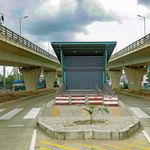
The 25.7-kilometre BRT Phase V project starts at the Ubungo Kijazi Interchange along Nelson Mandela Road and runs towards the Nyerere Bridge, which links Kurasini Ward in Temeke District with Vijibweni in Kigamboni District.
The route branches towards Segerea through Tabata before ending at Kigogo Roundabout, while another branch runs from Chang’ombe Veterinary through Mbagala Kwa Azizi Ali.
Delays in settling compensation claims are threatening to hold up implementation of the project, with the 2024/25 Controller and Auditor General (CAG) report warning that prolonged delays could increase construction costs and expose the Government to additional claims from contractors.
The audit found that delays in paying compensation contravened provisions of the Land Act, which require people whose land rights have been revoked or whose land has been acquired by the Government to receive full, fair and timely compensation.
Section 15(1) of the Land Acquisition Act also requires compensation to be paid with interest at six percent a year from the date the Government takes possession of the land until the date of payment where land is acquired before compensation is paid.
The BRT Phase V project, valued at €178 million (about Sh532 billion), is largely financed by the French Development Agency (AFD). It was initially scheduled to start in 2023 and be completed in 2025.
The compensation dispute has put the spotlight on the responsibilities of the Dar es Salaam Rapid Transit Agency (Dart), the Ministry of Finance and the Prime Minister’s Office Regional Administration and Local Government (PMO-RALG) over who should ensure that affected people are paid.
Dart has acknowledged that it has yet to receive funds needed to settle the claims, while PMO-RALG has rejected what it describes as an attempt by the agency to shift responsibility to the ministry and the Treasury.
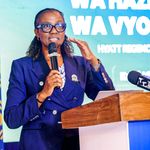
Speaking to The Citizen, Dart chief executive Saidi Tunda said the agency could not make the payments until the Government released the funds.“It is true that the Government has not yet released the funds for Phase V. How can you pay people when the money has not been made available?” he said.
However, the Permanent Secretary in the PMO-RALG, Mr Adolph Ndunguru, said Dart should take greater responsibility for following up the financing process instead of simply waiting for the money to be released.
Mr Ndunguru said Dart was a legally independent institution with its own board of directors and a chief executive who serves as the accounting officer responsible for the agency’s operations and financial management.
He said Dart’s responsibility should not end after completing the valuation of properties belonging to people affected by the project.Instead, the agency should follow up the process of securing funds until the affected people are paid, he said.
“Dart should not simply say that the money is at PMO-RALG or the Treasury. It is their responsibility to follow up and establish when the funds will be available so that they can pay the people,” he said.
He illustrated his point using the example of a school headteacher who signs a contract with a supplier to provide food for pupils.
“Once the supplier delivers the food, you cannot tell him to go and look for his money at the Treasury or PMO-RALG. It is the responsibility of the headteacher who signed the contract to follow up and ensure that the money is available and the supplier is paid,” he said.
Mr Ndunguru said the same principle applied to Dart, arguing that the agency should be able to provide clear answers to both the media and people waiting for compensation.
He said Dart should explain the steps it had taken to secure the funds and when it expected payments to be made.He added that PMO-RALG’s role was primarily policy-related, while implementation and day-to-day operations were the responsibility of Dart’s management.
The dispute comes after the CAG flagged Sh96.57 billion in outstanding compensation owed to people affected by the BRT Phase V project in its latest audit.
The delays could also affect families and businesses whose properties are earmarked for the project, particularly those unable to relocate or rebuild until they receive compensation.
The CAG recommended that the Government speed up valuation processes in areas where assessments had not been completed and strengthen coordination between local government authorities and land registration offices to verify ownership and resolve disputes.
It said accelerating compensation payments would help reduce project delays and costs while strengthening public confidence in Government development projects.
The project is intended to expand Dar es Salaam’s rapid transit network and improve public transport connectivity along some of the city’s busiest corridors.Earlier Sh102bn commitment
In May 2024, then-Dart chief executive Athumani Kihamia told The Citizen that the Government had approved a total of Sh102 billion for compensation related to BRT Phases IV and V.
He said Sh32 billion had been approved to compensate 229 Dar es Salaam residents affected by BRT Phase IV, while Sh70 billion had been allocated for residents affected by Phase V.
“The Government has approved a fiscal budget of Sh32 billion to compensate 229 Dar es Salaam residents who will be affected by the fourth phase of the BRT project, and Sh70 billion for residents affected by the fifth phase,” he said.
Mr Kihamia said the funds had been approved by the Government valuer and that the request had been submitted to the Ministry of Finance.
Register to begin your journey to our premium contentSubscribe for full access to premium content