Dar es Salaam. The government is in the process of strengthening its competition framework as part of broader efforts to improve market efficiency, protect consumers and create a more attractive environment for sustainable investment amid continued economic expansion.
Government officials and regulators say effective competition policies are becoming increasingly important as the country diversifies its economy and deepens integration into regional and global markets.
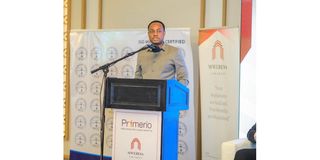
Opening a high-level competition and trade forum in Dar es Salaam yesterday, Deputy Permanent Secretary in the Ministry of Industry and Trade Aristides Mbwasi said competition policy was now central to economic transformation and inclusive growth.
“Competition policy is no longer a technical or secondary issue. It sits at the heart of economic transformation,” Mr Mbwasi said while representing the Minister for Industry and Trade, Ms Judith Kapinga.
He said Tanzania’s economic growth must remain inclusive and avoid market concentration that could disadvantage smaller businesses and consumers.
“As Tanzania’s economy continues to diversify and integrate into regional and global markets, we must ensure that growth does not become concentrated in ways that limit opportunities for smaller players,” he said.
According to him, a strong competition regime creates conditions that encourage innovation, consumer protection and long-term investment.
“A well-functioning competition regime creates the conditions necessary for innovation, consumer protection and sustainable investment,” he added.
Mr Mbwasi commended the Fair Competition Commission (FCC) and its partners for organising the forum at a time when the country was facing emerging challenges linked to digital markets, regional integration and cross-border trade.
He said Tanzania was seeking to build a transparent and predictable business environment capable of attracting both domestic and foreign investors while safeguarding fairness in the marketplace.
“The collaboration we are witnessing today is very commendable, and we congratulate the FCC for setting an example for other institutions under the ministry,” he said.
Mr Mbwasi also revealed that since 2007, the FCC has received and analysed 843 merger applications, with 794 approved unconditionally and 91 granted conditional approval.
He said the commission had also investigated several unnotified mergers and issued eight final decisions, imposing penalties in seven cases.
“These are businesses that, without a competition commission, would not have proper oversight. The FCC is playing a critical role in ensuring fair competition in the market,” he said.
Acting FCC director general Khadija Ngasongwa said competition law was increasingly influencing how companies enter markets, expand operations, set prices and engage with consumers.
“Competition law is no longer just a regulatory subject. It affects how businesses enter the market, how they grow, how they price and how they compete with each other,” she said.
Ms Ngasongwa said Tanzania’s goal was to build a predictable, transparent and competitive economy that supports investment while protecting consumers and smaller enterprises.
She urged businesses to view compliance not as a regulatory burden but as a mechanism for reducing commercial risk and improving investor confidence.
“Properly understood, competition compliance gives investors confidence and helps companies understand risks before enforcement action becomes necessary,” she said.
The FCC also announced plans to digitise several of its services, including the introduction of an online merger application system and a digital consumer complaints dashboard aimed at improving efficiency and public access to competition oversight services.
Ms Ngasongwa said stronger cooperation between regulators, investors and businesses would be necessary as competition enforcement increasingly overlaps with areas such as consumer protection, intellectual property, trade regulation, digital services and public procurement.
She said the forum should serve as the beginning of sustained engagement between regulators and the private sector in strengthening Tanzania’s competition and investment environment.