How Dar es Salaam commuting woes drain workers’ productivity
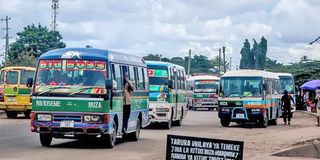
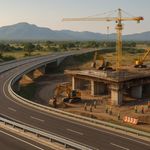
Ongoing infrastructure developments have disrupted commuting in Dar es Salaam burdening commuters who rely on daladalas to move to and from their job places. PHOTO | FILE
Dar es Salaam. Navigating the sprawling commercial capital of Dar es Salaam has become a daily endurance test for millions of residents.
As rapid urban expansion outpaces infrastructure development, the city’s transport network is reaching breaking point, leaving the workforce trapped in a cycle of congestion and rising costs.
While the Bus Rapid Transit project continues its phased rollout, the traditional commuter buses popularly known as daladala remain the backbone of urban mobility. Yet, traditional commuter transport system is now defined more by chaos than efficiency.
The economic toll of this dysfunction is significant. Hundreds of thousands of commuters face lengthy delays that not only erode household incomes but also undermine national productivity.
A recent survey by The Citizen across major corridors, including Mbezi–Mbagala and Kinondoni–Kariakoo, paints a picture of deep-seated frustration. For many, the simple act of returning home safely has become a logistical nightmare. In Buza, the relocation of a key minibus stop has sparked outrage among residents.
A resident, Ms Zaituni Abeli, said moving the stop from Buza Kanisani to Kwa Lulenge had effectively doubled the community’s travel burden.
“A person has to spend double the fare by either boarding a commercial rickshaw or walking long distances to catch the minibus at Kwa Lulenge,” said Ms Abeli.
She further observed that during peak morning and evening hours, the scarcity of buses is worsened by drivers who fail to complete their routes.
“During morning and evening rush hours, minibuses terminating at Buza Kanisani drop passengers far up the road instead, causing widespread confusion and distress,” she added.
The situation is equally dire for those commuting from Mbezi Luis, with Ms Colleen Beno describing the journey to Mwenge as an absolute ordeal, particularly when rain disrupts the availability of motorcycle operators. Ongoing infrastructure projects, while necessary for long-term growth, have created immediate gaps in the transport network.
“The removal of vital bus stops like Lufungira, Mlimani City and Kifuru due to ongoing road construction has forced everyone to commute directly to main hubs like Mwenge rather than catching rides along the way,” explained Ms Beno.
She also highlighted the behaviour of some operators who exploit congestion at Ubungo to nearly double the official Sh800 fare to Sh1,500, making it almost impossible to secure a seat after 5:30 pm.
Across the creek in Kigamboni, the challenges are shaped by geographical bottlenecks along the Uhasibu route.
Mr Enock Semkiwa said heavy traffic leads to overcrowded buses and unpredictable service.
He described a lawless environment at bus stops where commuters must scramble to board, and drivers occasionally alter their routes to bypass traffic or for personal choice, sometimes dropping passengers at different destinations after fares are paid.
What Darcoboa says
The Dar es Salaam Commuter Bus Owners Association (Darcoboa) has acknowledged the crisis but points to structural issues as the primary cause. Darcoboa Vice Chairman, Mr Shifwaya Lema, explained that the shortage of buses during peak hours is largely due to unbalanced directional demand.
He said in the mornings, demand is concentrated towards the city centre, leaving buses to return empty and creating an artificial deficit in the fleet. “Our association strongly condemns illegal fare hikes and route shortening, though passenger compliance and pre-boarding aggravate the problem,” said Mr Lema.
He urged the government to expedite roadworks and introduce dedicated bus lanes to bypass the worst bottlenecks.
Latra response
The Land Transport Regulatory Authority (Latra) has launched a crackdown on non-compliant operators. Latra acting manager for passenger vehicle regulation, Mr Patel Ngereza, said 225 minibuses had been fitted with electronic tracking systems to monitor and prevent premature journey terminations.
“We are aggressively tackling operators who terminate journeys prematurely,” said Mr Ngereza, adding that drivers are now being held personally liable for such infractions.
To provide a lasting solution to the gridlock, he said the government is accelerating the expansion of the Bus Rapid Transit (BRT) network along Morogoro and Kilwa roads.
Furthermore, Latra is prioritising regulatory licences for high-capacity vehicles, those carrying 40 or more passengers, to manage better the high-demand corridors that currently overwhelm the city’s ageing daladala fleet.
Register to begin your journey to our premium contentSubscribe for full access to premium content