Indonesia eyes deeper trade ties, farm technology with Tanzania

Dar es Salaam. Indonesia is seeking to deepen trade and investment ties with Tanzania, with Jakarta looking to increase imports from the country while sharing agricultural technology to help farmers cope with weather-related shocks.

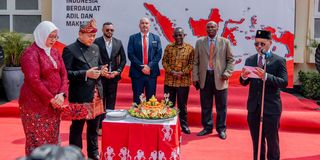
The push comes as Indonesia marks its 81st Independence Day, with its ambassador to Tanzania, Mr Tri Yogo Jatmiko, saying the two countries have significant room to expand economic cooperation.
Bilateral trade currently stands at about $460 million but is heavily skewed in Indonesia’s favour, with Indonesian exports to Tanzania accounting for about $316 million.

Tanzania’s exports to Indonesia are estimated at between $80 million and $120 million, according to the ambassador.

Mr Jatmiko said yesterday that Indonesia wanted to increase imports from Tanzania as it sought to diversify supply chains amid growing geopolitical risks.

“We need to have many sources of imports to anticipate any disruption because of geopolitical conflict. So it is in our interest to buy more products from Tanzania,” he said in Dar es Salaam yesterday.

He said Tanzanian products were competitive in terms of quality and price, but increasing exports to Indonesia would require a greater flow of commodities from Tanzania.

Beyond trade, Jakarta is preparing to establish a working group with Tanzania to explore the use of weather modification technology in agriculture.

The initiative follows the Joint Agriculture Cooperation Commission meeting held in Dodoma in May, where Tanzania expressed interest in Indonesia’s experience in using weather modification to reduce agriculture’s dependence on rainfall.

“We offer Tanzania the opportunity to learn from us the best practices on how Indonesia managed to modify weather, in simple terms of how to create rain for agriculture,” Mr Jatmiko said.

The proposed cooperation could give Tanzania access to technologies and expertise aimed at making agricultural production more resilient to increasingly unpredictable weather patterns.

Indonesia is also seeking to expand its investment footprint in Tanzania, with projects under consideration in energy, fertiliser, cooking oil, palm oil, soap and lotion manufacturing.

One of the projects involves Tanzanian and Indonesian businesses planning to establish a cooking oil processing plant in Kigoma.

The plant would initially use raw materials imported from Indonesia, with the longer-term plan being to source palm oil locally from plantations in Kigoma.

“We are in the pipeline of making it happen and we need the support of the Government of Tanzania,” Mr Jatmiko said.

The project could eventually link Indonesian investment with local agricultural production, creating a domestic supply chain for palm oil and related products.

Education is also emerging as another avenue for strengthening relations between the two countries.

The Indonesian embassy received applications from 269 Tanzanians seeking postgraduate study opportunities in Indonesia this year.

To support prospective students, the embassy plans to introduce a six-month Bahasa Indonesia course at the Muslim University of Morogoro in November.

Mr Jatmiko said the programme could eventually become permanent if demand for postgraduate education in Indonesia continues to grow.

He said the expanding economic and technical cooperation reflected a relationship that was moving beyond traditional government-to-government diplomacy.

“We come here as partners. We want to see Tanzania also growing in terms of its economy and food security,” he said.

Mr Jatmiko said the growing number of Tanzanians who had studied in Indonesia, including alumni attending the independence celebrations, demonstrated the role of education and people-to-people exchanges in strengthening bilateral relations.

“We are very optimistic that the best is yet to come in our relations between Indonesia and Tanzania,” he said.