Tanzania moves to rescue meat exports amid Middle East conflict

Dar es Salaam. Tanzania is exploring ways, including the use of national cargo aircraft, to safeguard its growing meat exports following flight disruptions linked to tensions in the Middle East that have sharply reduced air freight capacity to key markets.

The discussions come amid a steep decline in weekly meat export volumes, as aviation disruptions continue to constrain cargo space.
Data from the Tanzania Meat Board shows that shipments fell from 387 tonnes in the week of February 7–14, 2026, to 147 tonnes between March 7 and 14, representing a decline of about 62 percent within a month.

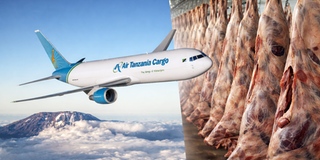
Acting Registrar of the board, Mr John Chassama, said authorities have begun engaging exporters and Air Tanzania Company Limited to explore the possibility of deploying dedicated cargo flights to sustain exports.

“We are bringing together major exporters and Air Tanzania to begin discussions on the possibility of using the airline’s cargo plane to transport meat collectively,” Mr Chassama told The Citizen in an interview.

“This would help exporters avoid relying entirely on foreign airlines whose services have either been suspended or significantly reduced.”

He said air freight remains the primary mode of transporting meat exports, with only limited volumes occasionally shipped by sea.

“Currently, many flights have been cancelled and even those still operating have limited cargo capacity,” he said.

He warned that prolonged disruptions could have far-reaching effects across the livestock value chain, including slaughterhouses, meat processing plants, traders and pastoralists supplying animals for export.

“This situation could create a multiplier effect across the sector,” Mr Chassama said. “It will affect factories, traders and livestock keepers who depend on export markets.”

However, he expressed optimism that coordinated action between exporters and airlines could help to stabilise shipments and sustain Tanzania’s presence in key international markets.

The logistics challenge comes at a time when Tanzania’s meat export industry has been recording steady growth.

According to data presented by the Ministry of Livestock and Fisheries during the 2025/26 budget session, the country exported 9,863 tonnes of meat by April 2025—equivalent to 89.9 percent of the annual target of 10,971 tonnes.

The exports were valued at $44.07 million, up from $39.3 million during the same period the previous year, representing a 5.75 percent increase.

Goat meat remains the leading export meat, accounting for 64.69 percent of total shipments, reflecting strong demand from Middle Eastern markets.

Tanzania currently exports meat to 11 international destinations, including Bahrain, Kenya, Kuwait, Oman, Qatar, Saudi Arabia, the United Arab Emirates and Vietnam.

Government data also shows that domestic meat production continues to expand, signalling increased capacity within the livestock sector.

Production rose by 9.4 percent, from 963,856.55 tonnes valued at Sh9.48 trillion in the 2023/24 financial year to 1,054,114.03 tonnes worth Sh10.38 trillion in 2024/25.

During the period, beef accounted for the largest share at 666,227.02 tonnes, followed by goat meat at 150,014.29 tonnes, poultry at 147,449.98 tonnes, pork at 58,775.14 tonnes and mutton at 31,647.60 tonnes.

This compares with 612,808.50 tonnes of beef, 134,403.35 tonnes of goat meat, 132,442.28 tonnes of poultry, 55,912.42 tonnes of pork and 28,290 tonnes of mutton recorded in 2023/24.