TPA halves port levy as cargo surge drives Sh16 trillion expansion plan

Dar es Salaam. The Tanzania Ports Authority has cut the Port Infrastructure Development Levy (PID) from nine percent to 4.5 percent of customs duty following concerns from traders and logistics stakeholders over rising import costs, even as the authority pushes ahead with a Sh16.1 trillion port expansion programme.

TPA director of marketing and communications, Dr George Fasha, said the revised levy followed months of consultations with importers, clearing and forwarding agents, transporters and other players in the maritime logistics chain.
The discussions, conducted between October and December 2025, centred on concerns that the initial levy structure would significantly increase the cost of imports when combined with other customs-related charges.

“Following consultations with stakeholders, TPA has revised the levy from nine percent to 4.5 percent of customs duty. This is aimed at ensuring efficiency in trade facilitation while sustaining investment in critical port infrastructure,” Dr Fasha told journalists in Dar es Salaam.

He said the authority reviewed all submissions before settling on the revised rate, which seeks to balance affordability for businesses with the need to finance long-term infrastructure development.

Despite the reduction, the levy will remain a major source of funding for Tanzania’s ambitious port modernisation drive, which seeks to expand capacity at major seaports and inland logistics facilities.

TPA plans to invest Sh16.1 trillion in upgrading and expanding port infrastructure across the country, including facilities in Dar es Salaam, Tanga, Mtwara and several inland dry ports.

According to Dr Fasha, about Sh11.2 trillion of the investment will be financed through TPA revenues, including collections from the revised levy, while Sh4.9 trillion is expected from private sector participation under Public-Private Partnership arrangements.

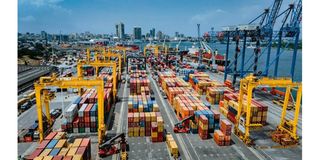
The investment push comes amid rapidly growing cargo volumes that have placed mounting pressure on existing infrastructure.

Between July 2025 and March 2026, Tanzania’s ports handled 29.6 million tonnes of cargo, with projections indicating the volume could exceed 32.8 million tonnes by the end of the current financial year.

Container traffic also surpassed one million twenty-foot equivalent units (TEUs) within nine months, signalling increased regional trade activity and improved port performance.

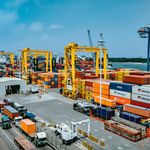
However, the surge in cargo has exposed severe capacity constraints, particularly at the Dar es Salaam Port, where an average of 20 vessels are reportedly waiting offshore daily due to limited berthing space.

Road congestion linked to port operations has also intensified sharply.

Truck movements connected to port activities have increased from about 1,000 per day five years ago to nearly 3,000 currently, placing pressure on key transport corridors including Kurasini, Mandela Road, Morogoro Road and the Dar es Salaam–Chalinze highway.

At the Tanga Port, congestion has also emerged for the first time, with at least six vessels reportedly waiting offshore for docking space.

Dr Fasha said the rising traffic demonstrated both growing confidence in Tanzania’s ports and the urgent need for infrastructure expansion.

“This growth is a positive indicator for the economy, but it also clearly shows that infrastructure must expand at the same pace to avoid bottlenecks,” he said.

To address the challenges, TPA is implementing several projects, including the construction of four new berths,  numbers 12 to 15, at the Dar es Salaam Port, additional berthing space covering 500 metres, oil reception and storage facilities, and an internal rail terminal.

Other planned projects include the development of a specialised cargo port at Kisiwa-Mgao in Mtwara, expansion works at Tanga Port, and the establishment of dry ports at Kurasini Phase II, Kwala, Ihumwa and Chuo cha Polisi.

TPA is also advancing plans for the Bagamoyo and Mwambani ports, alongside supporting road infrastructure such as a proposed logistics corridor linking Dar es Salaam Port to Chalinze to ease traffic congestion.

Dr Fasha warned that without a dedicated infrastructure levy, the authority would have to rely solely on operational savings to finance projects, a process he said could take up to a decade to complete a single major development.

He said delays in expanding infrastructure could undermine economic growth as demand for import, export and transit cargo continues to rise alongside industrialisation.

“As the economy grows, the demand for efficient port services increases. Without timely investment, ports risk becoming bottlenecks to economic activity,” he said.

The authority projects cargo volumes could rise to 62 million tonnes by the 2030/31 financial year, nearly double current levels.