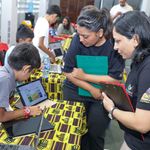
Dar es Salaam. A child today can solve homework, translate languages or generate ideas with a single tap on a smartphone, tasks that once required hours of human effort.
But as artificial intelligence (AI) continues to reshape how people learn, work and make decisions, experts warn that the next generation must develop strong human-centred skills to avoid overdependence on technology.

What may appear as convenience, they say, could gradually weaken the ability to think independently if not balanced with critical skills.
According to a report by Bright Heart Education, key skills for the future include metacognition, creative problem-solving and emotional intelligence abilities expected to remain uniquely human in an increasingly automated world.
Experts say these skills will not only help individuals adapt to technological change, but also enable them to interpret and question the vast amount of information generated by AI systems.
The report also suggests that while artificial intelligence is transforming the job market, many careers, especially those requiring creativity and human judgment, are less likely to be replaced.
Professions such as choreography are projected to see strong growth, while roles like musicians, fine artists and artisans face relatively low risk of automation.
Similarly, fast-growing professions tend to show higher resistance to AI disruption.
Fields such as big data analytics and cybersecurity also continue to rely heavily on human oversight, reinforcing the importance of critical thinking and decision-making skills.
According to Dr Ryan Stevenson, Co-founder and Director at Bright Heart Education, young people risk losing independent thinking if they rely too heavily on digital tools.
“As AI handles more thinking tasks, children risk ‘outsourcing’ their cognition and simply accepting what tools tell them as truth,” he said.
He added that early exposure to critical thinking is essential in helping children question information, evaluate sources and develop confidence in their own reasoning.
Building on this, AI expert Joseph Samwel said the growing influence of AI is changing not only how people access information, but also how they process it.
“AI is incredibly powerful at generating answers, but it does not always guarantee accuracy or context. Without critical thinking, users may accept outputs as facts without questioning how they were produced,” he said.
He further emphasised that as AI becomes more integrated into daily life, the ability to question and interpret information will become increasingly important.
“We are moving into an era where knowing how to ask the right question is just as important as knowing the answer,” he said. “The real risk is not the technology itself, but how unprepared people may be to engage with it critically.”
Human creativity
From a creativity perspective, tech enthusiast Dominick Dismas said the rise of AI is increasing the value of human imagination rather than diminishing it.
“AI can analyse and combine existing information, but it cannot fully replace human creativity. Those who will stand out are individuals who can think differently and apply technology in innovative ways,” he shared.
He further added that the future will favor those who can combine human insight with digital tools.
“It’s not about competing with machines, it’s about using them to expand what we are capable of doing,” he said.
Beyond thinking and creativity, experts also highlight emotional intelligence as a key skill in navigating both personal and professional life.
As workplaces become more interconnected, the ability to understand emotions and build relationships is becoming increasingly important.
Psychologist Daniel Gidion noted that human connection remains central, even in a technology-driven world.
“In a very real sense, we have two minds, one that thinks and one that feels,” he said. “How we manage emotions, empathise with others and build relationships will continue to define effective leadership and collaboration.”
As artificial intelligence continues to evolve, experts agree that the future will not be defined by technology alone, but by how well people can think, create and connect. In that future, the most valuable skills may not be digital but deeply human.
Register to begin your journey to our premium contentSubscribe for full access to premium content