Arrest, recognition and remittances: Why diaspora debate is far from over

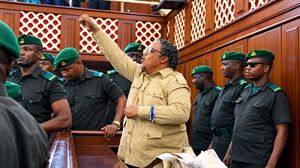
Mr Thadey Kweka, a Tanzanian-born American citizen arrested in December allegedly for posting online content said to have violated Cybercrime Act. PHOTO | FILE

In January 2025, the Tanzanian diaspora community watched in real time as long-held hopes for official recognition were once again deferred.

The then Speaker of Parliament, Dr Tulia Ackson, announced that the Diaspora Bill, which had been scheduled for a vote, would require further scrutiny and resubmission before it could return to the House.


The decision effectively shelved the bill for an indefinite period. At the heart of the controversy were proposed amendments to the Immigration Act and the Land Act.

The Immigration Act provisions included a proposal to introduce a Tanzanite Card, which would formally recognise Tanzanians by birth who had acquired foreign citizenship.  Meanwhile, the Land Act amendments sought to allow members of the diaspora to own land directly, rather than through the existing investment framework, which many consider restrictive and costly.

In the months leading up to the anticipated passage of the bill, online discussions within diaspora circles were filled with optimism.

There was a palpable sense of unity and expectation that, after more than three decades of lobbying, negotiations, and advocacy, Tanzanians living abroad would finally gain formal recognition in the country of their birth. For many, the bill symbolised belonging, dignity, and a long-overdue policy shift.

When it was halted, that optimism quickly gave way to disappointment. Interviews with Tanzanians living in Washington DC, Atlanta, and New York revealed a recurring sentiment. “In Tanzania, once you take up citizenship of another country, you are viewed as having betrayed your motherland,” said one Tanzanian based in Washington DC.

He challenged the government’s long-standing position that dual citizenship poses a national security risk.

“Would it not be easier for the Tanzanian government to arrest or prosecute me if I still held Tanzanian citizenship?” he asked. “Now, they will find it harder to act against a Tanzanian who only holds American citizenship, because legally, he is no longer theirs.”

At the time, the statement appeared theoretical. Yet less than a year later, it took on an almost prophetic quality.

As Tanzania’s General Election approached, political debate intensified both at home and abroad.

Members of the diaspora, many of whom retain deep emotional and familial ties to the country, became increasingly vocal in online discussions about the nation’s political future. Although most are not eligible to vote, their views carry weight within public discourse. More significantly, their economic contribution is substantial.

Diaspora remittances amount to hundreds of millions of dollars annually and are projected to peak at around $1.5 billion in the near future.

These funds support families, finance real estate projects, and sustain small and medium-sized enterprises across the country.

In December 2025, anxiety rippled through diaspora WhatsApp groups when a photograph of Mr Thadey Kweka, a Tanzanian-born American citizen, began circulating, accompanied by claims that he had been arrested in Moshi.

Within the diaspora community, there is a strong culture of staying connected, especially when someone travels back home. Travellers are often entrusted with requests for tea, coffee, local flour, or other items that evoke a sense of home. When Mr Kweka fell silent online, concern quickly mounted.

On Monday, December 29, 2025, the Tanzania Police Force confirmed his arrest.

The announcement was made by Police Spokesperson, Deputy Commissioner of Police David Misime.

According to the police, Mr Kweka had been detained over alleged online content and private communications said to have violated the Cybercrimes Act. The reaction from the diaspora was immediate and emotional.

Years of accumulated frustration surfaced at once. Many in the community have long felt marginalised, regarded neither as fully Tanzanian nor fully foreign. The arrest of one of their own appeared to confirm their fears that they remain vulnerable and unprotected when they return home.

The incident further strained an already fragile relationship between the Tanzanian government and its citizens abroad. The uncertainty surrounding the elections, coupled with heightened political tensions, only deepened the sense of mutual distrust.

The stalled Diaspora Bill has been cited as both a cause and a consequence of this disconnect. Its continued delay risks discouraging diaspora investment at a time when the country can ill afford to lose it.

Dr Shaaban Fundi, a prominent Tanzanian-American academic and commentator, has frequently engaged with Tanzanian political leaders during visits home.

He notes that one question repeatedly posed by officials is why members of the diaspora appear so angry.

In a widely shared article, Dr Fundi argued that the premise of the question is flawed. He wrote that the diaspora are not angry, but profoundly disappointed. “We want a country that works, a country that protects its people, and a country that rewards effort rather than punishing honesty,” he wrote.

Living abroad, he argued, reshapes expectations.

“You see what is possible when accountability exists. Living outside Tanzania exposes you to systems that, while imperfect, are functional.

You see governments that can be criticised without fear, institutions that largely do their jobs, courts that matter, and leaders who can be voted out.”

Despite this perspective, many within Tanzania regard diaspora commentary on domestic affairs as illegitimate. The sentiment is often expressed through the phrase: “Not your monkey, not your circus.”

Habibu Mchange, Chairperson of the Media Centre for Defenders of National Resources (MECIRA), strongly criticised the diaspora’s involvement in national debates.

He argued that Mr Kweka, having entered the country on a tourist visa, lacked the legitimacy to engage in Tanzania’s internal political matters.

According to Mchange, it is unreasonable for individuals who have renounced their citizenship to claim a role in shaping the country’s future, particularly if their words or actions risk inciting panic or undermining peace.

The suggestion that members of the diaspora have played a role in encouraging unrest has circulated quietly in the past.

However, following the events of October 29, those suspicions have become more openly expressed.

This development has left the diaspora community at a crossroads, uncertain of its standing and future relationship with the state.

Clarity, many argue, can only come from the government. A clear policy position on how the diaspora is viewed, what role it is expected to play, and how it can contribute safely and constructively to national development remains absent.

Meanwhile, Tanzanian activists abroad have continued to protest and lobby in European capitals and in Washington DC, particularly in response to disputed election outcomes.

These efforts have complicated the work of the Ministry of Foreign Affairs and East African Cooperation, which has sought to repair diplomatic relations strained by reports of violence and loss of life during periods of unrest.

Although this group represents only a small segment of the diaspora, its actions have had an outsized impact on relations between the government and Tanzanians living abroad. Organisations such as the Diaspora Council of Tanzanians in America (DICOTA) are now widely seen as crucial intermediaries in efforts to rebuild trust.

Many hope that quiet, behind-the-scenes diplomacy is already underway, given that billions of dollars in investment and countless family connections hang in the balance. “These are not abstract political grievances,” Dr Fundi observed.

“They translate into lost opportunities, broken families, suppressed talent, and a future that is constantly postponed. If my homeland offered even a fraction of the fairness, opportunity, and security that I can access abroad, I would have no reason to live so far away.”

Similar views dominate discussions at Tanzanian community gatherings from Maryland to Texas.

Many believe that Mr Kweka’s detention, regardless of the legal merits, could have been handled with greater sensitivity. Instead, it has intensified existing tensions and reinforced feelings of exclusion.

On January 3, 2026, Kilimanjaro Regional Police Commander Simon Maigwa confirmed that Mr Kweka had been released on bail.

While the legal process will continue, his release has been interpreted by some as an opening for dialogue and reflection.

Members of the diaspora frequently point out that all of Tanzania’s neighbours, from Kenya, Rwanda, and Uganda in the north to Malawi and Zambia in the south, offer some form of dual citizenship, special status, or legal recognition for citizens abroad.

Against this regional backdrop, many question why Tanzania remains resistant to similar reforms.

Whether the case of Thadey Kweka will mark a turning point remains uncertain. It could serve as a catalyst for renewed engagement and mutual understanding.

Equally, it could harden positions and further narrow the path towards dual citizenship or special diaspora status.

For now, the future of the relationship between Tanzania and its diaspora remains unresolved, suspended between hope and hesitation.