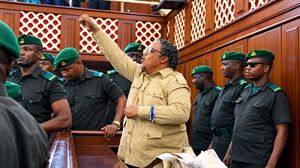
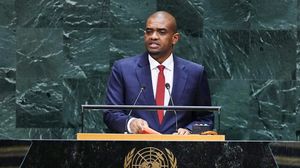
Most of his fellow parliamentarians couldn’t hide their puzzled reaction to the phonetic-style English.
One raised a concern to the speaker; she complained they can hardly understand him. Some laughed, and the internet went insane with comments, as they always do. But what is now known as code-switching has long been part of life for the African diaspora, and Tanzanians are no exception.
Code switching, defined as changing dialects, accents, and the way one speaks based on situation and audience, has long been practised.
Tanzanians in the diaspora, like many immigrants.
This has been a key to survival, a bragging right, and sometimes it is a genuine adaptation to the new life and reality.
At the immigration point at the Mwalimu Nyerere airport, when one stamps the passports as they head to their departure gate.
Your ears capture the last few Kiswahili sentences you will hear for a long time while you are abroad. For many Tanzanians in the diaspora, mostly those who moved to the West, they would tell you that landing in a foreign country and standing at the immigration point is when they truly notice how far they have strayed from home.
As a natural human instinct, one would do everything to fit in.
From acting like the train routes and ordering meals at the driveway are normal to them.
But the contrast of life is vast, and one would do it all to accustom oneself to the western life.
Some go as far as completely changing their accent to the newly mastered American English.
It has always been a topic of heavy debates, amusement, loathing and admiration, depending on who you ask.
Unbeknownst to those who haven’t had the opportunity to live in a foreign country, they might not know the length of time a Tanzanian has to change his or her way of life just to get by.
“I was walking in New York one winter morning, and a group of African American guys walked up to me asking where I was from.
I had to use my best New York accent to tell them I’m from here,” one Tanzanian diaspora residing in New York, who wished to remain anonymous, said.
In some places, ‘Neighbourhoods’, your accent could save you or get you in trouble; the question of ‘Where are you from?’ is not as polite as it may appear.
One could be asking you what you are doing on their ‘turf’ or if you represent a rival gang, which means they will view you as a threat.
Tanzanians across the United States, mostly the youth, have learnt that standing out is not ideal, so most try as much as possible to sound and look American.
It is just one of the camouflage tops that blends in, and you go about your life.
Natives can quickly tell when a person next to them is not local, and the language and accent are the easiest giveaways.
Dar es Salaam city, a metropolis with a blend of people from all cultures and nationalities.
People from the Democratic Republic of Congo, popularly known as Congolese, have always been welcomed with open arms and hence have made efforts to conceal their true identity.
Tanzania might be a safe, accommodating country, but that is not true for many countries around the world.
Saudi Arabia is a notable example, having recently ramped up efforts to deport thousands of individuals residing in the country without legal residence status.
Affecting migrant workers from the Middle East, Asia, and Africa.
Similarly, the Trump administration, which came into office with strong immigration laws, has deported thousands of illegal aliens in the one year since they took over the White House on Pennsylvania Avenue NW.
Still, many immigrants with questionable legal statuses remain in the country, which has more than 300 million people.
A recent social media clip showed an older Caucasian man calling the police on a delivery guy who spoke Spanish, insinuating that he is an illegal and should be arrested.
Such incidents are exactly why some people feel more comfortable assimilating and code-switching just for the peace of mind.
The Immigration and Customs Enforcement, commonly referred to as ICE, has infamous videos on social media making arrests when random people speak a foreign language or look ‘different’.
Some Tanzanians in the United States simply chose to stay indoors to avoid any confrontation with the law, but for those who couldn’t afford to, they chose code-switching as a cover, and they have mastered it so well that it is believable.
A fellow Tanzanian would speak to you in an American accent, and you would never know you are both from Dar es Salaam.
Being mocked abroad for being African and being mocked at home for sounding foreign.
That is a Tanzanian diaspora life, between the motherland and the adopted home.
In a time like the festival season. Those Tanzanians who find their way back home to family and friends face a new reality.
‘Speak like us, or we will shun you,’ and many have stories of hiked prices after the shopkeeper had them speak with an American accent to relatives, thinking their new accent is a way of showing family members that they are better than them.
A true dilemma for the Diaspora community
“I remember taking my kids to a gathering, and they kept forcing them to speak Kiswahili with a Tanzanian accent. My kids can hardly speak Kiswahili. I will never go to the next gathering,” one said.
After more than three decades in the US, he has understandably lost his Tanzanian accent.
His children are American-born, but he still has to be cautious of how he speaks when he is with Americans and, similarly, around Tanzanians.
He has to observe his accent and switch it accordingly.
A work environment where communication is vital
One Tanzanian who works at a bakery in downtown New York understands this too well.
He is frequented by everyday American buyers; his American accent is excellent. It needs to be to do a good job and get tips.
But when he gets back to his apartment, he gets to his phone and video calls back home, speaking all the Kiswahili he wasn’t able to speak during his work shift.
His ability to switch between the two languages and accents is what immigrants have mastered to navigate foreign countries while preserving their identity.
Though back in Tanzania their accents may raise eyebrows, and they are sometimes accused of sounding different, the reasons behind it are rarely discussed.
Register to begin your journey to our premium contentSubscribe for full access to premium content