Iran crisis unsettles Tanzanian business community in the Middle East
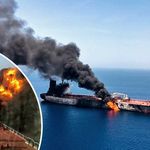
Smoke billows following a missile strike in a Middle Eastern city amid the escalating Iran conflict. Some Tanzanian traders based in Gulf countries are reportedly trapped as tensions intensify across the region. PHOTO | AGENCIES
The evolution of modern warfare has never looked deadlier. Unmanned drones have turned beautiful skyscrapers into potential death traps.
Suddenly, the world’s favourite business and holiday destination, often glamorised by social media influencers and celebrities, has become a zone of fear for a young Tanzanian businessman in the Gulf.
Imran (not his real name) asked that his last name be concealed for fear of reprisal and declined to share his photograph. The United Arab Emirates has strict laws governing online expression, including Federal Decree-Law No 34 of 2021 (Cybercrime Law), which regulates social media use.
The law requires influencers to be licensed, and posting videos, text or images that contradict official narratives can be treated as a serious offence.
According to Imran, the law has been applied strictly during the ongoing conflict involving the US, Israel and Iran, as the war enters its second week, with authorities closely monitoring what residents share online.
Imran deals in electronic goods, which he imports mainly from the UAE and occasionally from China for sale in Tanzania. When we spoke, the situation in Dubai remained tense, with emergency services on high alert and residents uncertain about what might happen next.
“It is relatively safe now, but people are still a little edgy,” he said.
Unlike much of the outside world, which was caught off guard by the way the conflict spread across the Gulf region, Imran said many residents who follow regional politics had expected tensions to escalate.
“For those who were closely following the collapse of negotiations between Iran and the United States, we knew it was only a matter of time before the situation worsened,” he explained.
Iran’s retaliatory strikes across the region sent shockwaves around the world. However, Imran said Iran had previously warned that countries hosting American military bases could become targets.
Iranian President Masoud Pezeshkian has since signalled that his country does not intend to attack neighbouring states again, but uncertainty remains.
For Tanzanian businessmen like Imran, the situation has created a difficult choice. He says he is torn between staying in Dubai or shifting more of his business to China to reduce risk.
He considers himself fortunate that his latest shipment of electronics had already been sent to Tanzania just days before the conflict intensified. Otherwise, he says, he would have suffered losses like some of his colleagues.
“The business has not completely stopped, but it is slowing down,” he said. “Movement is limited, and every day you cannot work properly means losing money.”
His life in the UAE depends on daily work and trade, and he earns only when he is actively doing business. In recent days, security concerns and restrictions have made that difficult.
“Mostly, I am worried about how unpredictable this conflict is,” he said.
“Tanzanians are not used to living in a war situation. This is unfamiliar to me, and I am deeply worried for my life. Many of us just want to pack up and go back home.”
Flights to and from the UAE have been severely restricted, making it difficult for traders like Imran, who normally travel frequently to keep their businesses running.
“I have to fly in and out of the country to make a living, but that has stopped for now,” he said.
The Tanzanian government has indicated that it is prepared to repatriate citizens affected by the conflict. However, Imran said priority appears to be given to travellers who were stranded while in transit rather than residents who live and work in the region.
“I do not think I will get a seat on the first Air Tanzania flight coming to pick people up,” he said.
“Maybe I will have a chance in the second round.”
He added that while ticket prices have not necessarily increased, the real problem is the lack of available flights.
“There are almost no commercial flights out of here,” he explained. “Even if you have money, it is very difficult to leave. It is next to impossible to get a flight back to Tanzania.”
So far, none of the Tanzanians he knows in the diaspora community has been injured, and no businesses belonging to his friends have been directly damaged.
He believes this is because most strikes have targeted military facilities rather than residential areas.
“He is not randomly bombing his neighbours,” he said, referring to the conflict. “Where I live, we only see smoke from far away. We are relatively safe for now.”
He also warned that not everything circulating on social media should be believed, as misinformation has spread widely during the conflict.
“Social media is also part of the propaganda war,” he said. “Not every video you see is real. Some are fake, and with artificial intelligence it is becoming harder to tell what is true.”
Although some online videos show people avoiding high-rise buildings for fear of attacks, Imran said that in his area there has been minimal damage to residential property.
Despite that, the conflict has already disrupted business operations, especially for traders who rely on regular shipments.
The electronics import business is normally profitable, he said, but the current situation has destabilised everything.
“With no flights, I do not know when my next shipment will reach Tanzania,” he said. “I have already explained the situation to my customers so they understand what is happening on the ground.”
He fears that if the conflict continues for several more weeks, losses will become unavoidable.
“If these countries keep attacking each other and drawing in their neighbours, it will affect supply,” he said. “When goods become harder to get, prices will go up in Tanzania.”
According to him, many people in the Gulf believe the war could last longer than expected because neither side appears ready to back down.
The Tanzanian embassy has advised citizens to avoid travelling to the region for the time being, while urging those already there to remain cautious.
Communication networks remain operational, allowing expatriates to stay in contact with their families.
“I speak to my family every day to assure them that I am safe,” Imran said. “They are worried, but there is nothing we can do except be careful.”
Although authorities in the UAE have advised residents to limit unnecessary movement, he said staying at home is not always possible for those who depend on daily business activities. “I have to be careful, but I cannot just stay indoors,” he said.
“We still have to try to survive.” When asked who he believes is responsible for the conflict, Imran declined to comment, saying he prefers to avoid political discussions.
“I do not want to talk about politics,” he said. “I just hope peace returns so that we can continue with our lives and our business.”
Register to begin your journey to our premium contentSubscribe for full access to premium content