“You know, we have just had our country back for approximately 30 years; can you at least let us enjoy our country that we earned through literally blood, sweat and tears?” said Nandipha (not her real name).
She is among the well-travelled South Africans who are dismayed by what they call slanted media coverage of the expulsion of illegal immigrants in South Africa. “You have to realise that there are many schools of thought about what is actually happening in the country. Some are very sympathetic to migrants and understand that they have come to South Africa in search of greener pastures. And then some believe that illegal migrants should not be in the country…that we’ve done enough for them, and they need to leave,” Nandipha said.
She further elaborated that some South Africans don’t even have an opinion about migrants at all because it does affect their daily lives.
And some feel that migrants add to the culture of South Africa and make it an African melting pot.
She disputes the blanket statements and the current narrative that is being displayed online, which is that illegal migrants must leave and that South Africans don’t care.
A Tanzanian diaspora member, Ludovic Mahuwi, who lives in Limpopo Province in South Africa near the Zimbabwean border, paints the reality on the ground; he has been in the front seat for the past decade as violence towards African immigrants has slowly escalated.
Through their WhatsApp groups for Tanzanians living in the rainbow nation, it seems like only a fraction of their communities were affected; a few went to ask for Tanzanian government-funded reparations for them like other countries did, fearing escalation of attacks. Masood Suddy, a resident there, went a step further by commenting on the Ministry of Foreign Affairs and East Africa Cooperation’s Instagram page, seeking help.
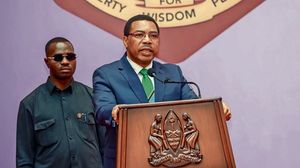
But talking to some Tanzanians living there, they echo the government’s assessment of the anti-immigration demonstrations; Tanzanians haven’t been directly impacted by the so-called “march-march” movement.
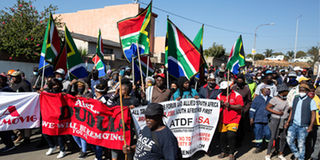
This was the call for all illegal immigrants to voluntarily leave South Africa. It is estimated that more than 160,000 black Africans have since left South Africa.
The majority of Tanzanians have remained put, opting to lock themselves indoors and wait it out, while sharing daily updates with other Tanzanians across the country.
The demonstrations have ceased; what remains lingering is the fear, people living while looking over their shoulders. Malawians, Zimbabweans, Zambians and Nigerians are some of the most affected people.
Ludovic did witness masses of people retreating back to Zimbabwe as they were trying to leave South Africa before the deadline elapsed. “I live by the border town, so most of the people leaving pass by our town, heading to Zimbabwe. I took a video. There were thousands of people,” he said, adding that he observed children amongst the crowd with no water or food, trying to keep up with their matching parents.
The South African government had to set up tents to shelter them from extreme weather. Ludovic wants Tanzanians back home to know that their security in South Africa is not guaranteed, but they have no option but to stay there, be abused; that’s where the money is.
And they have to feed their families, regardless.
“To be honest, nowhere is safe; even in Tanzania, there have been security issues, with the abductions we read about, so I feel like it’s all the same,” he said, adding that at some point he returned to Tanzania, trying to make a living there, but after a few months he had to choose to return to South Africa.
“There are no jobs in Tanzania, youth unemployment is high, young people have to have mechanisms to be financially empowered; that is what I call lack of security too.”
Ludovic insisted the Tanzanian government needs incentives to make its youth population desire to remain in the country; otherwise, more young people will seek better lives outside the country.
Nandipha grew up during the apartheid era. As a baby, she had to live in exile, so she understands the pain of adjusting to life in another country.
“I get it why other Africans look at South Africa and say, ‘But we helped you,’ because they did help us, but at the same time, we didn’t go there illegally,” she said.
This is not the first violent uprising against Africans Ludovic has witnessed.
Similar incidents took place a few years back, and he noted that authorities largely took a populist political stance and chose not to intervene.
Many Africans lost their lives, and no one was brought to justice.“Even now, the leaders of these movements are known but still roam free,” he pointed out.
Politics has played a huge role. Some political parties have sided with the movement because they view it as a popular agenda among their voters.
Aligning with the movement is the uMkhonto we Sizwe (MK) Party, founded by Jacob Zuma, a former freedom fighter who lived in exile in Zambia and Zimbabwe, who would later ascend to be president. The EFF party, led by Julius Malema, has taken the opposite stance, urging that Africa is one.
Ludovic acknowledged that, in some towns, the South African police seemed to have sided with the vigilante groups, but in other places, the police force went their way to protect the lives of the foreigners. Ludovic views South Africa as one of the very few prosperous African nations, and that’s why many young Africans flock to the nation to seek better lives.
That alone indicates the failure of other African countries to provide quality lives for their people.
“Despite its challenges, the South African government provides services to its people, something other African nations have failed to do,” he pointed out. “Many African countries, their economic improvement is only on paper, not in real life.”
South Africa has one of the largest welfare systems in Africa for its low-income households.
Ludovic appealed to Tanzania and other African countries to invest in their youth; these are the backbones of any society.
Funding innovations, ideas, and their education would greatly improve the living standards of their countries and decrease the number of their citizenry illegally immigrating to other countries. Immigration is a politically charged topic.
Some Africans who had invested their whole adult lives in establishing themselves in the country ended up going back home empty-handed.
Some Tanzanians have chosen not to disclose their losses; the shame of losing everything is too much for them to bring to media scrutiny.
Unlike neighbouring Uganda, which held a publicly televised reintegration programme for the returnees, Tanzanians affected have chosen to quietly lead their lives.
The effect is psychological; most of them do not view South Africa as the land of opportunity they once did.
The effect of South Africans’ strained relations with other Africans is already being felt; South African artists are cancelling their shows. Tyla announced the cancellation of her Lagos leg of her upcoming tour.
Ordinary South Africans face more scrutiny at African airports. But African problems necessitate African solutions.
It begins with making Africans feel decent life can be achieved at home and only visiting their neighbouring countries to strengthen the spirit of Ubuntu and not overstating their welcome.
Register to begin your journey to our premium contentSubscribe for full access to premium content