Beware of the so-called antibacterial soaps in supermarkets
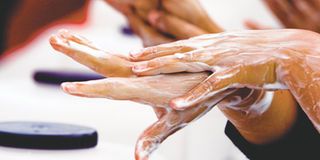
Consumers may think antibacterial washes are more effective at preventing the spread of germs but we have no scientific evidence that they are better than plain soap and water. PHOTO|FILE
What you need to know:
Does it really kill 99 percent of the germs? Let’s face the bigger question. Are these anti-bacterial soaps safe for human use?
Everyone of us must have entered a supermarket to look for body wash products and then came out with a product that reads “kills 99 percent of the germs.”
Does it really kill 99 percent of the germs? Let’s face the bigger question. Are these anti-bacterial soaps safe for human use?
Consumers may think antibacterial washes are more effective at preventing the spread of germs but we have no scientific evidence that they are any better than plain soap and water.
This was said by Dr. Janet Woodcock, director of the United State Food and Drug’s Center for Drug Evaluation and Research, in a Press Release last week. The statement also revealed that antibacterial soaps were banned from the US market since manufacturers had failed to prove the cleansers were safe or more effective than normal products.
In fact, she says, “Some data suggests that antibacterial ingredients may do more harm than good over the long-term.”
The responsible agency is also studying the safety and efficacy of hand sanitizers and wipes, and has asked companies for data on three active ingredients — alcohol (ethanol or ethyl alcohol), isopropyl alcohol and benzalkonium chloride — before issuing a final rule on them.
Manufacturers had failed to show either the safety of “long-term daily use” or that the products were “more effective than plain soap and water in preventing illness and the spread of certain infections”.
This applies to any soap or antiseptic products that have one or more of 19 chemical compounds, including triclocarbon, which are often found in bar soaps, and triclosan, often in liquid soaps.
It does not affect alcohol-based hand sanitizers and wipes, which the FDA is still investigating, or certain healthcare products meant specifically for clinical settings.
Researches have shown that they might affect human hormones or change natural resistance to bacteria.
The agency requested research from the producers to back up their health claims, but three years have now elapsed and no data has been found—FDA’s requests have been ignored.
Triclosan has been proven to be effective in killing bacteria if used at sustained length – far longer than the few seconds most people spend washing their hands – and was once only found in healthcare settings.
Recent studies have linked triclosan to a series of disruptions in human and animal health.
A University of Chicago study released in July found out that triclosan changed the microbiome inside human alimentary canal, and the researchers suggested that exposure could damage developing fetuses in pregnant women.
A study from earlier this year found that overuse could also be contributing to antibiotic resistance, and yet another study, done in 2015, found that antibacterial formulas were not more effective than soap and water.
Dr Rolf Halden, a scientist at the Biodesign Institute at Arizona State University began publishing findings on what appeared to be risks of triclocarban in 2004.
He said it is an older chemical- part of the family of organochlorines like DDT and hexachlorophene-some of which were eventually banned.
“Newer chemicals are much lighter on the environment, he said”, but triclocarban takes a very long time to disappear. In one study in New York City, for example, his team found traces of it that dated back to the 1960s.
Public health experts applauded the rule, which came after years of mounting concerns that the antibacterial chemicals that go into everyday products are doing more harm than good.
Experts have pushed the agency to regulate antimicrobial chemicals, warning that they risk scrambling hormones in children and promoting drug-resistant infections.
“It has boggled my mind why we were clinging to these compounds, and now that they are gone I feel liberated,” said Dr Halden, who has been tracking the issue for years.
“They had absolutely no benefit but we kept them buzzing around us everywhere. They are in breast milk, in urine, in blood, in babies just born, in dust, in water.”
Say goodbye to those “antibacterial” soaps. They do little or nothing to make soap work any better and said the industry has failed to prove they’re safe.
We may not be able to see these effects of such products in a short term but most data has shown that they have been harmful and need to be put to a stop as soon as possible.
Over the past two decades, anti-bacterial soaps have proliferated. It got to the point, a couple of years ago, where it was difficult to find any hand-washing products in some stores that were not labeled “antibacterial.”
All the way back in 2001, a study by Eli Perencevich and colleagues found that 76 percent of liquid soaps on the market contained some kind of antibacterial agent. It only got worse after that.
It didn’t take long for triclosan to start showing up in freshwater streams and elsewhere in the environment. Triclosan has been detected in the water supply in the U.S., multiple countries in Europe, Canada, Australia, Japan, and Hong Kong.
As use of antibacterial soaps proliferated, bacteria resistant to triclosan started to appear–an outcome that any biologist could have predicted, and that many did
The important question in the past few years has been--how long should you use these products--but as time went on, the frequency of use increased and thus prompting the recent intervention of the FDA. It banned the soaps last week.
Here in Tanzania, we wait to hear on the government’s stand on the matter. The regulatory body, TFDA, should also come up front on this issue or we face the great danger that these products can cause, as our country is a dumping market.