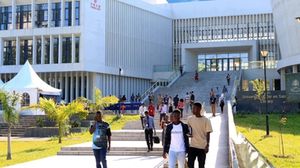
No longer viewed simply as a social service, the sector is now regarded as the country's most strategic investment—one that will determine whether Tanzania emerges as a regional leader or remains constrained by low productivity.
As the curtain falls on the implementation of Vision 2025, Tanzania has unveiled its most ambitious long-term blueprint yet: the Tanzania Development Vision 2050 (Dira 2050). Its targets are nothing short of transformative—turning the country into a knowledge-driven, industrialised upper-middle-income economy with a GDP of $1 trillion.
To realise that ambition, the government is placing education at the centre of its development agenda. No longer viewed simply as a social service, the sector is now regarded as the country's most strategic investment—one that will determine whether Tanzania emerges as a regional leader or remains constrained by low productivity.
At the heart of Dira 2050 is its second pillar, Human Capabilities and Social Development. For a country where 77.8 percent of the population is aged 35 or younger, experts say the demographic dividend presents both an opportunity and a risk.
Without high-quality education, they argue, this youthful population could become a demographic burden characterised by unemployment and underemployment. With the right investment, however, it could become the skilled scientific workforce—or "science elite"—needed to drive a modern, innovation-led economy.
Deputy Permanent Secretary in the Ministry of Education, Science and Technology, Prof Daniel Mushi, recently underscored this vision during the Annual Joint Education Sector Review.
"Education is not merely a social service but a strategic investment in human capital, which should be the cornerstone of Tanzania's innovation-driven and knowledge-based economy," he said.
The same philosophy has been championed by President Samia Suluhu Hassan, who has repeatedly called for a "radical shift in mindset" founded on meritocracy, innovation and a culture of execution.
Achieving upper-middle-income status will require a workforce with the knowledge, skills and productivity needed to compete with the world's more advanced middle-income economies.
Yet Tanzania still faces significant human capital challenges. The country's Human Capital Index score of 0.39 means that a child born today is expected to be only 39 percent as productive as they could be if they enjoyed complete education and full health throughout childhood.
While the country has achieved a literacy rate of 78 percent, this remains significantly below the upper-middle-income country average of over 95 percent, according to the Long-Term Perspective Plan (LTPP) 2026/27- 2050/51 of the National Planning Commission.
To bridge this chasm, the LTPP 2026/27–2050/51 prioritises comprehensive educational reforms. The government is not just building classrooms; it is overhauling the very nature of what is taught.
The transition from a seven-year primary cycle to a six-year cycle is expected to lead to a "double cohort" of nearly 5.1 million students entering junior secondary school in 2027, necessitating a massive scale-up in infrastructure and teaching staff.
Deputy Permanent Secretary in the Prime Minister’s Office (PO-RALG),Mr Atupele Mwambene, noted that "sound economic growth depends on well-prepared human capital," reinforcing the state’s commitment to ensuring no child is left behind in this transition.
Building a "science elite": The frontier discipline strategy
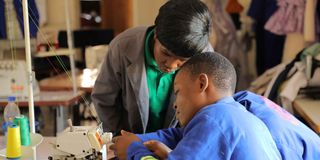
The most visible sign of this educational revolution is the government’s aggressive pivot toward Science, Technology, Engineering, and Mathematics (STEM).
The Minister for Education, Science and Technology, Prof Adolf Mkenda, has been the chief architect of this shift, positioning science and innovation at the centre of the economic agenda as directed by President Hassan.
Under the Samia Scholarship Extended initiative, the government is now sponsoring Tanzania’s brightest minds to attend world-leading institutions in frontier fields such as Artificial Intelligence (AI), data science, nuclear medicine, and aircraft engineering.
Prof Mkenda highlighted the urgency of this move in his recent budget speech, stating: “Government recognises the importance of building national capacity to understand, manage and effectively utilise Artificial Intelligence and related technologies”.
Education policy analyst, Prof Idris Kikula, supports this targeted approach, arguing that, "You cannot build a competitive industrial economy using outdated skills."
He adds: “By training a science elite, Tanzania aims to stop being a mere consumer of global technology and become an exporter of it. The goal is to ensure that by 2050, at least 25 percent of Tanzanians attain higher education with relevant, market-driven skills.”
The digital economy is projected to be a major contributor to the $1 trillion GDP goal. The Tanzania Digital Economy Strategic Framework 2024–2034 sets a target of 80 percent digital literacy for the workforce by 2050. This, analysts say, is not possible without a digitally savvy teaching corps.
The government has committed to training 30,000 teachers in emerging technologies by 2030 and equipping all secondary schools with internet access by 2045.
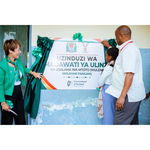
This effort is bolstered by international partnerships, such as the $5.8 million STEM education partnership between KOICA and UNICEF, which is currently constructing science and ICT laboratories in 13 secondary schools across Dodoma and Simiyu.
UNICEF’s Deputy Representative, Mr Lawrence Oundo, noted that such partnerships are vital for "equipping Tanzania’s youth with the skills needed to thrive in an increasingly digital and technology-driven world".
For the education sector to truly propel Tanzania to a higher middle-income status, the knowledge generated in lecture halls must find its way into factories and farms. The government is now demanding that universities turn research into solutions and knowledge into prosperity.
Vice Chancellor of the University of Dar es Salaam, Prof William Anangisye, argues that research and innovation are "indispensable tools for creating jobs and driving industrialisation."
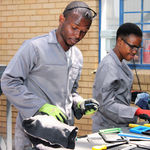
To facilitate this, the ministry has disclosed that 250 Memoranda of Understanding have been signed between universities and industries, with over 154,000 students already receiving practical industrial training under these partnerships.
The LTPP also sets a concrete target of raising national investment in Research and Development to at least one percent of GDP.
This move is designed to ensure that domestic industries benefit from tailored technological advancements, positioning Tanzania as a regional innovation leader in sectors like the blue economy, mining, and agribusiness.
The implementation hurdle: A call to action
Despite the optimism, experts warn of significant execution hurdles. Development specialist Dr Rutashubanyuma Nestory points to the heavy reliance on political will and the need for robust accountability mechanisms.
He says the sector faces a shortage of practical infrastructure, with only 32 percent of public secondary schools currently equipped with functional science laboratories.
Education researcher, Dr Hellen Mbozi, cautions that scholarships and curriculum changes alone are insufficient: “We must also strengthen local research institutions... so that returning graduates find an environment capable of utilising their expertise.”
She adds: “There is also the persistent risk of brain drain if local prospects do not improve alongside educational outcomes.”
Experts conclude that Tanzania's 2050 journey is a human capital race. The government's strategy is clear: align every aspect of the education sector with the needs of the 21st-century labour market.
“By investing in frontier sciences, digitising the classroom, and fostering university-industry linkages, the state is positioning education as the ultimate driver of productivity,” affirms Dr Mbozi.
As Dr Nestory noted, this mission is about "uplifting every individual and crafting a digital narrative intertwined with our cultural identity.”
If the state can navigate the execution hurdles and mobilise the necessary finance, the education sector will not just be the backbone of Dira 2050, it will be the very lifeblood that sustains a prosperous, self-reliant, and industrialised Tanzania for generations to come.