Court closes Olasiti church bombing case

Arusha. The Court of Appeal has ended a 13-year legal battle over the bombing of a Catholic church in Arusha after upholding the conviction of six men found guilty of murder, terrorism offences and using property to facilitate terrorism.

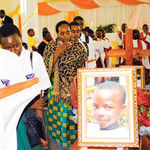
The ruling brings to a close the case arising from the May 5, 2013 attack at St Joseph the Worker Catholic Church in Olasiti, Arusha, which killed three worshippers and injured more than 50 others.

The attack occurred during the inauguration ceremony of the church, where hundreds of worshippers had gathered. A bomb was thrown into the crowd as the Apostolic Nuncio to Tanzania, Bishop Francisco Padilla, and then Archbishop of Arusha, Josephat Lebulu, were unveiling the church.

In its ruling, the Court of Appeal said the High Court did not err when it convicted Abashari Omary, Yusuph Hutta, Ramadhani Waziri, Abdul Juma, Kassim Ramadhan and Japhari Lema on the charges.

A three-judge panel comprising Justices Lugano Mwandambo, Abraham Mwampashi and Lameck Mlacha delivered the judgment on Monday, July 27, 2026.

The judges said the evidence presented during the trial proved the offences beyond reasonable doubt and found no grounds to overturn the High Court decision.

However, the court overturned the conviction for conspiracy to commit terrorism, stating that under the law, the offence cannot stand where the intended terrorism act has already been committed and proven.

“In all other respects, the appeal is dismissed, and the convictions for murder, committing acts of terrorism and using property to facilitate terrorism are upheld,” the judgment stated.

The criminal appeal, number 93 of 2024, was filed by the six appellants challenging the High Court decision delivered on December 12, 2023, by Justice John Nkwabi in Criminal Case No. 32 of 2023.

The appellants had argued that the prosecution failed to prove its case beyond reasonable doubt and that the High Court had not properly evaluated evidence from both sides.

They also claimed the conviction was based on inadmissible evidence and statements that had been rejected and excluded during the trial.

According to court records, 10 suspects were initially arrested and charged in 2014 following the bombing. One died before the trial began, while three others were acquitted during judgment.

The prosecution alleged that a meeting to plan the attack was held at the home of one of the accused, Ramadhani, while information about the church ceremony schedule was allegedly provided by Japhari.

The prosecution relied on witness testimony, forensic evidence, medical reports and statements from the accused to support the charges.

After hearing evidence from both sides, the High Court convicted the accused of murder, terrorism offences, using property to facilitate terrorism and conspiracy to commit terrorism, and sentenced them to death by hanging.

During the appeal hearing, the appellants were represented by nine advocates, while the Republic was represented by five senior state attorneys.