According to the latest Africa CDC situation report released on July 24, a total of 3,095 confirmed cases and 1,356 deaths have been recorded
Dar es Salaam. Tanzania will maintain all measures introduced to prevent the importation of Ebola until the outbreak in the Democratic Republic of the Congo (DRC) is declared over, meanwhile Uganda’s health minister declared the country Ebola-free yesterday following the latest outbreak of the viral haemorrhagic disease, which infected 20 people and claimed two lives.
Speaking to The Citizen, the Director of Health Emergency Preparedness and Response at the Ministry of Health, Dr Erasto Odindo, said the government has intensified surveillance at key points of entry, including border posts, airports and seaports, since May following Ebola outbreaks reported in neighbouring countries.
The Ministry of Health strengthened health screening after issuing a travel advisory on May 18, 2026, informing travellers and stakeholders of enhanced surveillance measures at points of entry.
The move comes as the Africa Centres for Disease Control and Prevention (Africa CDC) steps up support to the DRC, where the ongoing Bundibugyo virus disease outbreak continues to strain health systems, with confirmed cases surpassing 3,000.
According to the latest Africa CDC situation report released on July 24, a total of 3,095 confirmed cases and 1,356 deaths have been recorded across the two countries since the outbreak began.
The report shows that the DRC remains the worst-affected country, recording 102 new confirmed cases, 45 deaths and 16 recoveries in the previous 24 hours. Uganda, meanwhile, reported no new cases or deaths over the same period.
Africa CDC said Uganda has completed follow-up of all previously identified contacts, signalling progress in containing transmission. However, it warned that the situation in the DRC remains critical.
The eastern province of Ituri remains the epicentre of the outbreak, accounting for nearly 89 percent of all confirmed cases reported in the country.
Health facilities are also under increasing pressure. In North Kivu Province, treatment centres are operating beyond capacity, with bed occupancy reaching 126.9 percent, raising concerns over their ability to provide timely care for new patients.
The report also highlights challenges in disease surveillance, with contact follow-up in the DRC standing at 76.4 percent, well below the 95 percent target considered necessary to interrupt transmission effectively. Health experts say identifying, tracing and monitoring contacts remain among the most effective measures for controlling outbreaks of viral haemorrhagic diseases.
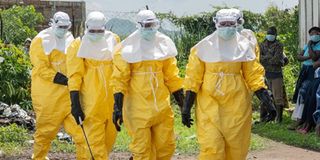
To strengthen the response, Africa CDC said efforts are focused on expanding isolation and treatment capacity, improving contact tracing, protecting frontline health workers, enhancing community engagement and ensuring safer access for emergency response teams operating in affected areas.
The agency has also expanded its technical and logistical support.
It has delivered nine GeneXpert diagnostic machines and laboratory reagents to improve testing capacity, deployed the DHIS2 outbreak response toolkit to strengthen surveillance and data management, and supported the training of more than 4,000 community health workers involved in case detection, risk communication and community mobilisation.
Africa CDC is also working closely with national authorities to strengthen cross-border coordination, citing the risk of disease transmission through cross-border population movements.
Public health experts say sustained surveillance, rapid diagnosis, community participation and adequate treatment capacity remain essential to bringing the outbreak under control, particularly in conflict-affected areas where humanitarian access is limited.
While Uganda's recent progress offers cautious optimism, the continued rise in infections and deaths in the DRC underscores the need for sustained regional and international support to prevent further spread of the disease.