Museveni dominates race with 71 percent as vote tally nears completion

What you need to know:


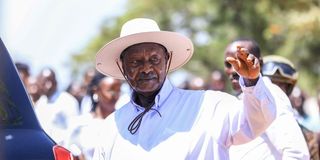
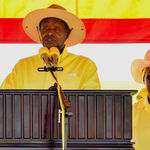
Kampala. Incumbent President Yoweri Museveni strengthened his grip on Uganda’s presidential race on Saturday after the Electoral Commission released fresh provisional results showing him maintaining a commanding lead.

According to Electoral Commission chairperson Justice Simon Byabakama, Mr Museveni had garnered 7,643,778 votes, representing 71.88 percent of valid ballots counted by around 10am.

Opposition leader Robert Kyagulanyi, popularly known as Bobi Wine of the National Unity Platform (NUP), followed with 2,601,150 votes, or 24.46 percent.

Other candidates trailed far behind. Nathan Nandala Mafabi had 202,802 votes (1.91 percent), Mugisha Muntu 57,019 (0.45 percent), Bulira Frank Kabinga 44,328 (0.42 percent), Robert Kasibante 32,224 (0.30 percent), Mubarak Munyagwa 30,509 (0.29 percent), and Joseph Mabirizi 22,274 (0.21 percent).

The commission said results from 47,499 polling stations — representing 93.61 percent of the country’s 50,739 stations — had been received and tallied.

A total of 10,634,084 valid votes and 264,015 invalid votes, accounting for 2.42 percent of ballots cast, had been recorded. Another 38,223 ballots were classified as spoilt.

Overall, 10,898,099 votes had been counted, translating into a voter turnout of 50.34 percent among Uganda’s 21,649,067 registered voters.

“This is the sixth session of releasing provisional results,” Justice Byabakama said, adding that the next update would be issued at 2pm.

Final presidential results were expected to be declared by 5pm on Saturday, in accordance with Ugandan law.

Security forces remained deployed in several urban centres following reports of post-election unrest.

At least 12 people have reportedly been shot dead or killed since voting closed on Thursday, according to local media.

Kampala Metropolitan Police deputy spokesperson Luke Owoyesigyire said security teams had been deployed to restore order following clashes between opposition supporters and security personnel in parts of the capital, including Makindye and Makindye Ssabagabo divisions.

Areas affected included Busabala, Ndeeba, Gangu and Najjanankumbi.

“Our teams are on the ground to address the disturbance. I cannot give a full assessment now because the operation is still ongoing,” Mr Owoyesigyire was quoted as saying.

Despite the tension, much of Kampala remained unusually quiet on Friday, with deserted streets and few businesses operating in the city centre during the second day of the election public holidays.

Authorities have also intensified ground security deployment and aerial surveillance in anticipation of further unrest.

The provisional tallies further indicated unexpected parliamentary losses for some opposition candidates in areas traditionally considered strongholds.

Electoral Commission declarations showed several opposition figures, including NUP Secretary General David Lewis Rubongoya, losing parliamentary races to candidates aligned with the ruling National Resistance Movement (NRM).

Mr Kyagulanyi rejected the provisional results, alleging widespread fraud and intimidation, and said his residence in Magere had been under military siege since voting closed.

“They do this because they are afraid of the people’s reaction after stealing the vote. Ignore the fake results being announced,” he said.

NUP spokesperson Joel Ssenyonyi told local broadcaster NTV Uganda that armed men had forced their way into Mr Kyagulanyi’s residence on Friday evening.

Earlier, journalists were ordered to vacate the area as a security cordon was enforced, according to local media reports.

The Electoral Commission defended its management of the vote, saying delays caused by biometric verification failures did not warrant cancellation and that manual voting was used where machines malfunctioned.

The commission described the General Election as “successful and generally peaceful,” despite reports of violence, arrests and heightened political tension.

None of the other presidential candidates had immediately commented on the provisional results.