Gendered inequalities in Pakistan: Female labour force participation and wage disparities

Pakistan’s female labour force participation (FLFP) remains among the lowest globally, reflecting entrenched socio-economic, cultural, and institutional barriers that constrain women’s economic empowerment.

Despite making up nearly half of the population, women are still sidelined in the labour market, with consequences that undermine both household resilience and national economic growth.

Nationally, the FLFP rate for women aged 15 to 64 stands at just 22.6 percent—well below the global average of 52.6 percent and the already modest South Asian average of 25.2 percent.

Even in major urban centres where economic opportunities are expected to be more diverse, progress remains limited.

In Islamabad, for example, women’s labour force participation is only 22.5 percent, compared with 67 percent for men. Urban women often contend with limited mobility, heightened scrutiny, and weaker social support systems, compounding the barriers to joining and staying in formal employment.

A combination of structural inequalities and deeply ingrained social norms drives these disparities. Gendered expectations around unpaid domestic work, limited access to financial services, wage gaps, and exclusion from high-productivity sectors continue to marginalise women economically.

The gender divide in microfinance access, digital inclusion, and youth not-in-education-employment-or-training (NEET) rates further illustrates the systematic nature of these inequalities.

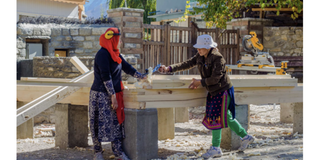
Cultural standards around physical gender segregation strongly influence employer behaviour. Many employers avoid hiring women for factory or on-site roles, citing cultural constraints. Nearly seventy percent of employers fill ninety percent or more of factory positions with men, and in Punjab’s garment manufacturing sector, women constitute only 12 percent of the workforce.

Education—often considered a vehicle for empowerment—has not translated into equitable labour outcomes. Despite increased female enrolment in higher education, only 21.6 percent of degree-holding women are employed, revealing that schooling alone cannot dismantle structural and cultural hurdles.

Marital status deepens the divide: married women have significantly lower employment rates than married men, reflecting persistent expectations that women prioritise household duties over professional aspirations.

The wage gap presents another stark inequality. According to the International Labour Organisation (ILO), Pakistan is one of the worst-performing countries in South Asia when it comes to gender-based wage disparity.

Women earn between 25 and 34 percent less than men for work of equal value—wider than the global average and significantly higher than in regional peers such as India, Bangladesh, and Nepal. Crucially, much of this gap is unexplained by education, experience, or job role, pointing to systemic discrimination and weak enforcement of labour protections.

The gap widens at managerial and professional levels, signalling a persistent glass ceiling that restricts upward mobility even in formal sectors such as healthcare, education, finance, and manufacturing.

Additionally, a large proportion of Pakistani women are concentrated in the informal economy—working in agriculture, domestic roles, and home-based manufacturing—where wages are low, protections are minimal, and access to benefits or formal contracts is rare.

This dual labour structure entrenches income inequality while suppressing national productivity by excluding half of the potential workforce from meaningful economic participation.

Pakistan’s position on global gender indices underscores the urgency of reform. In the Global Gender Gap Index 2025, the country ranks 148th out of 148 economies, with an overall parity score of 56.7 percent—a decline from previous years. Only 2.3 percent of the gender gap has been closed since 2006, with recent trends showing regression. Under the Economic Participation and Opportunity subindex, Pakistan is positioned among the bottom five globally, with a score of 34.7 percent.

Political empowerment indicators are equally troubling: women’s ministerial representation dropped sharply from 5.9 percent in 2024 to zero in 2025, while overall parliamentary parity fell from 12.2 percent to 11 percent in a single year.

Beyond the economic and political dimensions, women face significant social and security threats. Gender-based violence, workplace harassment, and character assassination remain common experiences for women in public life, including those in media, activism, or political leadership. These forms of intimidation reinforce narratives that discourage women’s visibility, leadership, and autonomy in public spaces.

Pakistan’s human capital development reflects these gendered inequalities. The Pakistan Human Capital Review 2023 reports a Human Capital Index score of 0.41, lagging behind regional counterparts such as Bangladesh and Nepal.

Stagnation over the past three decades highlights systemic failures in education, healthcare, and labour market inclusion. Gender, geography, and wealth remain strong determinants of human capital outcomes, with rural women disproportionately disadvantaged.

Female literacy stands at 48.5 percent, compared with near-universal literacy in countries such as the Maldives.

The Women’s Economic Empowerment Index reinforces the scale of the challenge. With a female labour force participation rate of 21.4 percent and minimal progress observed in recent years, Pakistan continues to constrain its own economic trajectory by underutilising the skills and potential of its female population.

Pakistan’s gender gap in labour participation and economic opportunity reflects deeply intertwined cultural norms, institutional weaknesses, and structural disadvantages.

Meaningful progress will require a comprehensive policy shift—strengthening labour law enforcement, expanding childcare and safe transport services, promoting digital and financial inclusion, and challenging restrictive social norms that limit women’s mobility and autonomy.

Without urgent action, Pakistan risks perpetuating cycles of poverty and underdevelopment, while leaving half of its population—and half of its economic potential—on the margins of national progress.