US sanctions ICC president, senior lawyer

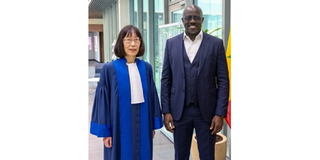
A combination picture showing ICC President Tomoko Akane (left) and former senior trial lawyer Abdoulaye Seye. PHOTO | COURTESY

Washington. The United States has imposed sanctions on International Criminal Court (ICC) President Tomoko Akane and senior trial lawyer Abdoulaye Seye, escalating the Trump administration’s campaign against the court over its investigations into officials from countries that do not recognise its jurisdiction.

US Secretary of State Marco Rubio announced the sanctions on Tuesday, accusing Akane and Seye of involvement in the ICC’s efforts to investigate, arrest or prosecute officials from countries that have not accepted the court’s authority, including the United States.

The two officials were added to the US Treasury Department’s Specially Designated Nationals and Blocked Persons List. The designation blocks any assets they may hold within US jurisdiction and generally prohibits US persons and entities from conducting transactions with them.

Rubio said the Trump administration considered the ICC a politicised institution that had exceeded its mandate and threatened national sovereignty.

The latest measures are part of a broader US effort to pressure the Hague-based court over cases involving American and Israeli officials. Washington is not a member of the ICC and has long rejected its jurisdiction over US nationals.

The dispute intensified after the ICC issued arrest warrants for Israeli Prime Minister Benjamin Netanyahu and former Defence Minister Yoav Gallant over alleged war crimes and crimes against humanity linked to the war in Gaza. Both Israel and the United States reject the court’s jurisdiction, while Netanyahu has denied the allegations.

The United States has also objected to ICC investigations involving alleged crimes by US personnel in Afghanistan and Iraq. The Trump administration has described the court as an unacceptable threat to US sovereignty and has vowed to weaken or dismantle its influence.

The ICC, however, strongly rejected the latest sanctions, saying threats against judicial officials for carrying out their legal duties risk undermining the rule of law and the international legal order.

The Netherlands, which hosts the court in The Hague, also criticised the US action. Dutch Foreign Minister David van Weel said international courts and tribunals must be able to carry out their mandates freely and invited Akane to discuss continued Dutch support for the court.

Japan, Akane’s home country, described the US sanctions as “extremely regrettable”, according to Kyodo News. Akane, a Japanese judge, has served as ICC president since 2024, while Seye is a Senegalese national serving as a senior trial lawyer at the court.

The sanctions mark the latest escalation in Washington’s confrontation with the ICC. Earlier measures targeted other court officials following its investigations and arrest warrants involving Israeli leaders.

The ICC was established in 2002 and is based in The Hague. It prosecutes individuals accused of genocide, war crimes and crimes against humanity when the relevant legal conditions for its jurisdiction are met. The United States has never joined the court.

The latest confrontation has raised broader concerns among supporters of international justice, who argue that sanctions against judges and legal officials could undermine the court’s independence. The ICC said it would remain committed to fulfilling its mandate despite the pressure.